


The Most Exciting and Important Place You've Never Heard Of
Beneath the surface of the ocean, where sunlight runs out, the Twilight Zone, a vast ecosystem teeming with life, begins.
The Twilight Zone is a layer of the ocean spanning across the whole of Earth, beginning at two hundred metres below the surface, and ending at 1km down – where the pressure would be equivalent to ten elephants standing on your head!
What Lives in the Twilight Zone?
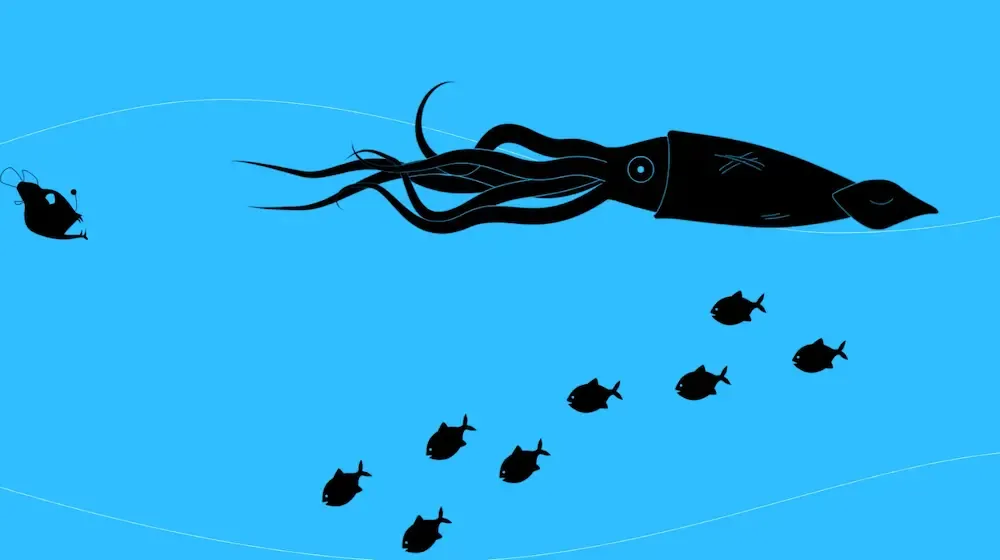
The Twilight Zone has many extraordinary creatures, adapted to life in this challenging environment. For example, they may be bioluminescent for camouflage or have huge mouths to make the most of rare encounters with prey in the dark.
There are many Twilight Zone creatures that are likely to be new and alien-looking to you, such as the Common Fangtooth. But there are others you are much more likely to have heard of, such as the Giant Squid and the Sperm Whale.
What Makes The Twilight Zone So Important?
Scientists think that the largest animal migration on Earth may take place in the Twilight Zone, every day!
At dusk, phenomenal numbers of creatures – fish, squid, shrimps – rise nearer to the surface to feed, using the dark of night to avoid predators. This would take the prize from birds, who see a huge annual migration of five billion.
Why is it Important to Protect the Twilight Zone?
Not only is the Twilight Zone full of marine life, it is also crucial to how the ocean takes up and stores carbon dioxide from the atmosphere in a process known as the biological carbon pump. Without life in the ocean providing this pump we think atmospheric carbon dioxide concentrations could be 50% higher than they are even now.
Key Parts of the Biological Carbon Pump
The surface ocean is full of tiny plants called phytoplankton and, like trees and grasses, they use carbon dioxide to grow. Phytoplankton are a vital part of the ocean food chain, creating huge amounts of new plant material each year – as much as all land plants combined, including rainforests! This material is eaten by tiny creatures such as copepods, which in turn are eaten by bigger animals and so on, reaching creatures such as the giant squid and sperm whale.
Learn MoreMany animals in the twilight zone commute up to the surface at night, and back down to the depths of the Twilight zone to respire during the day, transporting carbon dioxide away from the atmosphere and storing it deep in the ocean.
All the growth and feeding in the surface ocean creates a huge amount of debris from dead creatures and the waste products of living ones, known as marine snow.
Marine snow sinks in the ocean, taking large amounts of carbon with it. The deeper it gets the longer it stays away from the atmosphere. Small creatures such as copepods actively feed on marine snow, meaning 90% is recycled within the Twilight Zone. 10% of marine snow sinks even deeper, which is important in helping maintain atmospheric carbon dioxide levels lower than they would otherwise be.
Learn MoreWhat is the NOC Doing to Investigate the Twilight Zone?
The NOC is very active in leading research into the Twilight Zone, which includes having a co-lead role in the Joint Exploration of the Twilight Zone Ocean Network (JETZON) programme, which has been officially endorsed to focus on the Twilight Zone by the United Nations Ocean Decade.
The JETZON programme includes over 20 projects linking 30 countries. JETZON will see scientists from the NOC collaborate with global partners to study the impact of fishing, deep-sea mining and climate change on this largely unexplored ocean region. JETZON will bring together global scientists including students so that the international scientific community can obtain the greatest insight into the Twilight Zone from ongoing work and can maintain focus on this potentially threatened environment.
Project Spotlight: JETZON
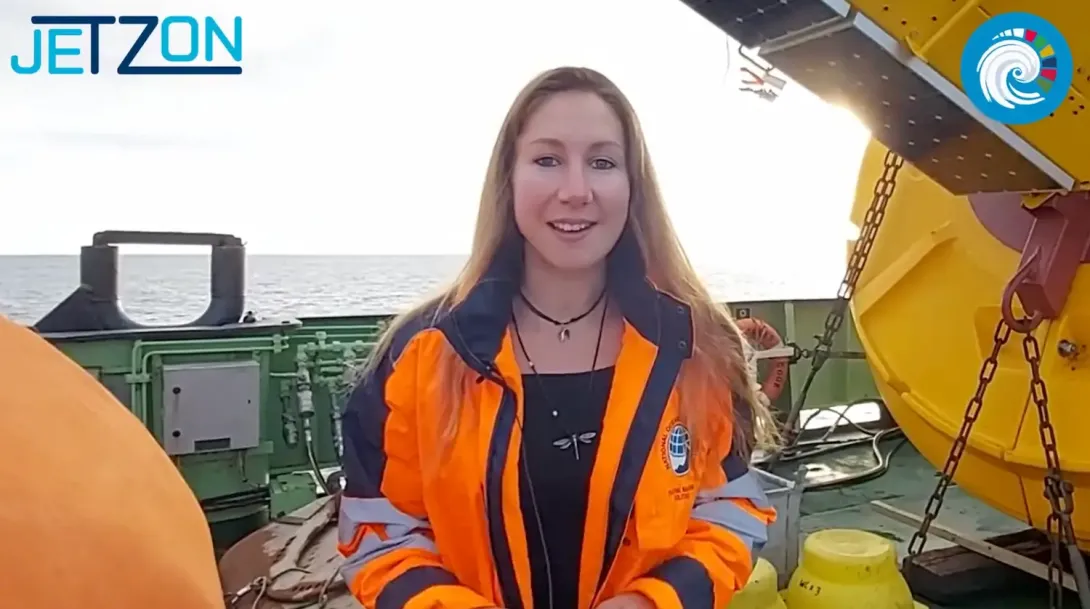
NOC's Dr Sari Giering answers some of the biggest questions about the Twilight Zone and how the JETZON programme is helping to address these challenges in the video below.
Key Publications
Martin, Adrian  ORCID: https://orcid.org/0000-0002-1202-8612; Boyd, Philip; Buesseler, Ken; Cetinic, Ivona; Claustre, Hervé; Giering, Sari ORCID: https://orcid.org/0000-0002-3090-1876; Henson, Stephanie ORCID: https://orcid.org/0000-0002-3875-6802; Irigoien, Xabier; Kriest, Iris; Memery, Laurent; Robinson, Carol; Saba, Grace; Sanders, Richard; Siegel, David; Villa-Alfageme, María; Guidi, Lionel.
2020
The oceans’ twilight zone must be studied now, before it is too late.
Nature, 580, 7801.
26-28.
10.1038/d41586-020-00915-7
ORCID: https://orcid.org/0000-0002-1202-8612; Boyd, Philip; Buesseler, Ken; Cetinic, Ivona; Claustre, Hervé; Giering, Sari ORCID: https://orcid.org/0000-0002-3090-1876; Henson, Stephanie ORCID: https://orcid.org/0000-0002-3875-6802; Irigoien, Xabier; Kriest, Iris; Memery, Laurent; Robinson, Carol; Saba, Grace; Sanders, Richard; Siegel, David; Villa-Alfageme, María; Guidi, Lionel.
2020
The oceans’ twilight zone must be studied now, before it is too late.
Nature, 580, 7801.
26-28.
10.1038/d41586-020-00915-7
2020
Article
Hemsley, V.; Füssel, J.; Duret, M.T.; Rayne, R.R.; Iversen, M.H.; Henson, S.A. ORCID: https://orcid.org/0000-0002-3875-6802; Sanders, R. ORCID: https://orcid.org/0000-0002-6884-7131; Lam, P.; Trimmer, M..
2023
Suspended particles are hotspots of microbial remineralization in the ocean's twilight zone.
Deep Sea Research Part II: Topical Studies in Oceanography, 212, 105339.
10.1016/j.dsr2.2023.105339
2023
Article
Prellezo, Raúl; Corrales, Xavier; Andonegi, Eider; Bald, Carlos; Fernandes-Salvador, Jose A.; Iñarra, Bruno; Irigoien, Xabier; Martin, Adrian ORCID: https://orcid.org/0000-0002-1202-8612; Murillas-Maza, Arantza; Tasdemir, Deniz.
2024
Economic trade-offs of harvesting the ocean twilight zone: An ecosystem services approach.
Ecosystem Services, 67, 101633.
10.1016/j.ecoser.2024.101633
2024
Article


Dive Deeper: Ocean Carbon
The ocean helps regulate atmospheric CO₂. Global warming would be substantially worse without the ocean, which has absorbed over a quarter of all the extra CO₂ we've added to the atmosphere. Ocean circulation then transports this carbon away from the surface, trapping it at depth.