

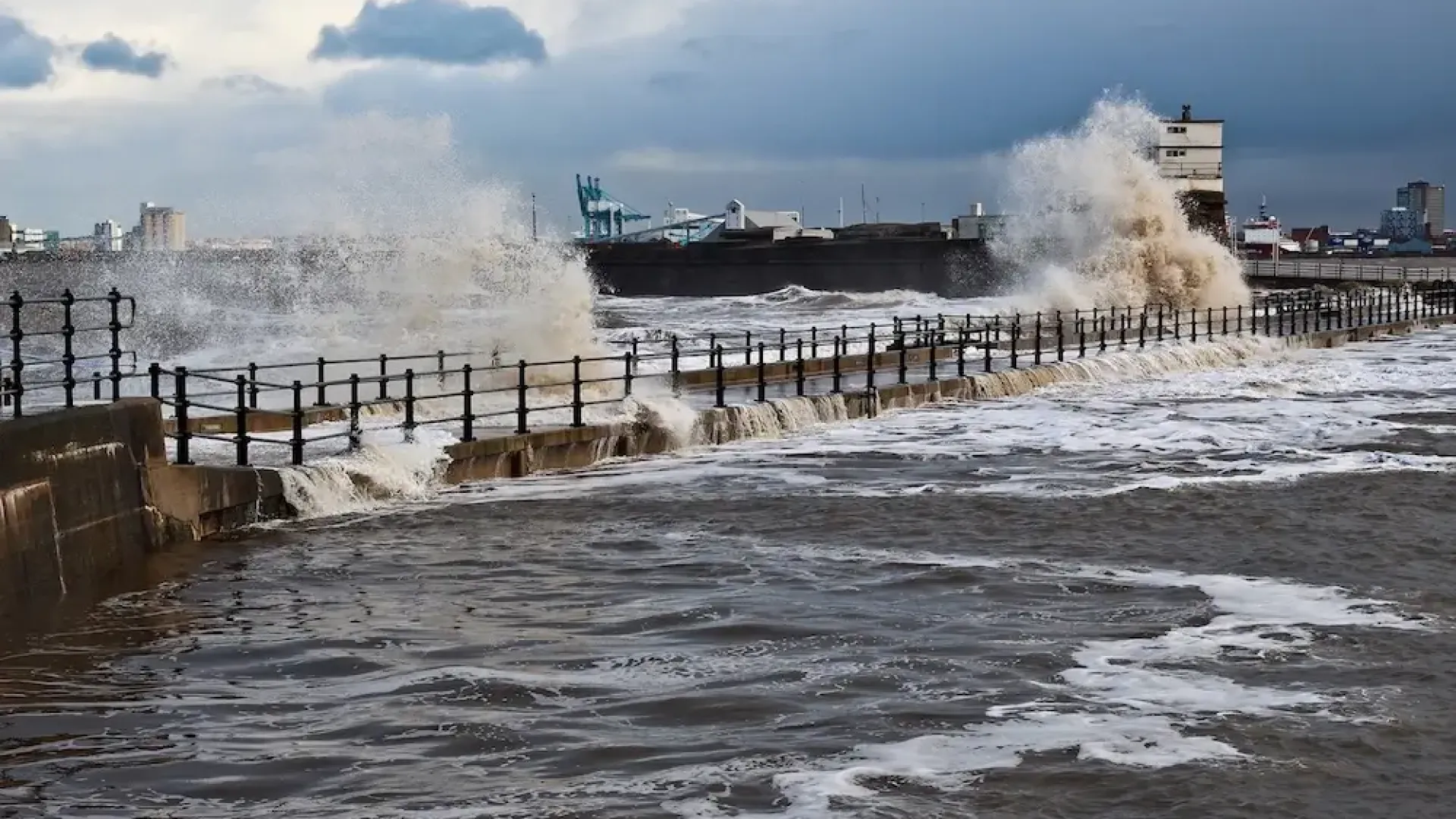
What is GLOSS?
The Global Sea Level Observing System (GLOSS) was established in 1985, starting with a proposed network of about 250 stations. Its primary aim was to collect long-term tide gauge observations, develop systems and standards for "ocean monitoring and flood warning purposes," and to support the activities of the Permanent Service for Mean Sea Level (PSMSL).
At the NOC we are deeply involved in this global effort. Here at NOC, the British Oceanographic Data Centre (BODC) and PSMSL jointly act as a GLOSS Data Archive. We provide services, data, and advice to the international sea level community. Furthermore, NOC staff sit on the GLOSS steering committee and are active members of its group of experts.
One of our special interests within GLOSS is sea level data rescue. This involves publishing advice, organizing workshops, and carrying out dedicated projects to retrieve and preserve historical data that might otherwise be lost.
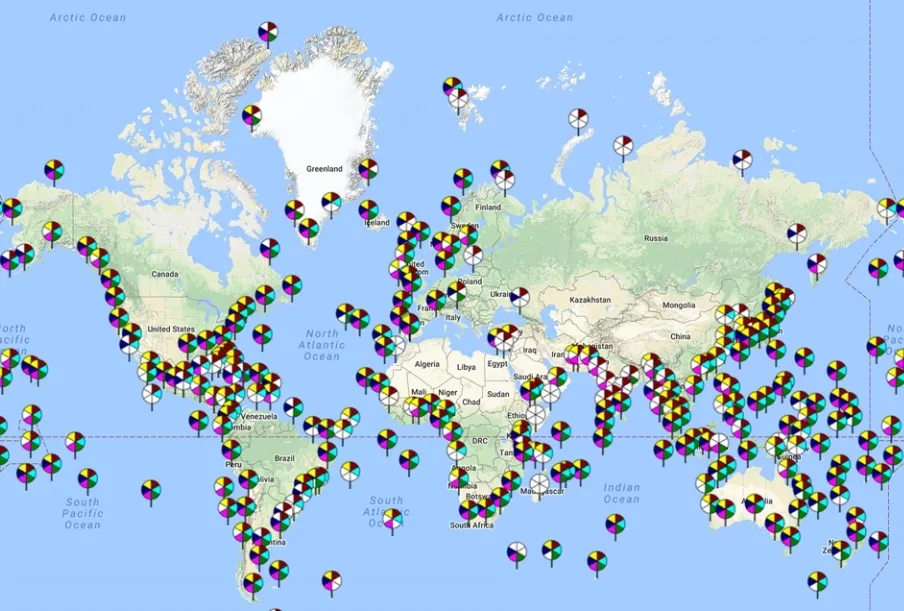
The Evolution of GLOSS
GLOSS has grown significantly since its launch. Today, more than 1,000 stations report in near real-time, and the use of this data has expanded dramatically.
This data is now required across many different timescales:
- Within several minutes: To monitor tsunamis and storm surges, and for use in daily port operations and hydrography.
- Within hours: To validate ocean circulation, tidal, and storm surge models.
- Within days: To help validate satellite altimeters.
- Annually: To provide high-quality, controlled data for climate studies.
GLOSS's Role in Global Ocean Observing
GLOSS is one of the biggest and oldest components of the Global Ocean Observing System (GOOS). It's a truly global collaboration, with 65 countries involved in transmitting fast-delivery data to the GLOSS network
Publications
Marcos, Marta; Calafat, Francisco M.  ORCID: https://orcid.org/0000-0002-7474-135X; Berihuete, Ángel; Dangendorf, Sönke.
2015
Long-term variations in global sea level extremes.
Journal of Geophysical Research: Oceans, 120 (12).
8115-8134.
10.1002/2015JC011173
ORCID: https://orcid.org/0000-0002-7474-135X; Berihuete, Ángel; Dangendorf, Sönke.
2015
Long-term variations in global sea level extremes.
Journal of Geophysical Research: Oceans, 120 (12).
8115-8134.
10.1002/2015JC011173
2015
Article
Calafat, F.M. ORCID: https://orcid.org/0000-0002-7474-135X; Chambers, D.P.; Tsimplis, M.N..
2014
On the ability of global sea level reconstructions to determine trends and variability.
Journal of Geophysical Research: Oceans, 119 (3).
1572-1592.
10.1002/2013JC009298
2014
Article
Jevrejeva, Svetlana ORCID: https://orcid.org/0000-0001-9490-4665; Moore, J.; Grinsted, A.; Woodworth, P..
2009
Recent global sea level acceleration started over 200 years ago?
In:
Climate Change: Global Risks, Challenges and Decisions.
Bristol, Institute of Physics, 012026.
(IOP Conf. Series: Earth and Environmental Science, 6).
2009
Book section
Church, John A.; White, Neil J.; Aarup, Thorkild; Wilson, W. Stanley; Woodworth, Philip L.; Domingues, Catia M. ORCID: https://orcid.org/0000-0001-5100-4595; Hunter, John R.; Lambeck, Kurt.
2008
Understanding global sea levels: past, present and future.
Sustainability Science, 3 (1).
9-22.
10.1007/s11625-008-0042-4
2008
Article
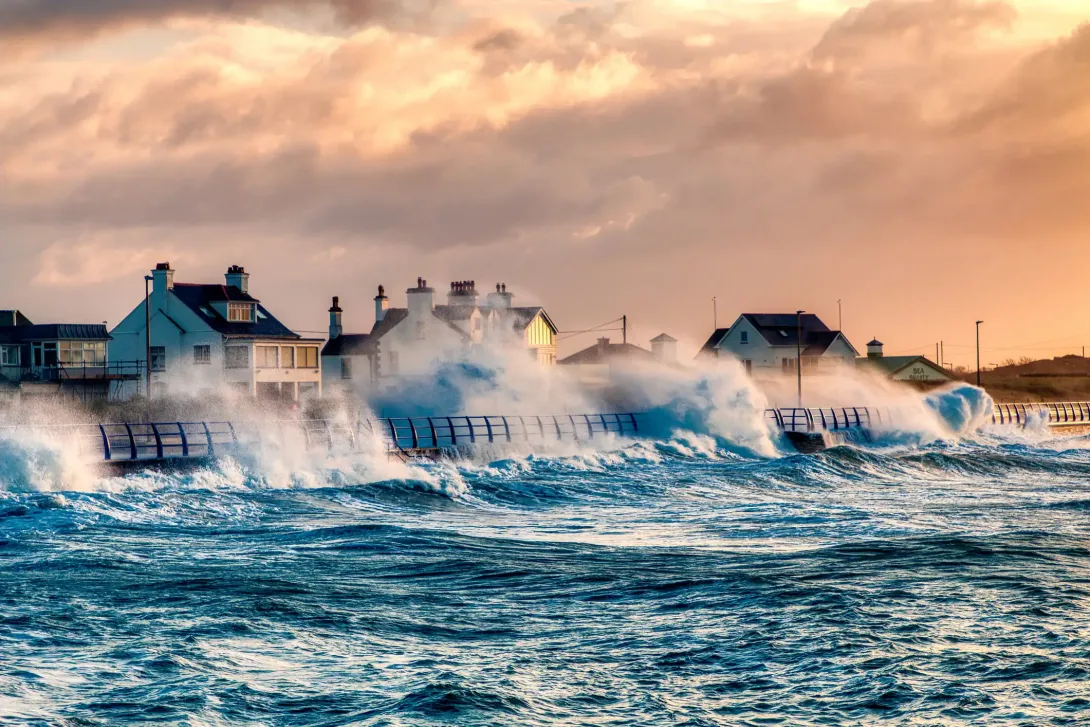
Learn more about global sea level data
Explore the British Oceanographic Data Centre (BODC), to access GLOSS and sea level monitoring data.