

What is ocean noise
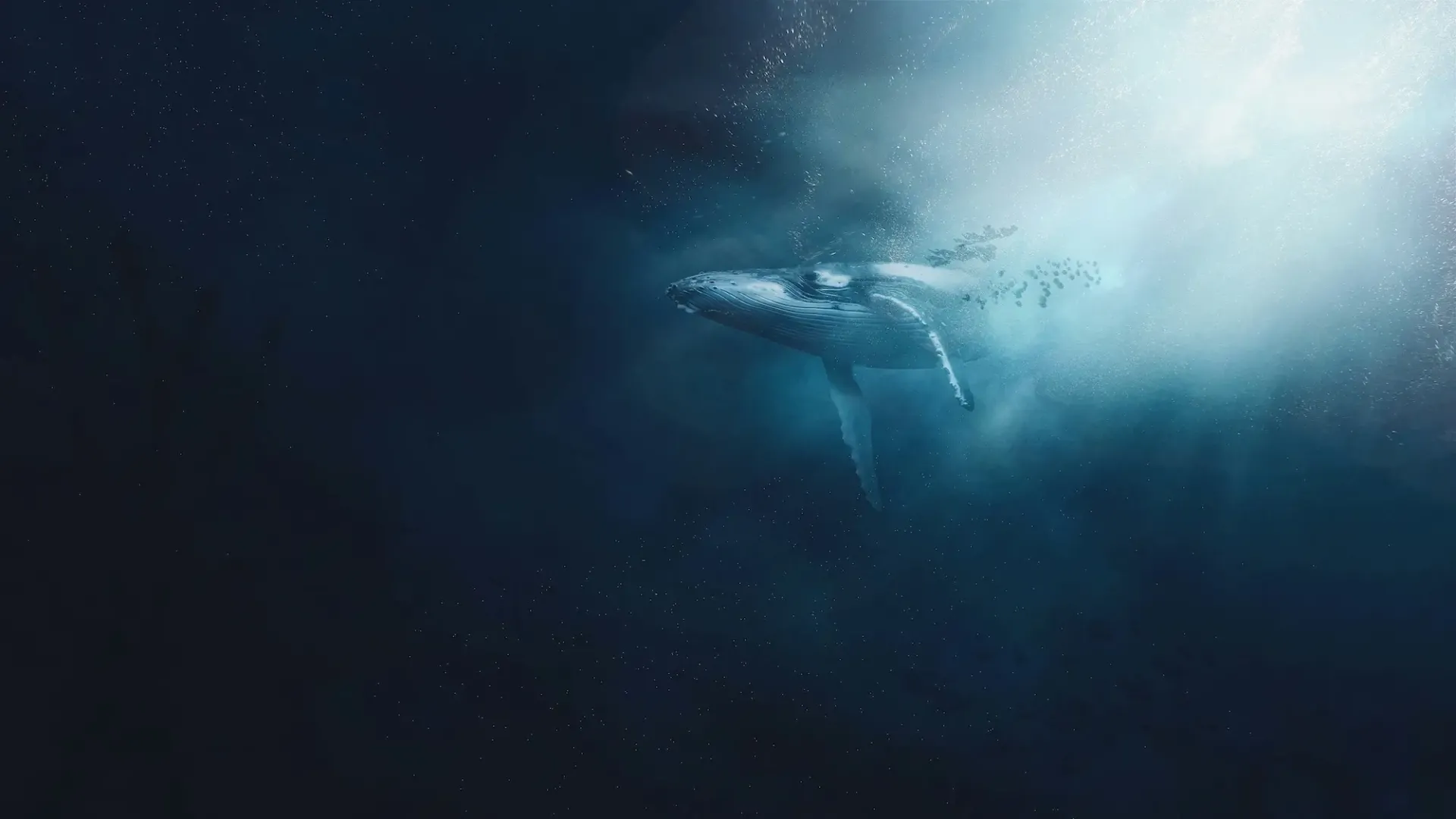
The ocean is far from silent. It resonates with a symphony of sounds: the songs of whales, the rumble of earthquakes, breaking waves, and passing ships.
We study this underwater soundscape to understand ocean dynamics, monitor marine life, and assess the impacts of human activity. By listening to the ocean across frequencies and timescales, we're uncovering how our seas are changing and what that means for ecosystems, climate, and society.
What is the ocean soundscape?
The ocean soundscape consists of natural and human-induced noise travelling inside the water column. Early studies of ocean noise in the 1960s revealed that the ocean is far from silent, but instead filled with a diverse range of sounds originating from ocean and atmospheric dynamics, tectonic movements, marine life, and human activity.
Noisy Oceans: Monitoring Seismic and Acoustic Signals in the Marine Environment
Ocean sounds fall into three main categories:
- Microseisms caused by wind-ocean interactions
- Sounds from volcanic activity and earthquakes
- Landslides and icebergs
- Hydrothermal vents
- Rainfall and breaking waves
- Gas bubbles
- Vocalisations from marine mammals (whales, dolphins, seals)
- Noises generated by other species like crabs and shrimp
- Communication, orientation, and navigation sounds
- Resource extraction (such as underwater mining)
- Coastal and offshore construction (like pipelines and wind turbines)
- Explosions
- Marine and coastal vessel traffic
- Seismic surveys
- Navigation equipment

Why is studying ocean noise important?
Studying noise provides critical information about ocean species and ecosystems, and how they may change in time due to natural processes and climate change.
For marine ecosystems: Many marine species rely on sound for communication, orientation, and navigation. They can be stressed and change behaviour in response to increased noise levels, or may even suffer physical harm from noise.
For ocean physics: Noise analysis helps us understand physical oceanography and ocean dynamics in coastal, pelagic, and deep-sea regions, and provides evidence of climate variability.
For unique fingerprinting: Noise analysis in space and time provides an opportunity for unique fingerprinting of diverse processes, and for understanding how our oceans are evolving from natural and human-induced factors.
Without this research, we'd lose crucial insights into ecosystem health, ocean processes, and the impacts of human activities on marine environments.
How is human activity changing the ocean soundscape?
The ocean soundscape is changing in response to numerous human activities:
Resource extraction and offshore infrastructure development:
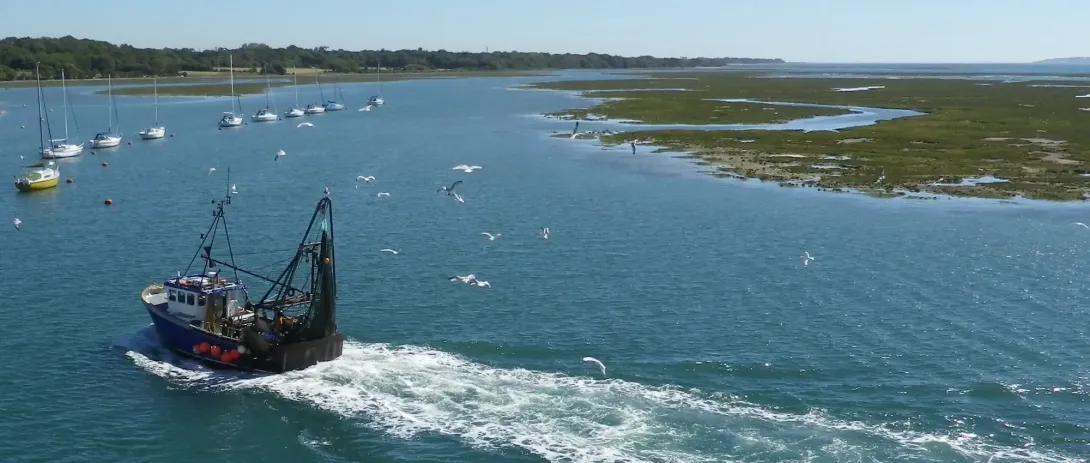
- Fishing, mining, and drilling operations
- Marine infrastructure and construction
- Geophysical exploration and seafloor mapping
- Oil and gas production
Energy generation:
- Tidal and wave energy converters
- Offshore wind farms (both construction and operation)
Storage activities:
- CO₂ sequestration
- Hydrogen storage
Other sources:
- Vessel traffic
- Explosions and nuclear ordnance
Some anthropogenic noise sources are short-duration, such as explosions, whilst others occur over long periods of time, such as vibrations linked to the operation of wind farms.
What are the impacts of human-induced noise on marine life?
Whether short-duration or long-lasting, human-induced noise can cause serious impacts on marine life, particularly marine mammals:
Physical damage: High-intensity sounds can cause physical injury to sensitive hearing organs.
Stress: Chronic exposure to elevated noise levels causes physiological stress.
Behavioural changes: Animals may avoid important habitats, alter migration routes, or change feeding patterns.
Reduced reproductive success: Noise interference with communication can affect mating and parenting behaviours.
Communication masking: Background noise can prevent animals from hearing important signals from conspecifics or their environment.
These impacts highlight why efforts for a sustainable blue economy must prioritise understanding the impact of human-induced noise across the ocean, to define safe noise level and noise duration recommendations, and guide noise mitigation schemes.
What are the broader applications of ocean noise research?
Beyond understanding ecological impacts, noise monitoring has critical applications for society:
Navigation and safety: Acoustic monitoring supports safe vessel navigation in all conditions.
Defence: Vessel detection and underwater surveillance for security purposes.
Marine Protected Areas: Noise monitoring and setting noise limits is key to informing regulations and ensuring their enforcement for Marine Protected Areas (MPAs), detecting encroachment by shipping and other activities.
Climate monitoring: Long-term acoustic records reveal changes in ocean temperature structure, circulation, and ice dynamics related to climate change.
Natural hazard detection: Acoustic signals provide early warning for tsunamis, underwater landslides, and volcanic activity.
What instruments do we use to record ocean noise?
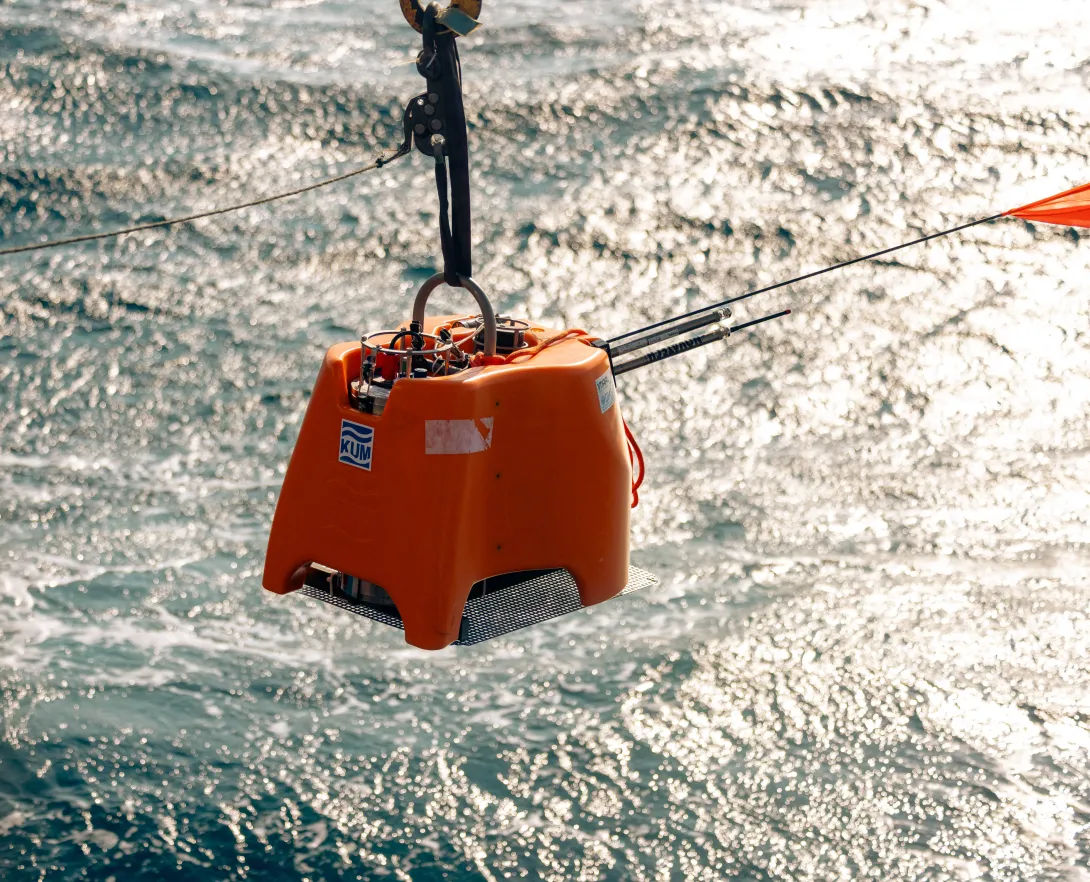
We record noise with a variety of marine sensors, each capturing different aspects of the acoustic environment:
Hydrophones: Record changes in pressure, which includes sound waves travelling through the water column. These capture acoustic signals in the water.
Ocean Bottom Seismometers (OBS) and Ocean Bottom Nodes: House geophones that record seismo-acoustic signals received at the seafloor across three directions, capturing both seismic and acoustic energy.
Distributed Acoustic Sensing (DAS): Captures deformation along seafloor cables caused by vibrations. This emerging technology turns fibre-optic cables into dense arrays of acoustic sensors.
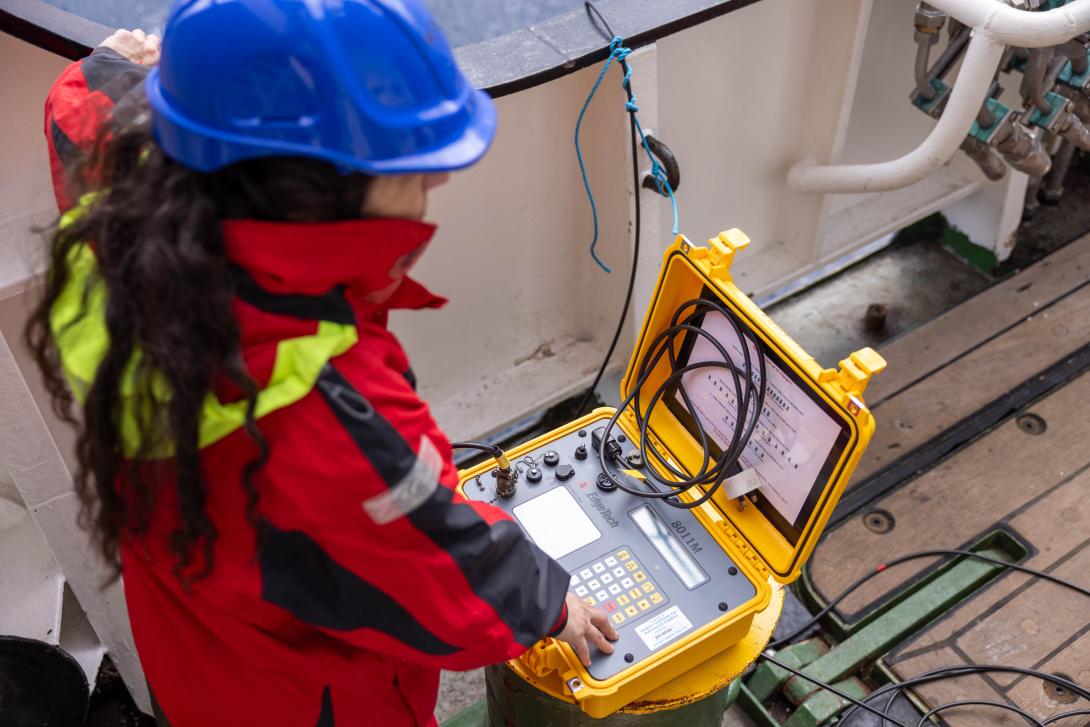
The deployment and recovery of these instruments usually require seagoing expeditions, and the design of such surveys is guided by initial modelling studies to best capture the noise.
What frequency range does our ocean noise research cover?
Our research focuses on ocean noise investigation across a broad frequency range, from tens of millihertz to kilohertz, enabling us to study phenomena at vastly different scales:
Ultra-low frequencies (millihertz): Gravity waves, tsunamis, tides, and large-scale ocean circulation patterns.
Low frequencies (Hz): Microseisms from wind-ocean interactions, earthquakes, volcanic activity, and shipping noise.
Mid frequencies (tens to hundreds of Hz): Marine mammal vocalisations, internal waves, and anthropogenic sources like construction.
High frequencies (kHz): Sounds from smaller marine life (crabs, shrimp), rain, bubbles, and high-resolution acoustic imaging.
This broad frequency coverage allows us to capture the full spectrum of ocean processes and their interactions.
What ocean processes can we study through noise?
- Gravity waves and tsunamis
- Tides and internal waves
- Wind-ocean interaction
- Deep sea conditions
- Natural cycles and indications of climate change
- Detection and monitoring of marine mammals
- Species distribution and behaviour patterns
- Seasonal variations in biological activity
- Shipping noise including encroachment of Marine Protected Areas
- Noise from offshore energy harvesting (tidal turbines and offshore wind farms)
- Impact of construction and industrial activities
- Seismoacoustic properties of the water column and subsurface using ambient noise interferometry (ANI) methods
- Temperature structure of the ocean
- Subsurface geological characterisation

What is distributed acoustic sensing and why is it revolutionary?
Distributed Acoustic Sensing (DAS) is an emerging technology that transforms existing fibre-optic cables into dense arrays of acoustic sensors. Rather than deploying individual instruments, we can monitor sound along entire cable lengths, potentially hundreds of kilometres.
Key advantages:
Spatial coverage: Continuous measurements along the cable, rather than at discrete points.
Cost-effectiveness: Uses existing infrastructure (telecommunications or power cables) rather than requiring dedicated sensor deployments.
Long-term monitoring: Can operate continuously without requiring physical recovery and redeployment.
Multiple applications: Simultaneously captures signals from ocean dynamics, seismic activity, marine life, and human activities.
We're pioneering the use of DAS for oceanography, including work on the Full Ocean Fibre project to understand ocean dynamics and climate change signals.
What key publications has our ocean noise research produced?
These publications demonstrate how we're advancing both the fundamental science of ocean acoustics and the practical applications of acoustic monitoring technologies.
Our ocean noise research has resulted in several significant publications:
Bayrakci, Gaye; Belal, Mohammad  ORCID: https://orcid.org/0000-0001-5175-3158; Clare, Michael A. ORCID: https://orcid.org/0000-0003-1448-3878.
2023
Noisy Oceans: Monitoring Seismic and Acoustic Signals in the Marine Environment.
American Geophysical Union, 288pp.
(Geophysical Monograph Series).
ORCID: https://orcid.org/0000-0001-5175-3158; Clare, Michael A. ORCID: https://orcid.org/0000-0003-1448-3878.
2023
Noisy Oceans: Monitoring Seismic and Acoustic Signals in the Marine Environment.
American Geophysical Union, 288pp.
(Geophysical Monograph Series).
2023
Book
Harmon, Nicholas ORCID: https://orcid.org/0000-0002-0731-768X; Belal, Mohammad ORCID: https://orcid.org/0000-0001-5175-3158; Mangriotis, Maria-Daphne ORCID: https://orcid.org/0000-0002-1765-9149; Spingys, Carl ORCID: https://orcid.org/0000-0001-6220-3047; Rychert, Catherine A. ORCID: https://orcid.org/0000-0001-5071-793X.
2025
Distributed acoustic sensing along a shallow water energy cable.
IEEE Journal of Oceanic Engineering.
1-10.
10.1109/JOE.2024.3523363
2025
Article
Spingys, Carl P.; Garabato, Alberto C. Naveira; Belal, Mohammad ORCID: https://orcid.org/0000-0001-5175-3158.
2024
Optical fibre sensing of turbulent-frequency motions in the oceanic environment.
Scientific Reports, 14 (1).
10.1038/s41598-024-70720-z
2024
Article
Spingys, Carl P.; Naveira Garabato, Alberto C.; Belal, Mohammad ORCID: https://orcid.org/0000-0001-5175-3158.
2024
Distributed optical fibre sensing for high space‐time resolution ocean velocity observations: A case study From a macrotidal channel.
Earth and Space Science, 11 (5).
10.1029/2023EA003315
2024
Article
How have we engaged with the public about ocean noise research?

What are the practical implications for marine management?
Ocean noise research provides essential information for sustainable ocean management:
Regulatory frameworks: Data on noise levels and impacts inform development of noise regulations and guidelines for marine industries.
Marine Protected Areas: Acoustic monitoring ensures MPAs are genuinely protecting marine life from noise pollution, detecting unauthorised vessel traffic and industrial activities.
Environmental impact assessments: Baseline noise measurements and impact predictions guide decisions about offshore development projects.
Mitigation strategies: Understanding noise propagation and impacts enables design of effective mitigation measures, from seasonal restrictions to technological solutions.
Monitoring compliance: Ongoing acoustic monitoring verifies that industries are operating within permitted noise levels.
This evidence-based approach supports a sustainable blue economy that balances economic development with ecosystem protection.
How does ocean noise research support defence and security?
Acoustic monitoring has important applications for maritime security:
Vessel detection: Passive acoustic monitoring can detect and classify vessels, including submarines, without active sonar that might disturb marine life.
Navigation safety: Understanding the acoustic environment improves sonar performance and helps vessels navigate safely.
Underwater surveillance: Monitoring networks can provide awareness of activity in sensitive maritime zones.
Treaty verification: Acoustic networks can detect underwater explosions, supporting nuclear test ban treaty monitoring.
These applications demonstrate how fundamental research in ocean acoustics serves both scientific and societal needs.
What future developments can we expect in ocean noise research?
The field of ocean acoustics is rapidly evolving:
Expanded DAS networks: Growing use of existing cable infrastructure for continuous, large-scale ocean monitoring.
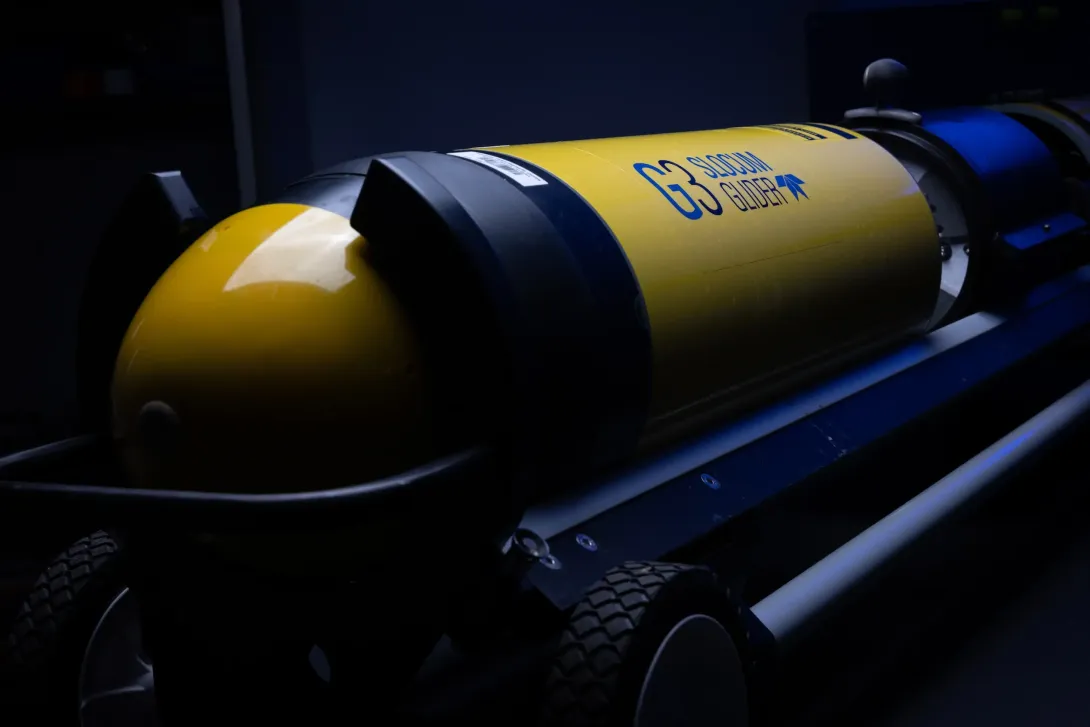
Integrated monitoring: Combining acoustic data with other observations (satellite, moorings, autonomous vehicles) for comprehensive ocean state assessment.
Machine learning: AI techniques for automated detection and classification of acoustic signals, from whale calls to earthquakes.
Real-time processing: Moving from post-recovery data analysis to near-real-time acoustic intelligence for rapid response to events.
Climate applications: Longer time series revealing climate change fingerprints in ocean acoustic properties.
As technologies advance and datasets grow, ocean acoustics will become increasingly central to understanding and managing our changing ocean.
Learn more
Stay up to date with NOC’s research as we develop new tools and knowledge to tackle ocean pollution and protect marine life.