
How We Reach the Ocean's Greatest Depths
Exploring the deep ocean requires special tools. Some of our instrument platforms are towed or lowered from ships on cables, sending back data in real time. Others are autonomous, exploring on their own for weeks or even months at a time. Among all these technologies, Remotely Operated Vehicles (ROVs) are some of the most versatile and sophisticated tools we have for deep-ocean research.
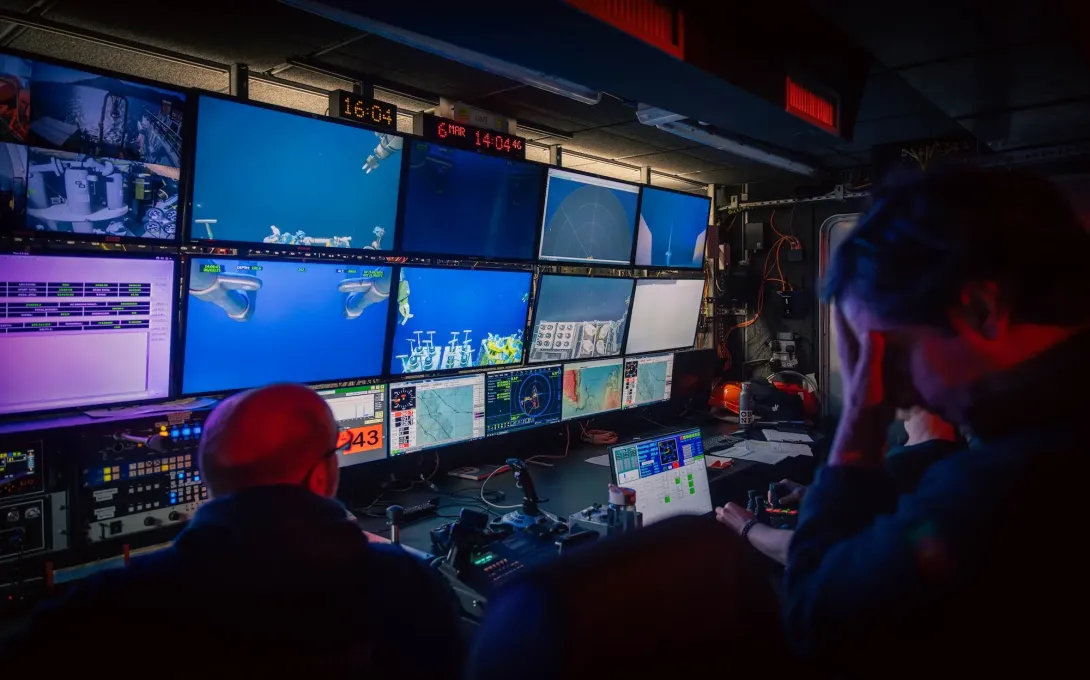
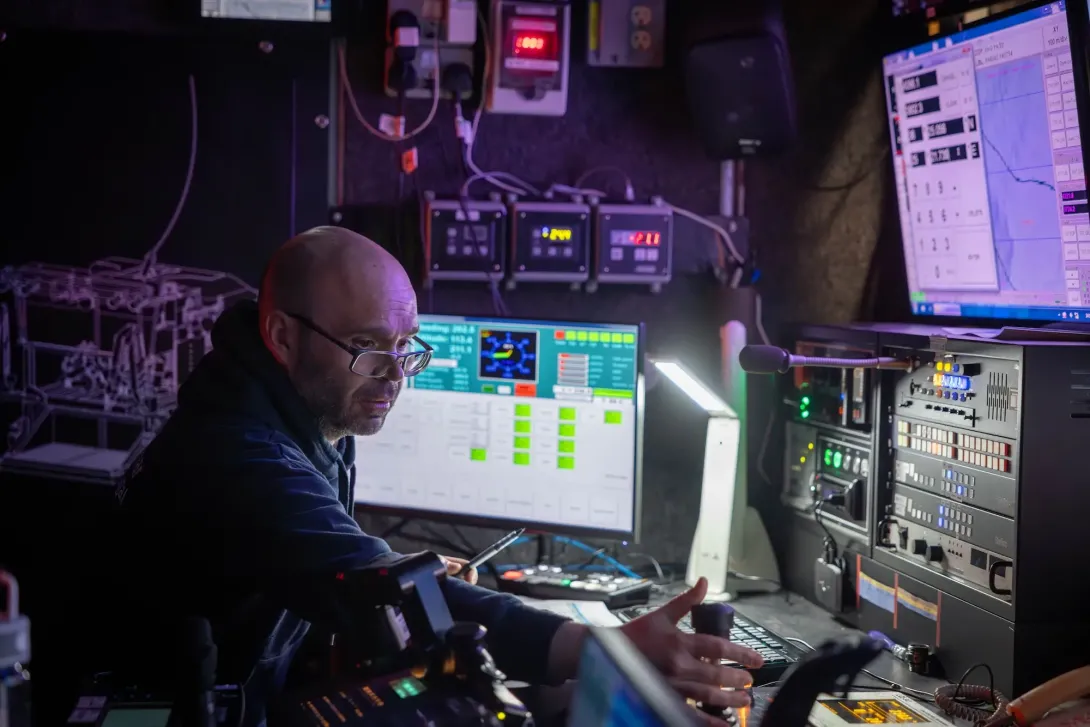
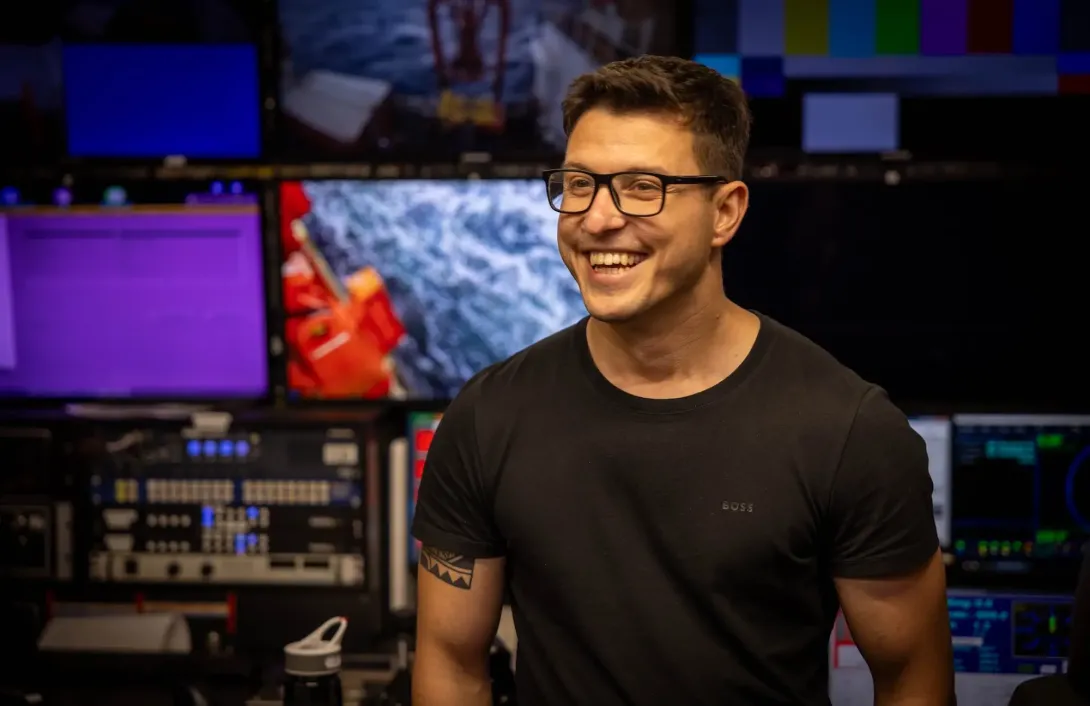
A Remotely Operated Vehicle, or ROV, is a tethered underwater robot. It’s unmanned, highly maneuverable, and controlled by a team of pilots on a ship at the surface. The ROV is connected to the ship by a long cable, or umbilical, which acts as its lifeline, carrying power, video, and data back and forth.
Think of it as giving the operator eyes and hands on the seafloor. It allows us to carry out delicate tasks at depths where the crushing pressure makes it impossible for human divers to survive.
What Makes ROVs So Capable?
ROVs are packed with complex technology, including powerful cameras and lights, thrusters for moving around, and robotic manipulator arms for collecting samples or carrying out experiments. They come in all shapes and sizes, from small vehicles used for inspections to large, work-class systems that can operate in the most extreme environments on Earth.
NOC's World-Class ROV Fleet
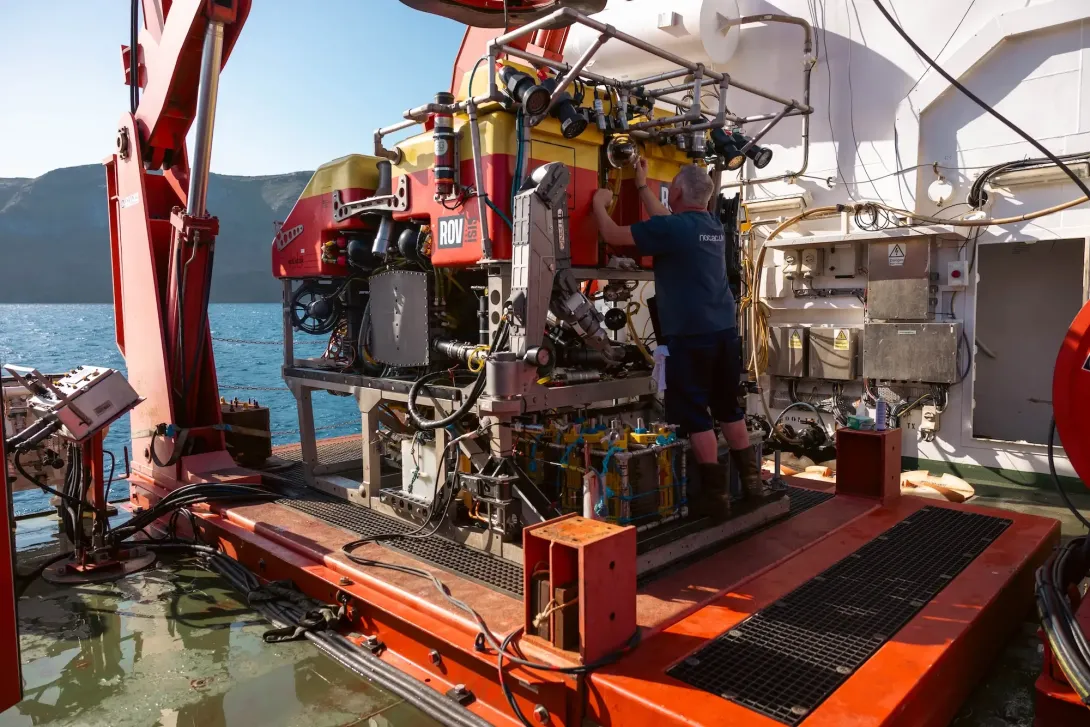
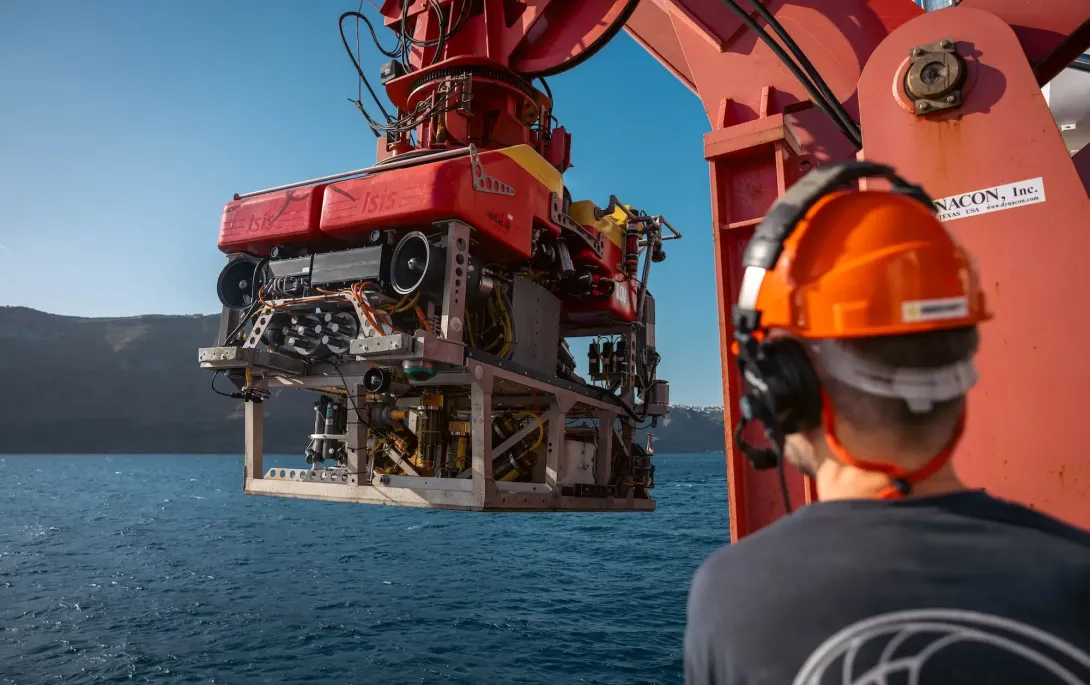
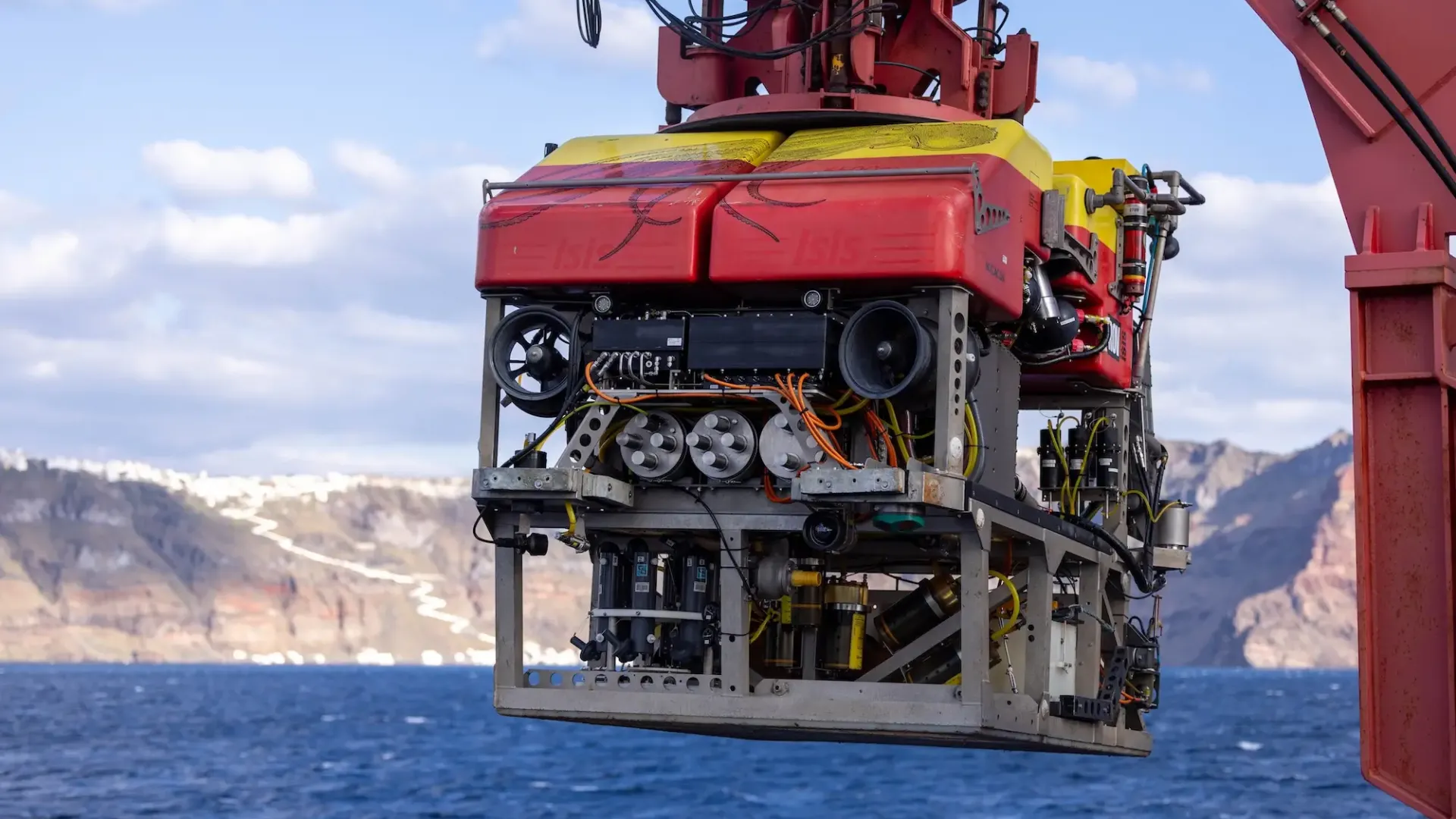
Isis is the UK's flagship deep-diving ROV for science. It's capable of operating at depths of up to 6,500 metres (four miles), which allows it to reach into the hadal zone, the deepest part of the ocean where very few vehicles can go. This remarkable machine can collect samples, drill into the seabed, and capture stunning high-definition video in some of the most remote and hostile environments on our planet.
The complete Isis system includes a containerised control room, a dedicated workshop, and a purpose-built launch and recovery system that can safely handle the 4,000kg vehicle.
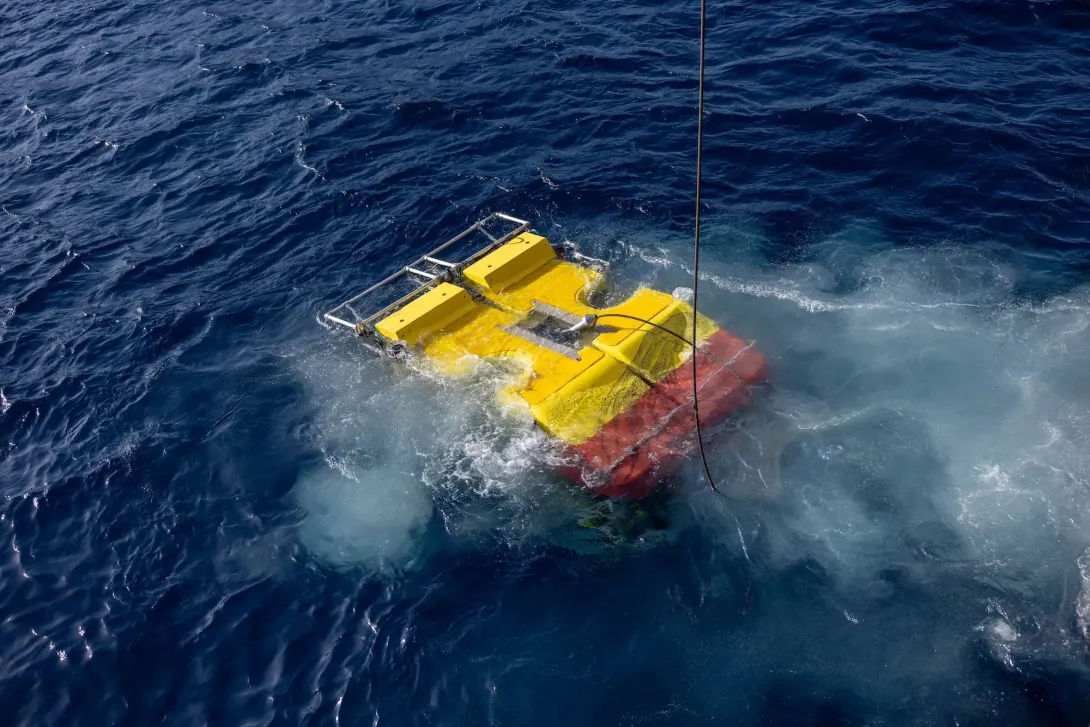
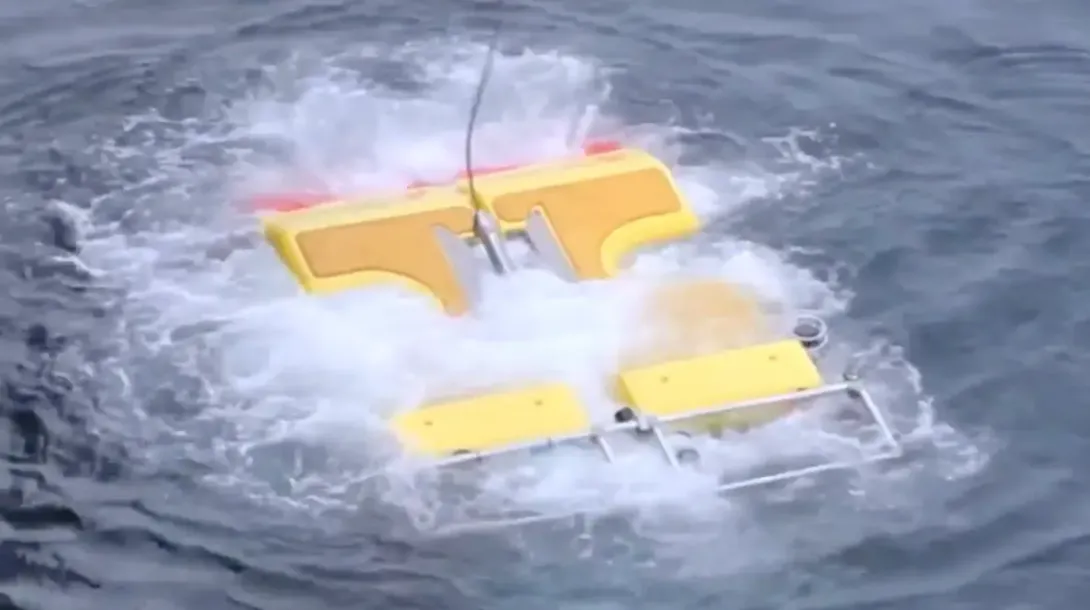
The Hydraulic Benthic Interactive Sampler, or HyBIS, is another of our robotic vehicles, capable of reaching depths of 6,000 metres. Unlike a conventional ROV, HyBIS is not neutrally buoyant. Instead, its depth is controlled by a fibre optic cable from the ship.
This unique design makes HyBIS the heavy-lifter of our fleet. It can deploy and recover net loads of up to 700kg, which is several times the payload of a typical ROV, making it perfect for missions that require heavy sampling equipment.
What capabilities do ROVs provide that other systems cannot, and how do they enhance scientific observation?
ROVs allow us to carry out complex surveys and precision sample collection at extreme depths. While manned submersibles can take people to these depths, ROVs are a more compact, practical, and safer alternative.
With their cameras (eyes) and manipulators (hands), ROVs can recover small, delicate objects with a precision that no other system can match. Scientists get to see the undisturbed environment before they selectively collect a sample, which provides crucial context for understanding deep-sea habitats. They can even conduct complex experiments on the seafloor, which is essential for studying organisms that are adapted to high pressure and low temperatures.
How do ROVs Advance Multiple Research Disciplines?
The deep ocean covers more than half of our planet, yet it remains less explored than the surface of Mars. ROVs give us the combination of depth capability, precision control, and real-time observation that is essential for conducting rigorous science in this extreme environment.
ROV capabilities serve a huge range of scientific needs, from marine biology and geology to chemistry and climate science. As ocean research pushes into deeper waters and tackles more complex questions, our ROVs will continue to evolve, with advances in sensors, cameras, and control systems keeping them at the forefront of exploration.
The deep ocean holds the answers to some of the most fundamental questions about life on our planet. ROVs like Isis and HyBIS are the keys that are unlocking these mysteries, allowing us to see, touch, and sample Earth's final frontier.
Where has ROV Isis Explored?
ROV Isis has worked all over the world, from the Arctic to the Antarctic, and throughout the Pacific, Atlantic, and Mediterranean. It has completed over 500 dives to survey everything from hydrothermal vents and submarine canyons to cold-water coral reefs and underwater volcanoes.
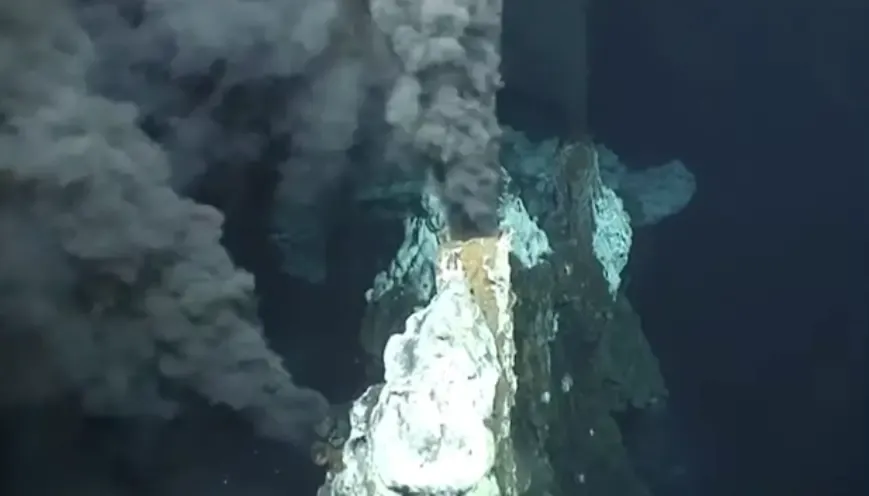
During the CHESSO project, Isis discovered the southernmost hydrothermal vents in Antarctica, an extraordinary finding that revealed life thriving in one of the planet's most remote environments. It was during these expeditions that Isis discovered and sampled the 'Hoff crab', a new species with a hairy chest that was named after the actor David Hasselhoff.
As part of the SMARTEX project, researchers used Isis to carry out some incredible detective work. They revisited a deep-sea mining track that had been created in 1979 at a depth of 4,700 metres in the Pacific Ocean. This unprecedented study allowed them to see the long-term impacts of mining, revealing that even after 44 years, the tracks were still highly visible and the recovery of marine life was incomplete. This research provides critical evidence for making informed decisions about deep-sea mining.
The STEMM-CCS project used Isis to carry out a large experiment in the North Sea where CO₂ was released under the seafloor. The ROV was used to test the best ways to monitor potential future Carbon Capture and Storage sites, research that is crucial for our efforts to tackle climate change.
During the CHESSO project, Isis discovered the southernmost hydrothermal vents in Antarctica, an extraordinary finding that revealed life thriving in one of the planet's most remote environments. It was during these expeditions that Isis discovered and sampled the 'Hoff crab', a new species with a hairy chest that was named after the actor David Hasselhoff.
As part of the SMARTEX project, researchers used Isis to carry out some incredible detective work. They revisited a deep-sea mining track that had been created in 1979 at a depth of 4,700 metres in the Pacific Ocean. This unprecedented study allowed them to see the long-term impacts of mining, revealing that even after 44 years, the tracks were still highly visible and the recovery of marine life was incomplete. This research provides critical evidence for making informed decisions about deep-sea mining.
The STEMM-CCS project used Isis to carry out a large experiment in the North Sea where CO₂ was released under the seafloor. The ROV was used to test the best ways to monitor potential future Carbon Capture and Storage sites, research that is crucial for our efforts to tackle climate change.
What Impressive Track Record has HyBIS Established?
HyBIS has completed over 100 dives in it's first four years alone.
Recorded over 450 hours of HD video.
Carried out complex sampling missions at over 40 different sites.
Can HyBIS Do More Than Sampling?
Yes. Beyond its scientific sampling, HyBIS has also carried out deep-sea rescue missions, recovering two different seabed landers that contained scientific equipment worth over £300,000. This demonstrates the vehicle's versatility and its value in salvaging expensive research gear from the deep ocean.
Where Can People Experience Deep-Ocean Exploration?
We love to share the amazing footage our ROVs capture. Video and photographs from Isis are regularly featured at our open days, at public events on board UK research ships, and in exhibitions around the UK. These stunning visuals bring the alien beauty and scientific importance of the deep ocean to audiences who will never get to visit these depths themselves. Check out our video archive below:
In Action: ROV Isis Gallery
In 2025, scientists from NOC led an international team on a groundbreaking expedition in and around Santorini, Greece, to enhance our ability to forecast and understand the hazards posed by Earth’s most explosive volcanic eruptions. ROV Isis was utilised to study how circulating fluids interact with magma deep beneath the Earth's surface.