
Why is marine renewable energy important?
Alongside wind, harnessing the power of tides and waves can diversify our clean energy mix. This helps reduce reliance on a single energy source, making energy supply more reliable and resilient in the face of climate change and growing demand.
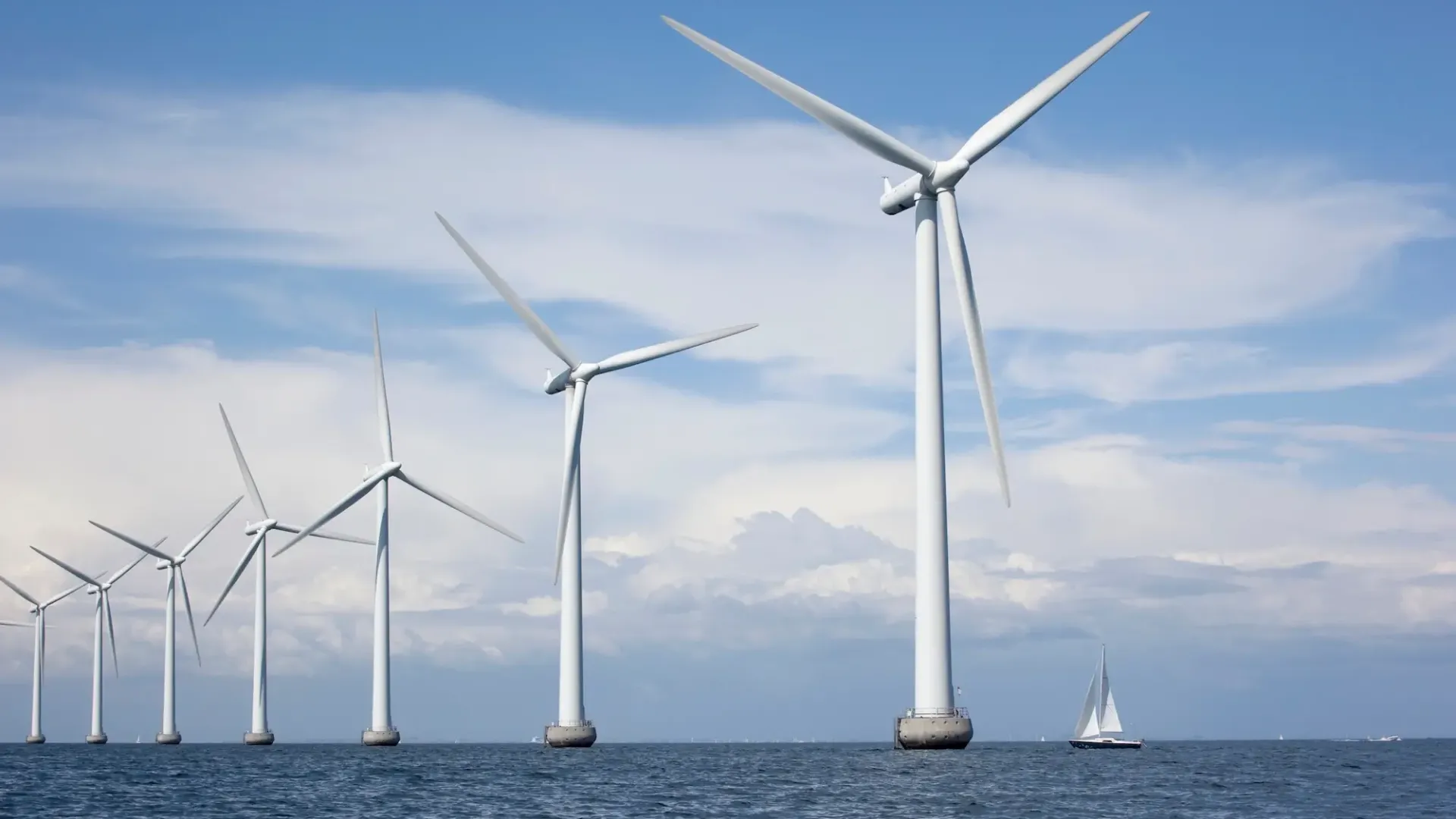
As the world moves towards net-zero, oceans offer a vast, untapped source of clean, renewable energy. Globally, about 30% of electricity now comes from renewable sources, mainly solar, hydropower and wind. In the UK, wind power is already the largest source of renewable electricity, providing about 30% of total electricity, with a national goal of reaching 50 GW of offshore wind capacity by 2030, including 5 GW from floating turbines (British Energy Security Strategy 2022).
How do marine renewables affect the ocean?
Changing how deep, nutrient-rich water mixes with surface waters — which affects phytoplankton, fish, seabirds and marine mammals.
Installation and operation can affect marine life and seabed ecosystems.
Human-made structures like turbines and platforms can become habitats for marine species, potentially boosting local biodiversity but also changing natural patterns.
What research is NOC doing on energy transition?
While marine renewable energy has clear climate benefits, its impact on ocean systems must be carefully understood.
At the National Oceanography Centre, we use observations, models and advanced technology to understand how offshore renewable energy interacts with the ocean environment and climate.
Our goals are to:
- Find the best locations for devices, maximising energy output while minimising ecological impacts.
- Support climate resilience, providing evidence to design and operate wind, tidal and wave systems that can withstand future extreme weather and changing ocean conditions.
- Inform policy and industry, ensuring decision-makers have robust science for sustainable development.
- Understand the roll-out of renewable energy in the context of ongoing climate change and accelerated sea-level rise. With renewable energy infrastructure being built alongside existing oil and gas platforms in busy sea-space alongside the need to maintain fishing and shipping, NOC research aims to investigate the cumulative effects of renewable energy in this context.
Projects
NOC are involved with several research projects in this area: Ecological Consequences of Offshore Wind (ECOWind) research programme (https://ecowind.uk/):
Publications
De Dominicis, Michela  ORCID: https://orcid.org/0000-0003-0544-7939; Wolf, Judith ORCID: https://orcid.org/0000-0003-4129-8221; O'Hara Murray, Rory.
2018
Comparative effects of climate change and tidal stream energy extraction in a shelf sea.
Journal of Geophysical Research: Oceans, 123 (7).
5041-5067.
10.1029/2018JC013832
ORCID: https://orcid.org/0000-0003-0544-7939; Wolf, Judith ORCID: https://orcid.org/0000-0003-4129-8221; O'Hara Murray, Rory.
2018
Comparative effects of climate change and tidal stream energy extraction in a shelf sea.
Journal of Geophysical Research: Oceans, 123 (7).
5041-5067.
10.1029/2018JC013832
2018
Article
De Dominicis, M. ORCID: https://orcid.org/0000-0003-0544-7939; O'Hara Murray, R.; Wolf, J. ORCID: https://orcid.org/0000-0003-4129-8221.
2017
Multi-scale ocean response to a large tidal stream turbine array.
Renewable Energy, 114 (B).
1160-1179.
10.1016/j.renene.2017.07.058
2017
Article
Bell, Paul ORCID: https://orcid.org/0000-0002-4673-4822.
2014
Marine renewable energy.
Science in Parliament, 71 (2).
34-36.
2014
Article
Podcasts
NOC’s award-winning podcast, Into the Blue, takes listeners on a journey to discover some of the biggest topics and challenges the ocean faces today and learn from some of the leaders in ocean research on how they plan to overcome them.