

Sensors for the Marine Carbonate System
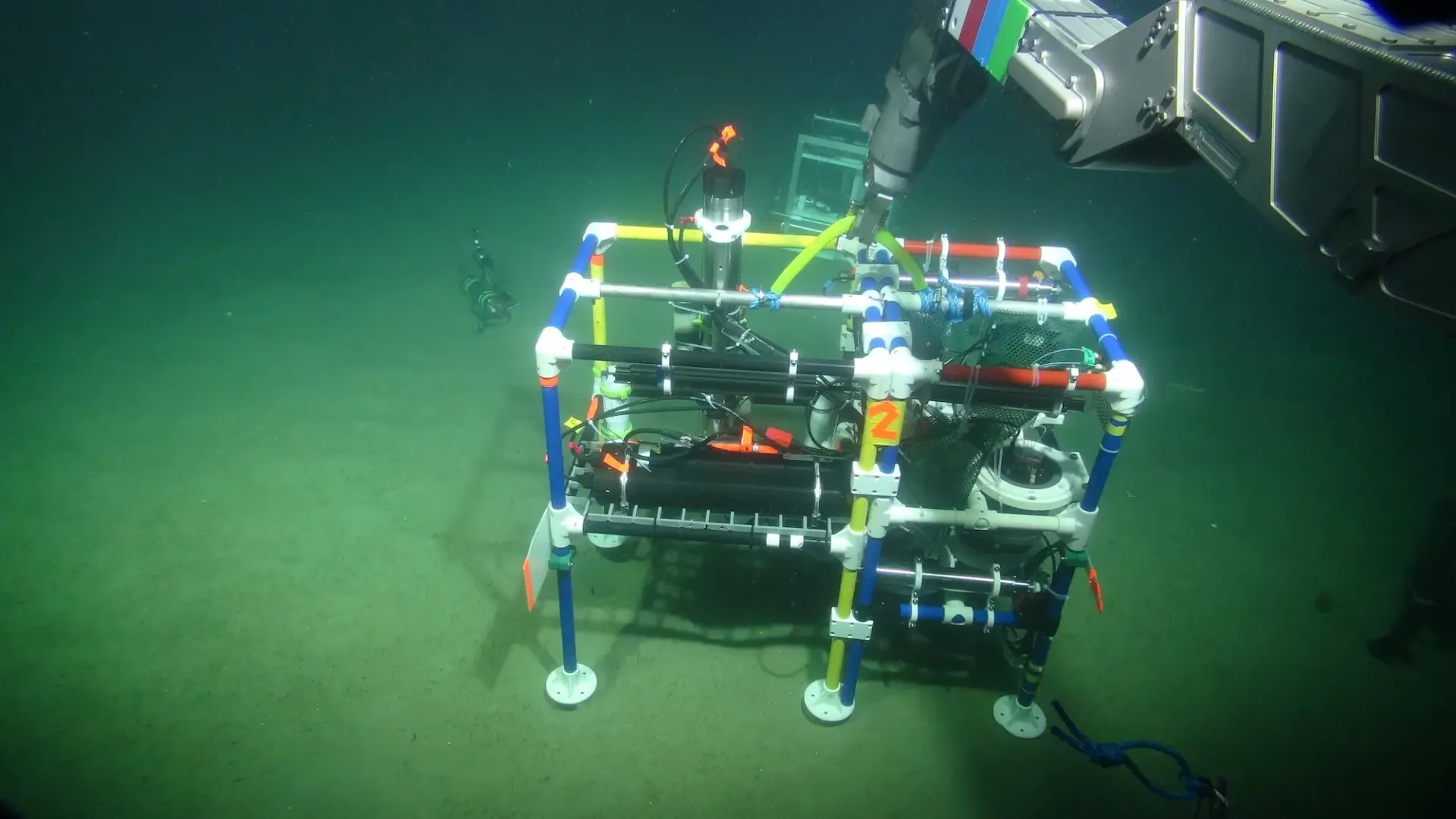
We are developing cutting-edge sensors to characterise the marine carbonate system with high-precision, high-accuracy instrumentation capable of long-term deployments in full ocean depths.
We have developed sensors for pH, total alkalinity (TA), and dissolved inorganic carbon (DIC), based on lab-on-chip technology.
pH Sensor
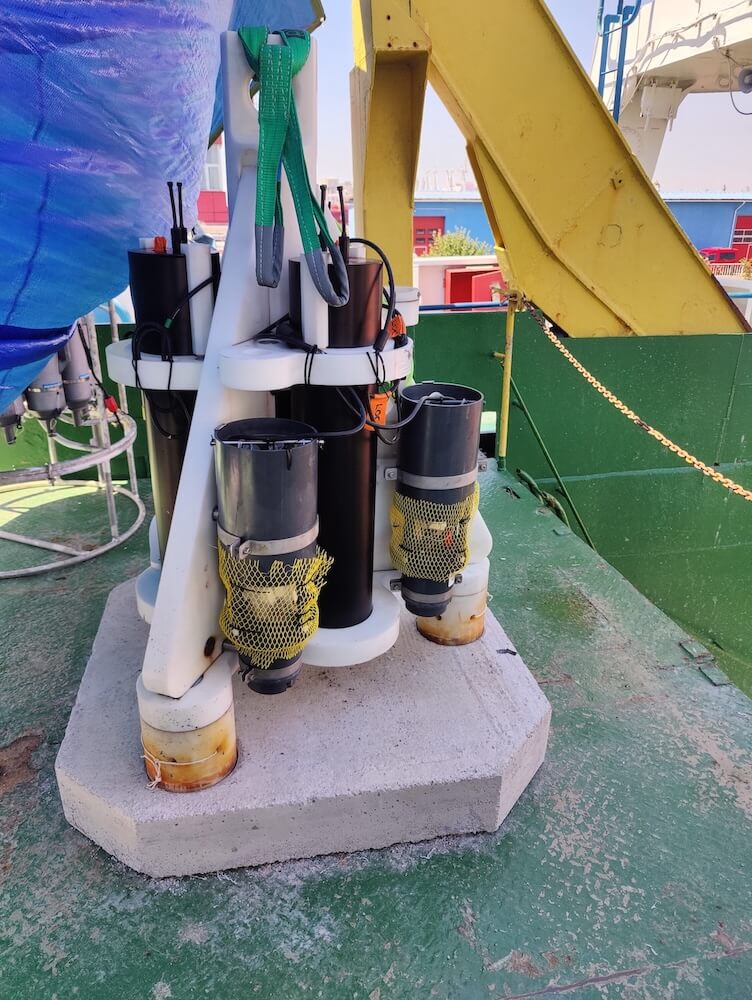
NOC has developed an integrated microfluidic lab-on-chip sensor for autonomous high-quality pH measurements onboard autonomous platforms. It utilises the standard spectrophotometric analytical method using meta-Cresol purple offering high accuracy (<0.005) and precision (<0.001) measurements for ocean acidification and ocean carbon cycle research.
It can be deployed for periods of longer than a year on autonomous platforms measuring at a maximum frequency of <6 measurements per hour. It has low power consumption and can be powered by either on-board batteries or an external power source. High performance electronics and communication systems allow on-board data processing and output of temperature and salinity corrected pH measurements. Pressure tolerant components allow deployments at a depth of 6,000 metres.
The pH sensor has been deployed around the world, including for coral reef studies, CCS storage site monitoring, long term pH monitoring in Germany, and on autonomous vehicles.
Current Specifications
Sample rate: 8 minutes
Calibration method: Self referencing
Precision: 0.002 pH units
Accuracy: 0.005 pH units
Sample volume: 400 µL per measurement
Deployment depth: to 6000 m
Voltage range: 10 V to 16 V
Power consumption: 1.8 W
Current draw (12 V): 155 mA average, 385 mA maximum
Output interface: RS232, USB
Connector type: SubConn MCIL8M
Dimensions: 17 cm long, 15 cm diameter (without reagent housing) 56 cm high, 20 cm diameter (sensor with reagent housing)
Weight in air: 3.6 kg (without reagent housing) 6 kg (sensor with reagent housing)
Weight in water: 0.85 kg
More Information
Hammermeister, Emily M.  ORCID: https://orcid.org/0000-0002-1739-761X; Papadimitriou, Stathys ORCID: https://orcid.org/0000-0001-8540-1169; Arundell, Martin; Ludgate, Jake; Schaap, Allison ORCID: https://orcid.org/0000-0001-5391-0516; Mowlem, Matthew C.; Fowell, Sara E. ORCID: https://orcid.org/0000-0002-9835-4725; Chaney, Edward; Loucaides, Socratis ORCID: https://orcid.org/0000-0001-5285-660X.
2025
New capability in autonomous ocean carbon observations using the Autosub Long-Range AUV equipped with novel pH and total alkalinity sensors.
Environmental Science & Technology, 59 (14).
7129-7144.
10.1021/acs.est.4c10139
ORCID: https://orcid.org/0000-0002-1739-761X; Papadimitriou, Stathys ORCID: https://orcid.org/0000-0001-8540-1169; Arundell, Martin; Ludgate, Jake; Schaap, Allison ORCID: https://orcid.org/0000-0001-5391-0516; Mowlem, Matthew C.; Fowell, Sara E. ORCID: https://orcid.org/0000-0002-9835-4725; Chaney, Edward; Loucaides, Socratis ORCID: https://orcid.org/0000-0001-5285-660X.
2025
New capability in autonomous ocean carbon observations using the Autosub Long-Range AUV equipped with novel pH and total alkalinity sensors.
Environmental Science & Technology, 59 (14).
7129-7144.
10.1021/acs.est.4c10139
2025
Article
Cryer, Sarah E.; Evans, Claire ORCID: https://orcid.org/0000-0003-0569-7057; Fowell, Sara E. ORCID: https://orcid.org/0000-0002-9835-4725; Andrews, Gilbert; Brown, Peter ORCID: https://orcid.org/0000-0002-1152-1114; Carvalho, Filipa ORCID: https://orcid.org/0000-0002-8355-4329; Degallerie, Diana; Ludgate, Jake; Rosado, Samir; Sanders, Richard ORCID: https://orcid.org/0000-0002-6884-7131; Strong, James A. ORCID: https://orcid.org/0000-0001-8603-097X; Theophille, Derrick; Young, Arlene; Loucaides, Socratis.
2023
Characterizing reef net metabolism via the diel co‐variation of pH and dissolved oxygen From high resolution in situ sensors.
Global Biogeochemical Cycles, 37 (9).
10.1029/2022GB007577
2023
Article
Yin, Tianya; Papadimitriou, Stathys; Rérolle, Victoire M.C.; Arundell, Martin; Cardwell, Christopher L. ORCID: https://orcid.org/0000-0003-1305-4174; Walk, John; Palmer, Martin R.; Fowell, Sara E. ORCID: https://orcid.org/0000-0002-9835-4725; Schaap, Allison ORCID: https://orcid.org/0000-0001-5391-0516; Mowlem, Matthew C.; Loucaides, Socratis.
2021
A novel lab-on-chip spectrophotometric pH sensor for autonomous in situ seawater measurements to 6000 m depth on stationary and moving observing platforms.
Environmental Science & Technology, 55 (21).
14968-14978.
10.1021/acs.est.1c03517
2021
Article
Schaap, Allison ORCID: https://orcid.org/0000-0001-5391-0516; Koopmans, Dirk; Holtappels, Moritz; Dewar, Marius; Arundell, Martin; Papadimitriou, Stathys; Hanz, Rudolf ORCID: https://orcid.org/0000-0003-2123-1599; Monk, Samuel; Mowlem, Matthew; Loucaides, Socratis.
2021
Quantification of a subsea CO2 release with lab-on-chip sensors measuring benthic gradients.
International Journal of Greenhouse Gas Control, 110, 103427.
10.1016/j.ijggc.2021.103427
2021
Article
Monk, Samuel A.; Schaap, Allison ORCID: https://orcid.org/0000-0001-5391-0516; Hanz, Rudolf ORCID: https://orcid.org/0000-0003-2123-1599; Borisov, Sergey M.; Loucaides, Socratis; Arundell, Martin; Papadimitriou, Stathys; Walk, John; Tong, Daisy; Wyatt, James; Mowlem, Matthew.
2021
Detecting and mapping a CO2 plume with novel autonomous pH sensors on an underwater vehicle.
International Journal of Greenhouse Gas Control, 112, 103477.
10.1016/j.ijggc.2021.103477
2021
Article
Total Alkalinity Sensor
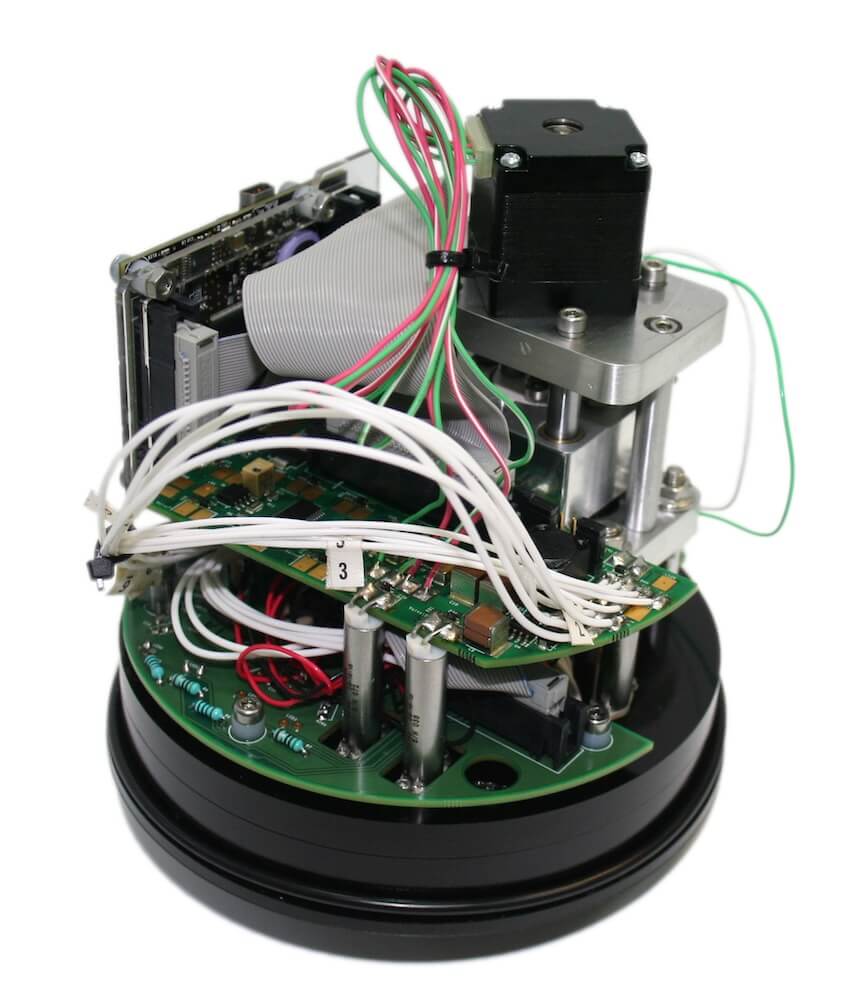
This sensor uses lab-on-a-chip technology to sample seawater and perform single-point open-cell titration with an optical measurement. It can carry multiple calibration materials on board, allowing for routine recalibration and quality checks in the field. The sensor has been characterized in the laboratory and in a pressure testing facility to 600 bar (equivalent to 6 km depth) and deployed in estuaries and coastal environments, ship’s underway systems, landers, moorings, and on remote-operated and autonomous underwater vehicles. The sensor has a field-demonstrated precision and accuracy regularly better than 5 μmol kg–1 and a sample time of ~10 minutes.
Current Specifications
Sample rate: 10 minutes
Calibration method: Self-calibrating to on-board reference materials in the field
Precision: <5 umol/kg
Accuracy: <5 umol/kg
Sample volume: 3 mL per measurement
Deployment depth: to 6000 m
Voltage range: 10 V to 16 V
Power consumption: 1.8 W
Current draw (12 V): 155 mA average, 385 mA maximum
Output interface: RS232,USB
Connector type: SubConn MCIL8M
Dimensions: 17 cm long, 15 cm diameter (without reagent housing) 56 cm high, 20 cm diameter (sensor with reagent housing)
Weight in air: 3.6 kg (without reagent housing) 6 kg (sensor with reagent housing)
Weight in water: 0.85 kg
More Information
Schaap, Allison ORCID: https://orcid.org/0000-0001-5391-0516; Papadimitriou, Stathys; Mawji, Edward; Walk, John; Hammermeister, Emily ORCID: https://orcid.org/0000-0002-1739-761X; Mowlem, Matthew; Loucaides, Socratis ORCID: https://orcid.org/0000-0001-5285-660X.
2025
Autonomous sensor for in situ measurements of total alkalinity in the ocean.
ACS Sensors, 10 (2).
795-803.
10.1021/acssensors.4c02349
2025
Article
Schaap, Allison ORCID: https://orcid.org/0000-0001-5391-0516; Koopmans, Dirk; Holtappels, Moritz; Dewar, Marius; Arundell, Martin; Papadimitriou, Stathys; Hanz, Rudolf ORCID: https://orcid.org/0000-0003-2123-1599; Monk, Samuel; Mowlem, Matthew; Loucaides, Socratis.
2021
Quantification of a subsea CO2 release with lab-on-chip sensors measuring benthic gradients.
International Journal of Greenhouse Gas Control, 110, 103427.
10.1016/j.ijggc.2021.103427
2021
Article
Monk, Samuel A.; Schaap, Allison ORCID: https://orcid.org/0000-0001-5391-0516; Hanz, Rudolf ORCID: https://orcid.org/0000-0003-2123-1599; Borisov, Sergey M.; Loucaides, Socratis; Arundell, Martin; Papadimitriou, Stathys; Walk, John; Tong, Daisy; Wyatt, James; Mowlem, Matthew.
2021
Detecting and mapping a CO2 plume with novel autonomous pH sensors on an underwater vehicle.
International Journal of Greenhouse Gas Control, 112, 103477.
10.1016/j.ijggc.2021.103477
2021
Article
Dissolved Inorganic Carbon Sensor
The DIC sensor uses lab-on-a-chip technology to sample seawater and perform a conductometric measurement of DIC. The sample is acidified to convert all the DIC content into dissolved gaseous carbon dioxide (CO2), which is then pumped through a unit containing a gas-permeable membrane where the CO2 diffuses through to an acceptor solution on the other side. The resulting conductivity change of the acceptor solution provides an indirect measurement of DIC content within the sample.
The sensor has been characterized in the laboratory and in a pressure testing facility to 600 bar (equivalent to 6 km depth) and deployed in estuaries, ship’s underway systems, and on remote-operated vehicles.
Current Specifications
Sample rate: 10 minutes
Precision and accuracy: in development
Calibration method: Self-calibrating to on-board reference materials in the field
Deployment depth: to 6000 m
Power, size, and weight are similar to the pH and TA sensors.