
After months of planning we have set sail on our latest expedition on the RRS James Cook to continue our long-term study of ecological change at abyssal depths of the north east Atlantic Ocean and maintain ocean observations throughout the water column.
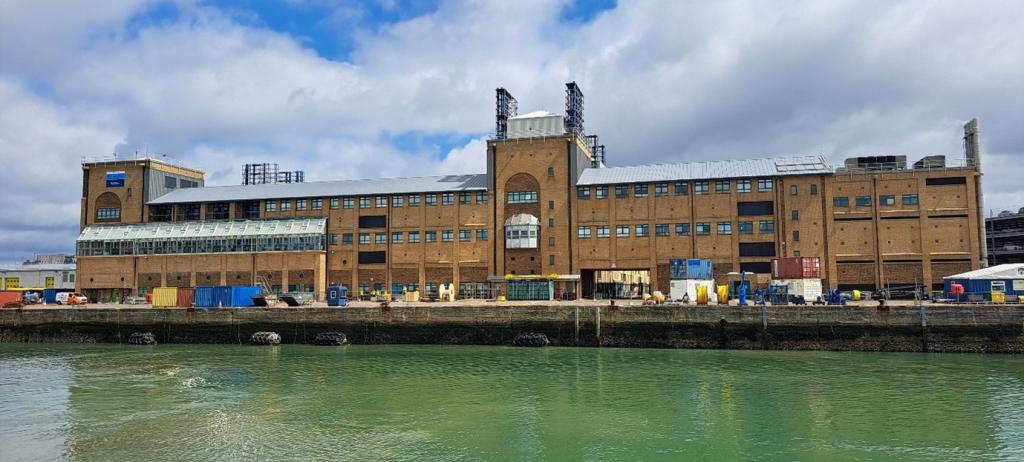
The view of the NOC offices from the RRS James Cook as we departed.
This year marks the 40th anniversary of science at the Porcupine Abyssal Plain Sustained Observatory (PAP-SO). Our international team on board are reflecting on the importance of long-term observations and looking to how we can maintain and enhance the science in future.
Joining the National Oceanography Centre team are scientists and engineers from the Horizon Europe ‘GEORGE’ project (Next Generation Multiplatform Ocean Observing Technologies for Research). GEORGE will demonstrate novel technologies for ocean observations alongside the established methods we currently use at PAP-SO. We will also be deploying sensors to listen to the soundscape of the ocean.
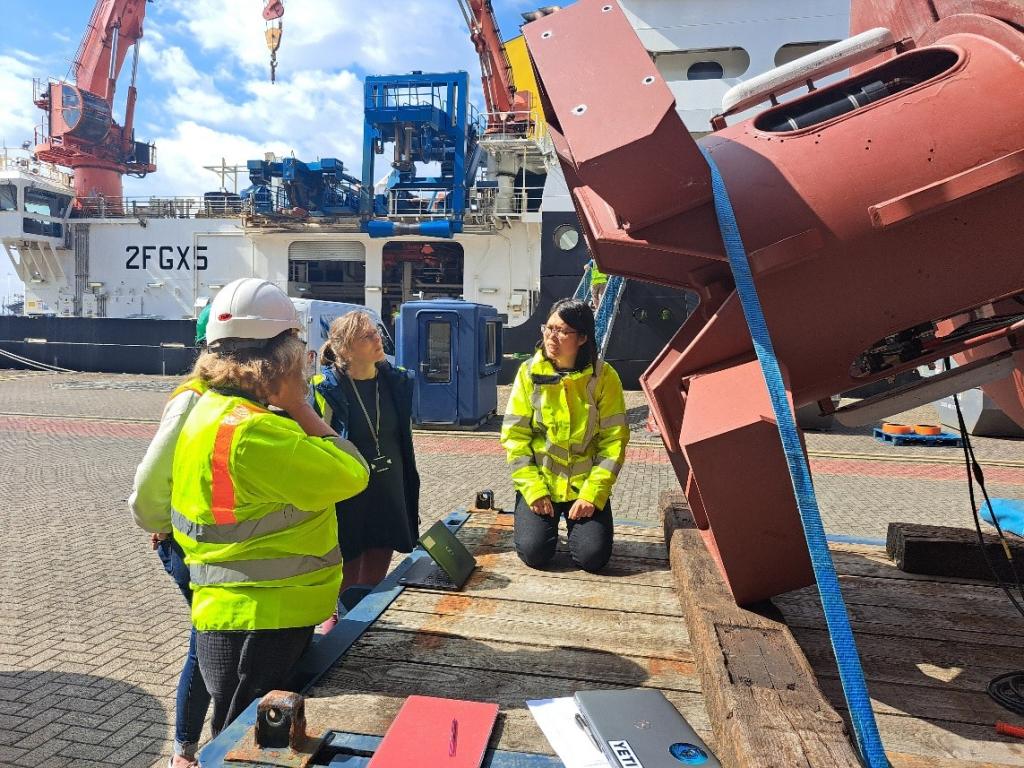
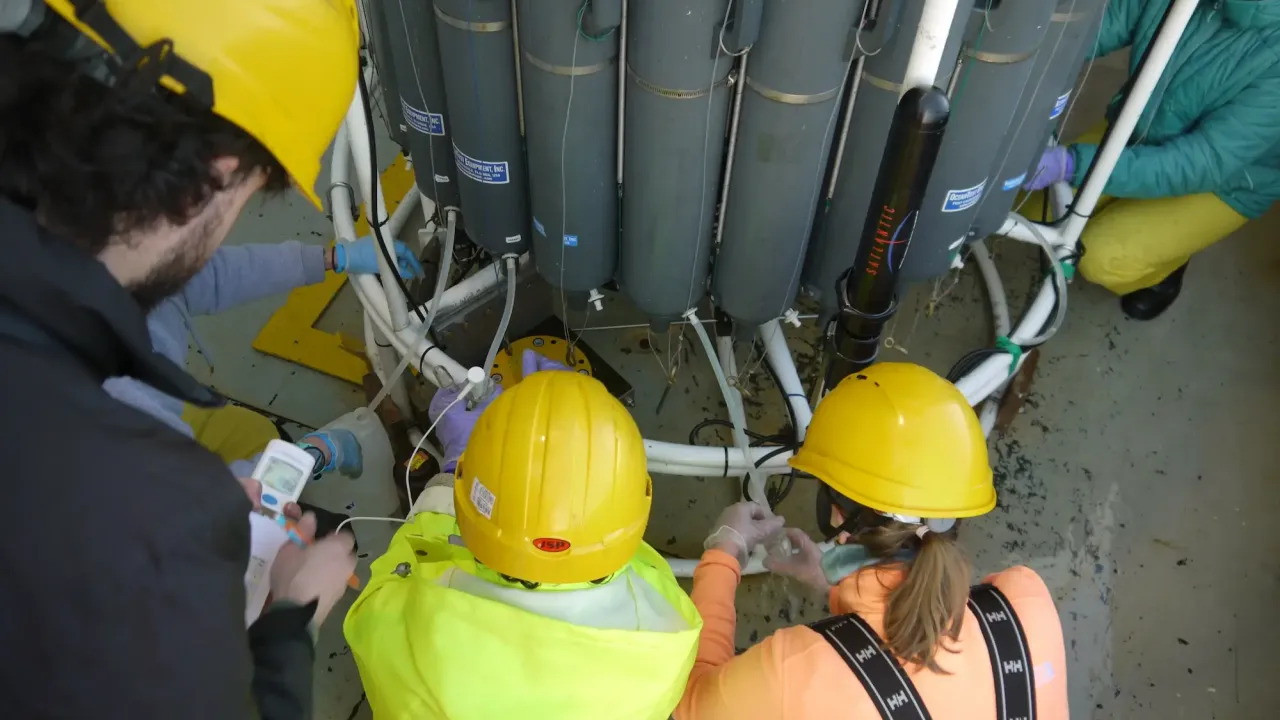
The NOC team setting up sensors in the keel of a surface ocean buoy that will be deployed for a year in 4,850 m water depth in the challenging NE Atlantic conditions.
The lead up to our departure was very busy with final preparations for the science alongside some media interest from the BBC South. Members of the team were interviewed for TV news, radio and online reports about the long-running scientific programme.
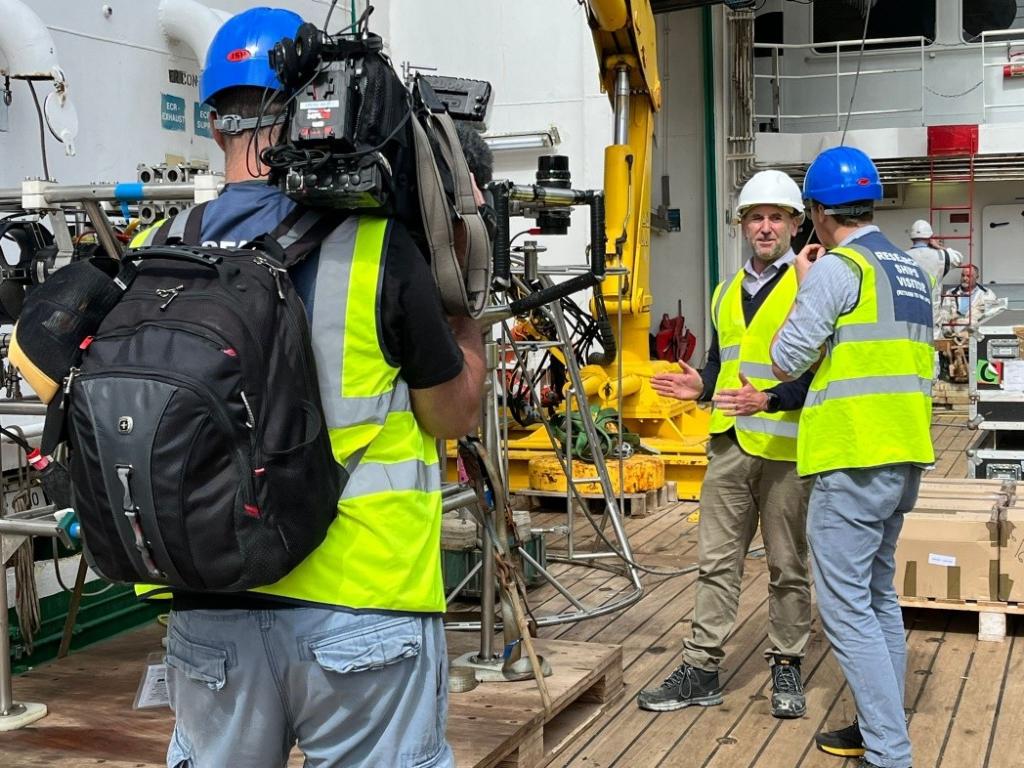
BBC South carrying out interviews during mobilisation.
In the coming weeks we look forward to sharing perspectives from our team through this blog.
Be part of the community helping our ocean thrive.