

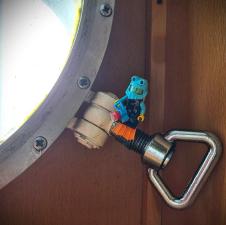
 We’re at sea onboard the Royal Research Ship (RRS) James Cook as part of JC278, the 40th anniversary expedition to the Porcupine Abyssal Plain Sustained Observatory (PAP-SO).
As well as the more than 30 scientists onboard, we’ve been joined by our Lego figure, Mini diver!
She’s been having great fun touring the ship and the many scientific instruments we have onboard that are helping us to learn more about this site.
Can you spot her on her tour? Take a close look at each images to see if you can find her.
Her first visit was to the ship’s chemistry laboratory, where a ship-board instrument measures dissolved gas in the surface seawater while we are at sea.
It does this by sucking in seawater from under the ship and passing this through instruments, helping us to learn how the flux of carbon dioxide into the water changes along our route.
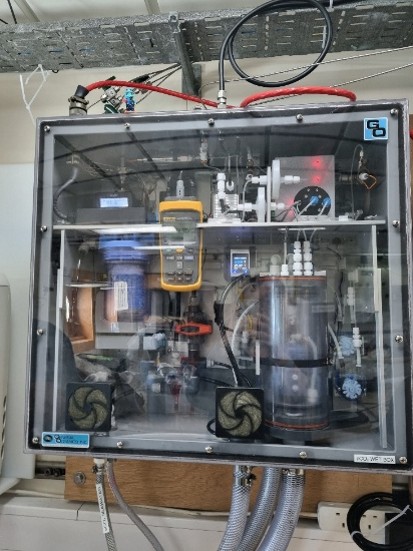
Can you spot Mini diver in our chemistry laboratory?
Meeting a Buoy!
Mini diver is also hiding on the large UK Met Office buoy that we will install and then leave at the PAP-SO site, 800 km west of Lands End in the Northeast Atlantic Ocean, during this voyage.
It will make similar measurements as our ship-board instruments, but it will do this throughout the year, because it stays here.
This buoy is multi-purpose. It contributes to our weather forecasts, and we have added instruments to measure ocean biology and chemistry, including oxygen and carbon dioxide gas.
Because it’s there, year-in, year-out, it means we have a long timeseries of measurements, spanning over different seasons and over years and even decades.
From this timeseries we can ask how does the surface carbon dioxide level change compared with temperature and ocean life and how does it change from year to year?
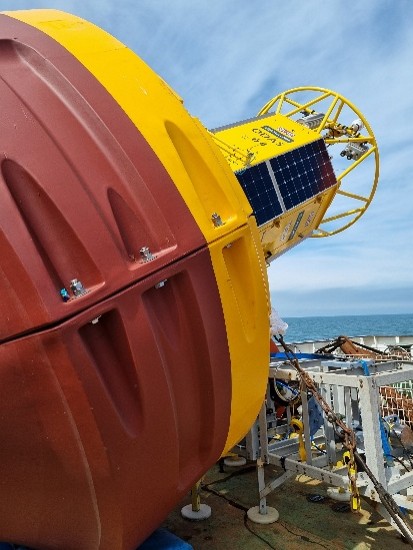
Can you find Mini diver on the Met Office buoy?
Mini Diver Meets GEORGE
Next Mini diver visited an instrument that will sit at the bottom of the ocean for an entire year. This is called an EGIM and it makes similar year-round measurements of ocean chemistry, at nearly 5 km depth!
This is part of a project called GEORGE, which you will hear more about from the group working on it onboard the RRS James Cook in a future blog!
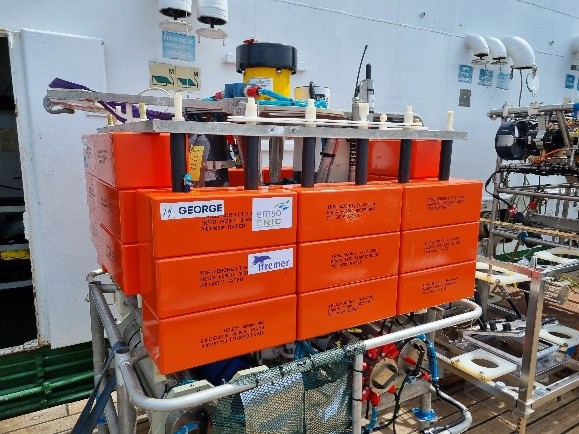
The EMSO Generic Instrument Module EGIM lander is another autonomous platform being deployed as part of the GEORGE project. Can you spot Mini diver?
Discovering the Role of the CTD
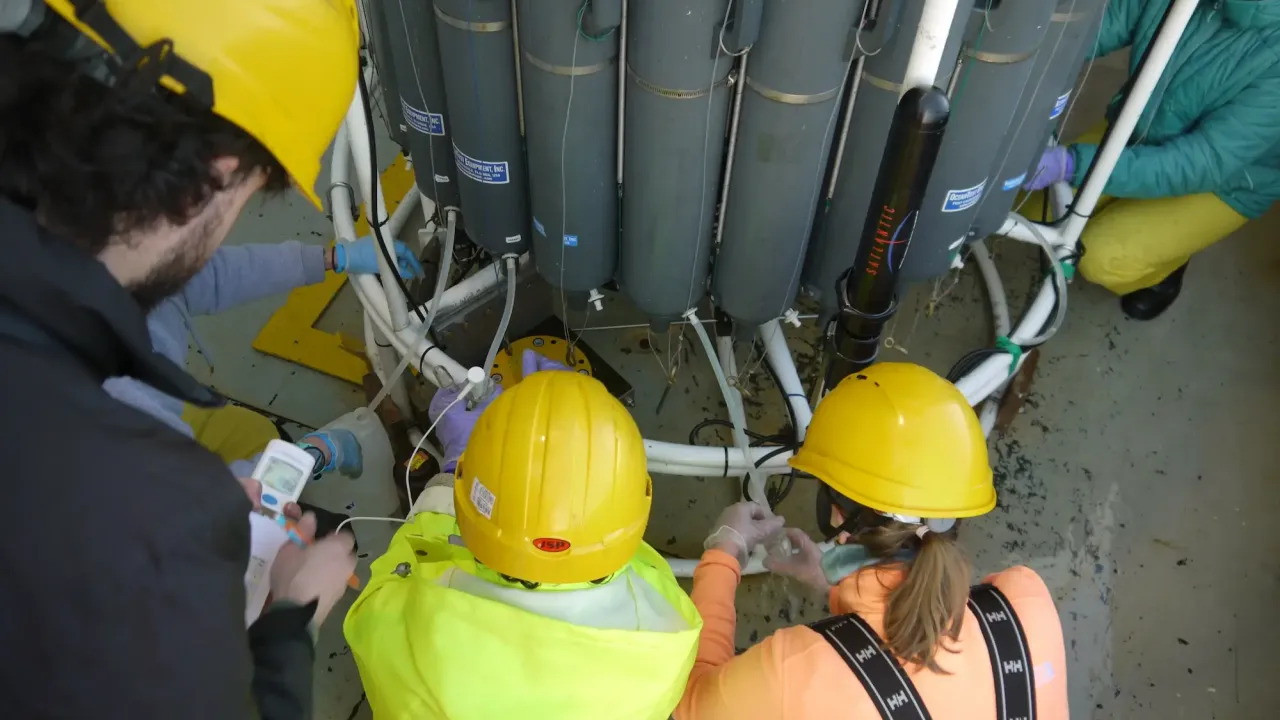
The next stop was our CTD rosette. This is a real work horse on board the ship! CTD means conductivity (used to calculate salinity, or how salty the sea is), temperature and depth (i.e. pressure). The rosette is a circular frame that holds the water sampling bottles we use to take this measurements – they’re also known as Niskin bottles. They’re configured to be remotely triggered at specific depths to collect water samples for analysis in our floating laboratory, as well as back on shore for more detailed analysis.
With this and our ship-board and seabed instruments, we have a full set of surface to seabed measurements that we can compare and study.
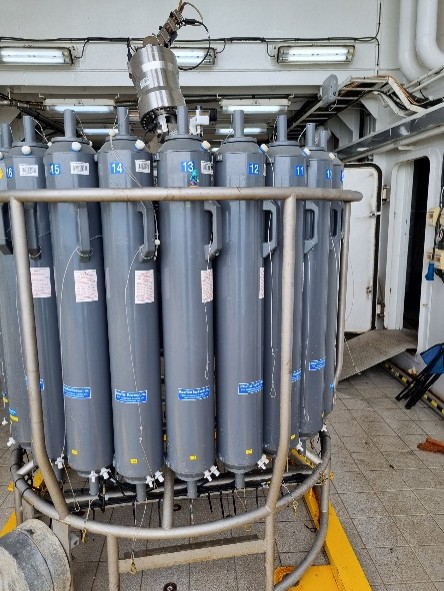
A CTD rosette. Where is Mini diver?
Underwater Imaging
We’re also keen to see and monitor life at the seabed. Mini diver met HyBis, the instrument we use to do this! It is an underwater camera system, towed by – and remotely operated from – the ship, helping us to exploring the water and seabed, including all the life we find there.
I hope you enjoyed coming on the tour with our voyage companion Mini diver, that I won from Knight Optical (my family were happy to build the much larger set that Mini diver escaped from to come on JC278 with us!).
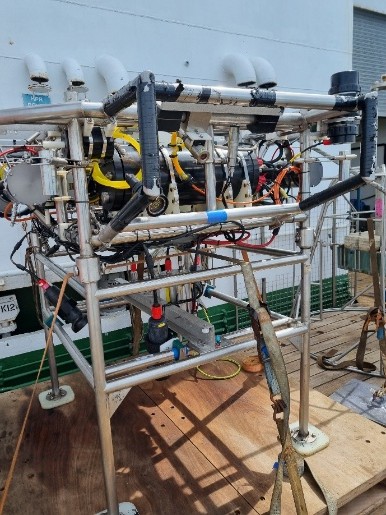
HyBis - our underwater towed camera system. Can you spot Mini diver?
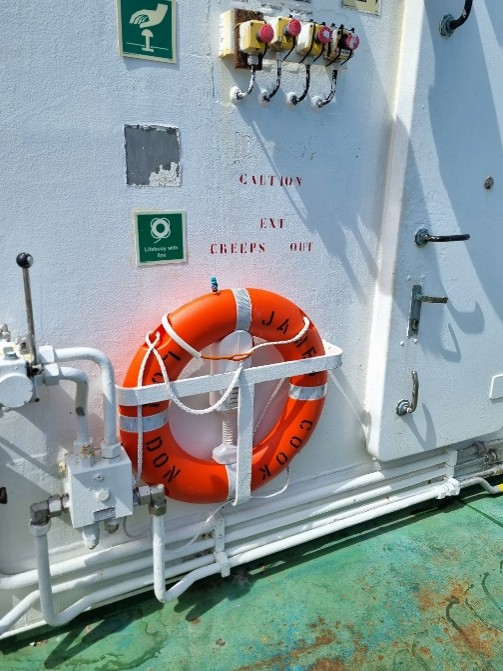
Mini diver taking a break at the end of her tour. Can you spot her?
Be part of the community helping our ocean thrive.