
A pioneering research collaboration has been recognised with a prestigious Royal Meteorological Society (RMetS) Award.
The GloSAT Data Development Team have been received the Award for Innovation in Development of Observations or Instrumentation at an RMetS Awards celebration, held at the Royal Botanic Gardens in Kew on Wednesday (3 June).
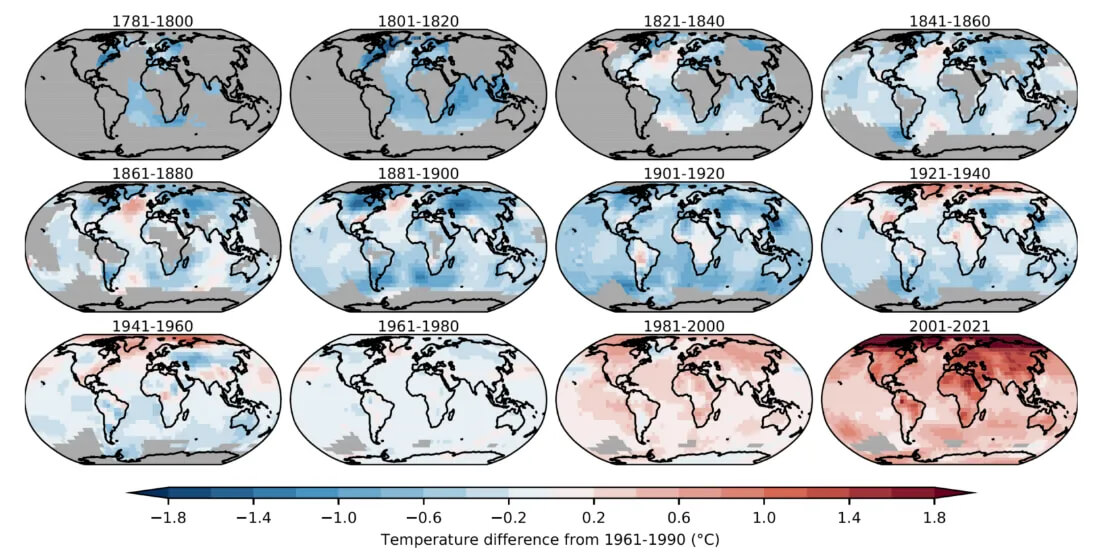
Led by the National Oceanography Centre (NOC) and funded by the Natural Environment Research Council (NERC), the team produced the longest instrument-based record of surface temperature, extending back to the 1780s.
This was achieved through innovative methods to correct biases in historical observations over land and ocean, including adjustments for ship-based heating effects and differences in early measurement practices.
The resulting dataset extends the global record back to around 70 years earlier than previous records and enables new insights into historical climate change, including the impacts of early volcanic eruptions.
The GloSAT project brought together a wide network of institutions, including NOC, the Met Office, National Centre for Atmospheric Science and the Universities of East Anglia, Edinburgh, Reading, Southampton, and York. The collaboration also relied heavily on the recovery and digitisation of historical observations, many of which were preserved in paper archives.
I speak for the entire GloSAT team when I say that we’re delighted and honoured to receive this award. Extending the global temperature record back to the late 18th century has only been possible through close collaboration and innovation in handling historical data. It has been a true team effort.
Dr Elizabeth Kent, Research Leader at NOC
“It is very much our hope that dataset will support future research and innovation, as well as improve our understanding of how the climate system responds to both natural and human influences.”
The Royal Meteorological Society Awards are among the most prestigious honours for the weather and climate community, celebrating people and teams who have made outstanding and enduring contributions to their field.
Be part of the community helping our ocean thrive.