
The waters surrounding Antarctica are among the most important, but perhaps least understood, regions on Earth.
As sea ice decreases and ocean circulations shift, scientists are working to understand how these changes could affect climate and marine ecosystems.
To help achieve this, scientists from the National Oceanography Centre (NOC) have joined a new €8.5 million global research project, SYNCHRONY.

Funded by the European Union, led by the Alfred Wegener Institute and involving 27 international partners, the project will provide vital new observations of the Southern Ocean to improve our understanding and ability to predict climate and ecosystem changes around Antarctica.
SYNCHRONY will launch on August 1 2026 and aims to provide better knowledge of the rapid changes taking place in the complex system comprising the ocean, ice and atmosphere in the Southern Ocean and around the Antarctic ice shelves, as well as their impacts on the global climate and biodiversity.
The project provides an important foundation for the international UN Ocean Decade initiative Antarctica InSync, and builds on existing research consortia.
The Southern Ocean and the Antarctic shelf seas have been undergoing massive changes for several years.
The Southern Ocean and its sea ice cover are rapidly changing and are vital elements of the climate system, taking up much of the excess heat and carbon in the atmosphere from the climate crisis due to burning of fossil fuels.
Professor Simon Josey, who leads the NOC component of the project
Professor Josey continued: “Within SYNCHRONY, at NOC, we will advance the design of the Southern Ocean observing system to enable the exchange of heat between the atmosphere and the ocean to be properly measured for the first time. We will also seek to advance our understanding of the heat transfer in regions of strong sea-ice decline which is driving stormier conditions and has potential impacts on the wider climate system including impacts to Europe.”
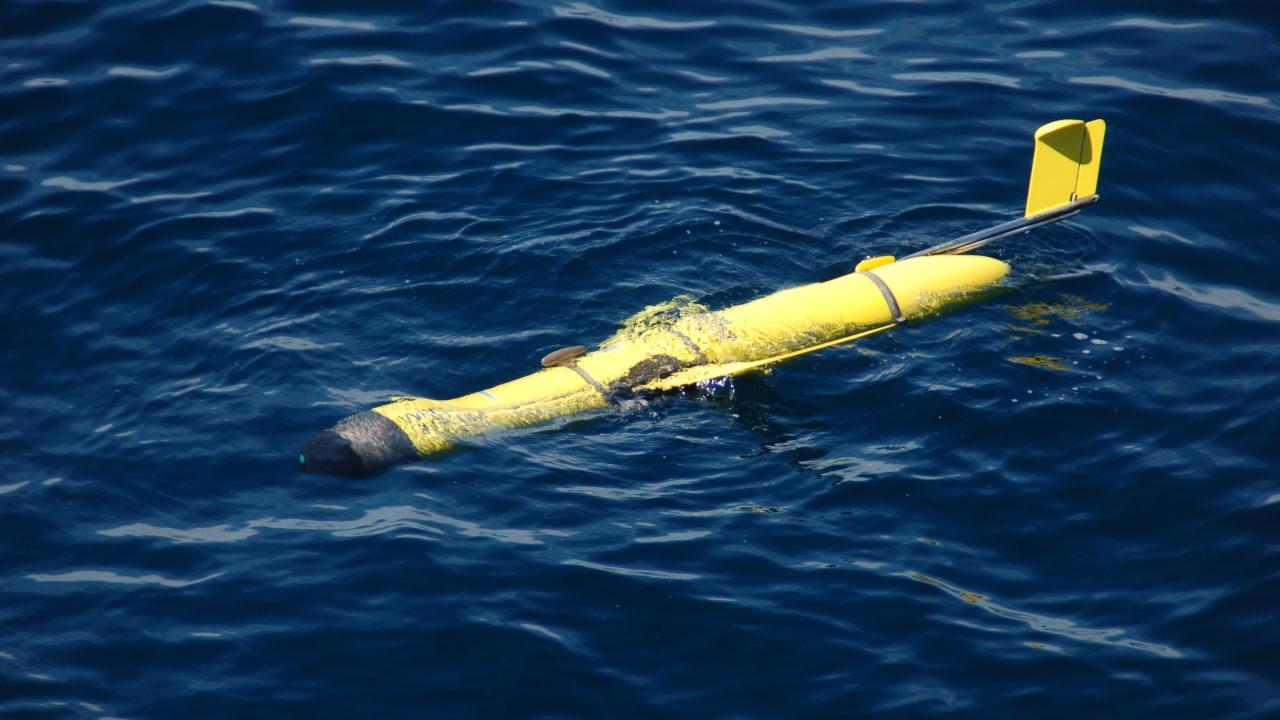
Another key element of the project is to improve the quality and use of ocean observations collected beneath sea ice by enhancing our ability to work with data from Argo profiling floats.
These autonomous instruments measure temperature, salinity, and a range of biogeochemical properties throughout the ocean water column, from the surface to depths of a few kilometres, providing essential insights into ocean change.
NOC’s Dr Kamila Walicka will lead this analysis.
Argo floats provide vital year-round observations of the global ocean, including from remote regions that are key to understanding climate change. However, the Southern Ocean remains challenging to observe, with sea ice limiting satellite positioning of autonomous instruments.
Dr Kamila Walicka, NOC
Dr Walicka said: “Through the SYNCHRONY project, NOC will improve methods for reconstructing under-ice Argo float trajectories, enhancing the accuracy and reliability of polar ocean observations and supporting a better understanding of climate-driven changes in one of Earth’s most influential ocean regions.”
A new observing system for the Southern Ocean
SYNCHRONY is a complex project involving contributions from many countries to advance understanding of the Southern Ocean and sea-ice changes.
“The full implications of these abrupt changes for the local and global climate and the ecosystems remain unclear. We are currently unable to predict these changes,” explained SYNCHRONY principal investigator Prof. Dr. Alexander Haumann, who heads the AWI-LMU Joint Research Group for Southern Ocean–Climate Interactions (SO-CLIM) at the Alfred Wegener Institute, Helmholtz Centre for Polar and Marine Research (AWI) and holds a professorship at Ludwig-Maximilians-Universität Munich (LMU).
This knowledge gap is largely due to insufficient observational data and the inaccurate or missing representation of processes in Earth system models. Urgent action and enhanced international cooperation are therefore required not only to better observe and understand the complex changes in the coupled ocean-ice-atmosphere-biosphere system, but also to provide the basis for political decision-making that will protect this region in the long term.
Prof. Dr. Alexander Haumann, SYNCHRONY principal investigator
Joint cross-platform missions and circumpolar, multidisciplinary observation networks are indispensable for this effort in this vast and inaccessible region - yet they are still not available to a sufficient extent.
Major international initiatives in the coming years will be key building blocks in closing this observational gap: Antarctica InSync (2027 to 2030), the 5th International Polar Year 2032/2033, and the implementation of the European Ocean Pact. They build on the existing efforts of networks such as SCAR (Scientific Committee on Antarctic Research) and SOOS (Southern Ocean Observing System).
SYNCHRONY is another key project in this work, and aims to establish an internationally coordinated and synchronised observing system in the Southern Ocean and the coastal regions of Antarctica. It coordinates interdisciplinary activities that specifically contribute to Antarctica InSync.
The Antarctica InSync initiative was launched by several members of the Antarctic Treaty System. It forms part of the UN Ocean Decade and supports the UN 2030 Agenda, in particular Sustainable Development Goals (SDGs) 13 and 14, which focus on measures to combat climate change and its impacts, as well as the conservation and sustainable use of the oceans, seas and marine resources. Between 2027 and 2029, Antarctica InSync will establish one of the largest observing network ever set up in polar environments to assess the state of this rapidly changing environment and promote sustainable development.
About SYNCHRONY
“SYNCHRONY will expand and improve Antarctic observing networks, consolidate existing datasets, collect new ones and make them more accessible to the international research community. It will mark a milestone towards a comprehensive polar observing system. The resulting knowledge will help us to better understand the rapid changes in the region and make them more predictable,” said Prof. Dr. Stefanie Arndt, head of the AWI–University of Hamburg Joint Research Group on snow research on Antarctic sea ice (SNOWflAke) and co-principal investigator for the project.
“This action-oriented knowledge will also form an important basis for policy decisions on the protection of the climate and biodiversity in the Southern Ocean and will support international intergovernmental bodies, the European Green Deal and the European Ocean Pact.”
The Alfred Wegener Institute (AWI) is coordinating the international research project SYNCHRONY. With five planned Polarstern cruise legs during the main observation period of Antarctica InSync (Antarctic summer 2027/28 to summer 2028/29), autonomous instruments, and the multidisciplinary HAFOS observatory in the Weddell Sea, the AWI is contributing key research infrastructure. It is also taking on a leading role in establishing a dedicated observation network for sea ice, atmospheric, ecosystem and ocean research, in the harmonisation of polar research data, and in international coordination and science communication.
SYNCHRONY is funded by the European Union under Grant Agreement ID 101295248.
More information is available on the project website: https://synchrony-project.eu/
SYNCHRONY consortium:
- Alfred Wegener Institute – Helmholtz Centre for Polar and Marine Research (AWI), Head of Partner, Germany
- United Kingdom Research and Innovation (UKRI-BAS), United Kingdom
- Catholic University of Louvain (UCLouvain), Belgium
- Scientific Committee on Antarctic Research (SCAR), United Kingdom
- Norwegian Polar Institute (NPI), Norway
- ETT Spa (ETT), Italy
- Mercator Ocean (MOI), France
- Consorzio Nazionale Interuniversitario per le Scienze del Mare Associazione (CONISMA), Italy
- European Polar Board (EPB), Sweden
- Royal Belgian Institute of Natural Sciences (RBINS), Belgium
- Centre National de la Recherche Scientifique (CNRS), France
- National Oceanography Centre (NOC), United Kingdom
- European Science Communication Institute GmbH (ESCI), Germany
- University of Gothenburg (UGOT), Sweden
- Ludwig Maximilian University of Munich (LMU), Germany
- The University of Edinburgh (UEDIN), United Kingdom
- Council for Scientific and Industrial Research (CSIR), South Africa
- University of Southampton (UoS), United Kingdom
- Consiglio Nazionale delle Ricerche (CNR), Italy
- Korea Polar Research Institute (KOPRI), South Korea
- University of Otago (UO), New Zealand
- University of Canterbury (UC), New Zealand
- Euro-Argo ERIC (EURO-ARGO), France
- Institut Français de Recherche pour l’Exploitation de la Mer (IFREMER), affiliated partner, France
- Federal Maritime and Hydrographic Agency (BSH), affiliated partner, Germany
- University of Brest (UBO), affiliated partner, France
- University of Tromsø – The Arctic University of Norway (UiT), Norway
International cooperation partners:
- Southern Ocean Observing System (SOOS)
- Association of Polar Early Career Scientists (APECS)
Be part of the community helping our ocean thrive.