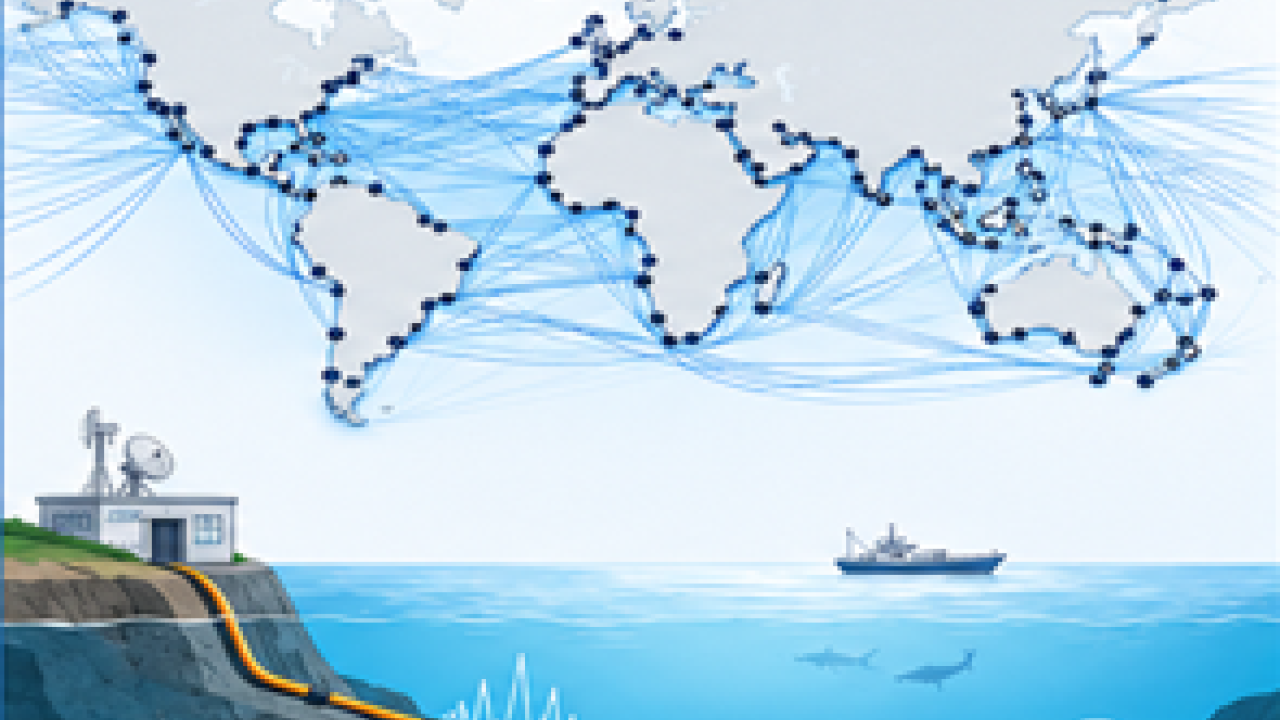
As the world experiences one of the strongest El Niño events on record, scientists are highlighting the vital role of ocean observations in improving understanding of climate variability and its impacts on weather, ecosystems and societies worldwide.
Professor Penny Holliday, the National Oceanography Centre (NOC)’s chief scientific officer, worked alongside PhD candidate Sreevathsa Golla to contribute to an important briefing document produced by the Royal Meteorological Society about the rapidly strengthening ‘super’ El Niño.
El Niño is a naturally occurring climate phenomenon that originates in the tropical Pacific Ocean and can affect weather patterns far beyond its source region. Its impacts can include heatwaves, droughts, heavy rainfall and flooding, with consequences for communities, ecosystems, food production and economies worldwide.
El Niño can influence North Atlantic weather patterns, potentially affecting winter storms and rainfall, although its effects on UK weather are less predictable than in the tropics. The UK is also exposed through global food production, commodity prices, supply chains and economic disruption. Climate change is already increasing the UK's exposure to extreme heat and intense rainfall.
This latest event is unfolding against a backdrop of long-term human-driven climate warming, meaning its effects may be felt more strongly in a world that is already experiencing rising temperatures and more frequent extreme weather events.
For ocean scientists, the event underlines the critical role of sustained ocean observations. Monitoring the ocean helps researchers understand the processes driving climate variability, improve forecasting capabilities and assess how natural climate patterns interact with longer-term environmental change.
El Niño is a natural climate phenomenon, but this event is unfolding on a planet already warmed by human activity. Previous strong El Niño events did not always lead to record global temperatures, but today there is far less headroom before records are broken, which is why this event is possibly the strongest in modern history. This makes sustained ocean observation and forecasting more important than ever, helping scientists understand how the climate system is changing and giving communities valuable time to prepare for its impacts.
Prof Penny Holliday, Chief Scientific Officer at NOC
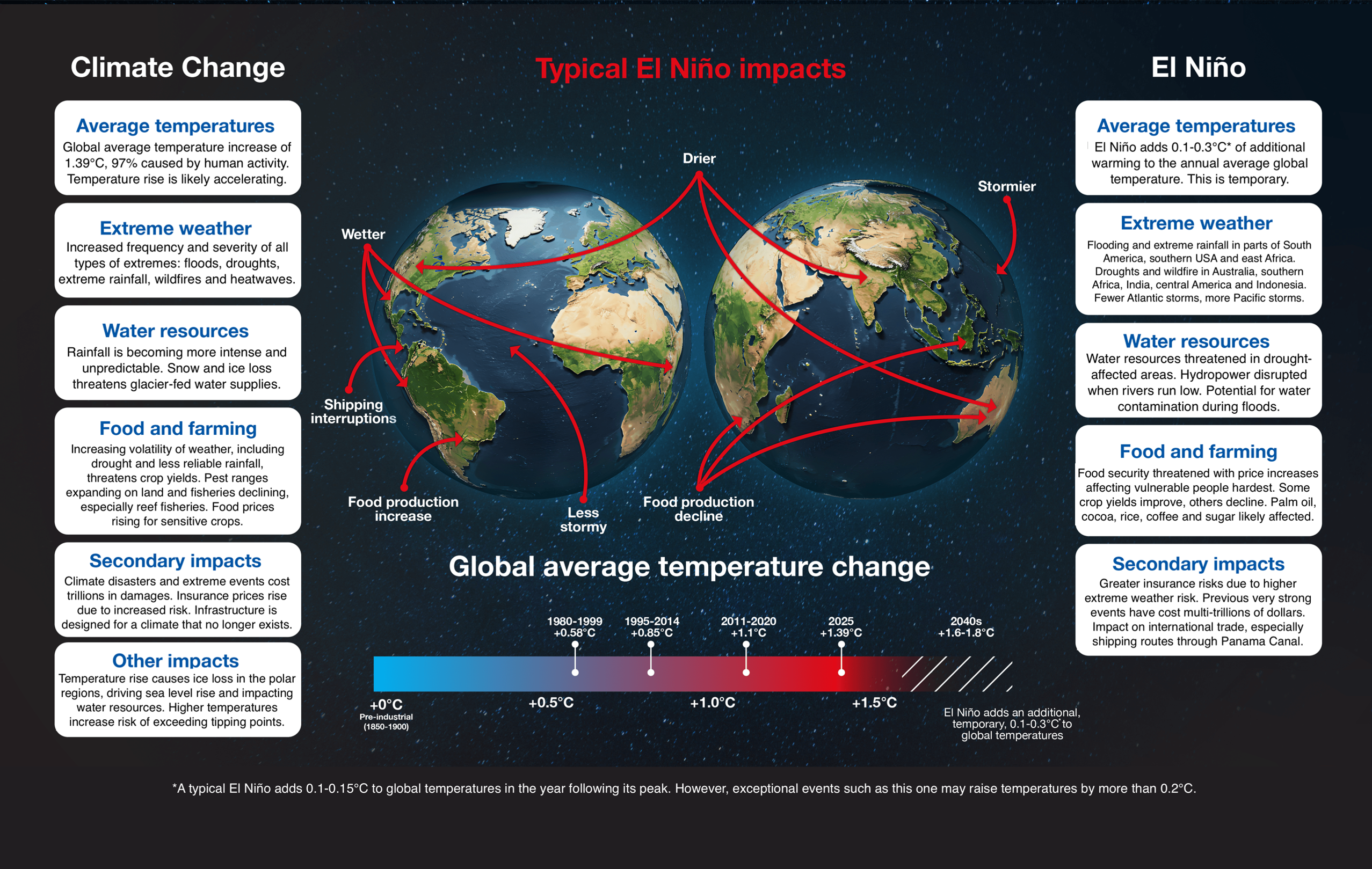
The briefing, which has been produced by the Royal Meteorological Society in collaboration with NOC and a number of leading universities including University of Oxford, University of Exeter, Newcastle University and Imperial College London, is designed to set out evidence-based messages that reflect scientific understanding around the impacts of El Niño. Produced to support journalists, media organisations and institutes reporting on El Niño, it’s hoped it will help to strengthen accurate reporting of what’s behind this year’s extreme weather.
Dr Ella Gilbert, who led the briefing, said: “Climate change is turbocharging extreme weather, and when we add an off-the-charts El Niño into the mix, we can expect some serious impacts this year and next. It’s vital that the public understands that fossil fuel-driven climate change is having a much larger and longer-lasting effect on food prices, energy costs and global trade than El Niño, and the media has a crucial role to play in communicating that.”
View the briefing document here: https://www.rmets.org/news/media-briefing-super-sized-el-nino-occurring-hotter-planet
Be part of the community helping our ocean thrive.