

How the Pacific Ocean Influences Weather Worldwide
El Niño is one of the most important climate phenomena on Earth. It begins in the tropical Pacific Ocean, thousands of miles from the UK, yet it can impact weather patterns, ecosystems and economies around the world.
This natural climate phenomenon has occurred for thousands of years, but the 2026 event is unfolding against a backdrop of record global temperatures. ‘Supercharged’ by the effects of human-induced climate change, it has the potential to bring more extreme weather events to millions of people around the world, affecting lives, livelihoods and the environments we depend on.
Understanding El Niño
To understand El Niño and its effect on the planet, we must first look at the El Niño Southern Oscillation, also known as ENSO. This naturally occurring climate cycle is driven by interactions between the tropical Pacific Ocean and the atmosphere. It is one of the most important sources of year-to-year climate variability on Earth and has a major influence on weather patterns around the world.
ENSO has three phases:
- El Niño: Unusually warm sea surface temperatures in the central and eastern tropical Pacific.
- La Niña: Unusually cool sea surface temperatures in the same region.
- Neutral: Conditions that are neither warm enough to be El Niño nor cool enough to be La Niña.
As ENSO shifts between these phases, it changes the movement of heat, moisture and air around the planet. This can influence rainfall, drought, storms, temperatures and other weather patterns thousands of miles from the Pacific Ocean.
Find out more about ENSO from the Met Office here.
What Happens During an El Niño Event?
Under normal conditions, trade winds blow westward across the Pacific, pushing warm surface waters towards Southeast Asia and bringing cold, deep water up to the surface off the coast of South America.
During an El Niño, these trade winds weaken or even reverse, allowing the warm water to spread eastwards along the equator. This stops cold, deep water in the eastern Pacific from rising to the surface, causing sea surface temperatures across the central and eastern tropical Pacific to rise considerably. This shift also changes how heat is exchanged between the ocean and atmosphere, influencing weather patterns around the world.
El Niño typically occurs every two to seven years and lasts around nine to twelve months. Although a natural part of Earth's climate system, today's El Niño events are unfolding in a warmer world due to human-induced climate change, which can amplify their impacts and contribute to more extreme weather.
As one of the largest drivers of year-to-year climate variability, El Niño is closely monitored by scientists to better understand how our changing ocean influences life on Earth and to help communities prepare for the impacts ahead.
El Niño: The Key Stats
El Niño typically develops every 2-7 years, making it the strongest source of year-to-year climate variability on Earth.
Most El Niño episodes last around nine to twelve months, although some persist longer.
Over the past century, the global ocean has warmed by around 1°C, with El Niño events capable of temporarily adding to global temperature extremes.
The global economic impact of the 2026-27 event is projected to cost the world economy nearly $1 trillion.
How Does El Niño Affect the Ocean?
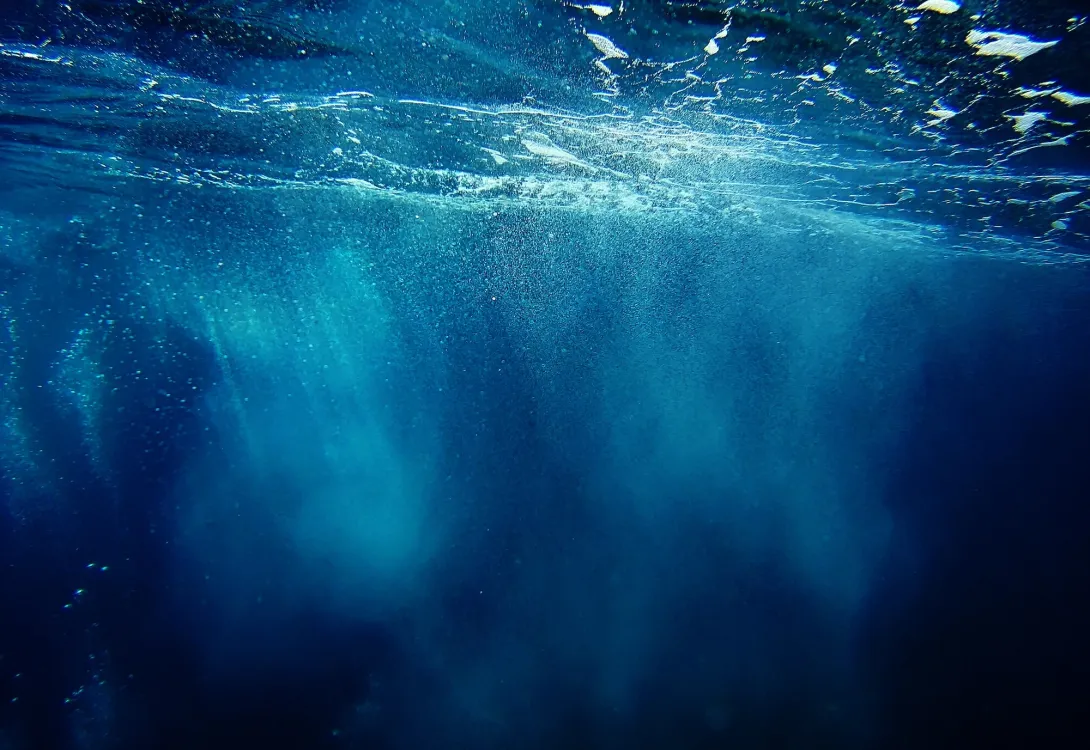
El Niño doesn't only influence weather on land; it can also have significant impacts on marine ecosystems.
Under normal conditions, nutrient-rich water rises from the deep ocean along the west coast of South America, supporting some of the world's most productive fisheries. During El Niño, this upwelling is weakened, reducing the supply of nutrients that marine food webs depend on.
Warmer ocean temperatures associated with El Niño can also contribute to marine heatwaves and increase the risk of coral bleaching across tropical reef systems, placing additional stress on already vulnerable marine ecosystems.
Because the ocean plays such a central role in the Earth's climate system, understanding these changes is essential for managing environmental risks and supporting communities that depend on healthy seas.
Why Can It Affect Weather Across the Whole World?
The Tropical Pacific is the engine room of much of the world’s weather. Its warm ocean waters drive a vast region of rising warm, moist air, normally centred over the western Pacific, which pumps large amounts of heat and moisture high into the atmosphere from the ocean.
During an El Niño, that warm water, along with the rising moist air, shifts thousands of kilometres east. This shift in the ocean heat source disturbs the atmosphere above, and the disturbance spreads outward like ripples on a pond, creating long-distance effects known as teleconnections. These disturbances alter the strength and position of the jet streams that adjust weather systems globally.
With the jet streams disturbed, rain, storms, and heat end up in different places than normal, with some regions getting wetter and others drier than usual.
What Does it Mean for the UK?
The UK's weather is influenced more strongly by the North Atlantic and Arctic than by conditions in the tropical Pacific. As a result, El Niño's direct influence here is weaker than in many tropical regions.
However, El Niño can still have indirect effects. Scientists have identified links between El Niño and:
- Wetter and stormier periods in parts of north-west Europe
- Changes in winter weather patterns
- Disruptions to global food and commodity supply chains
- Impacts on food prices and energy markets
For the UK, some of the biggest effects may be economic rather than meteorological. Weather disruptions elsewhere in the world can affect the availability and cost of products imported into the UK.
How Does El Niño Contribute to Climate Change?
El Niño and climate change are often discussed together, but they are not the same thing. El Niño is a natural climate cycle and climate change is the long-term warming of Earth's climate caused primarily by greenhouse gas emissions.
Scientists often describe the relationship using a simple analogy:
El Niño is like a bouncing ball, causing temperatures to rise and fall from year to year. Climate change is like a staircase, steadily lifting the whole system higher over time.
El Niño can temporarily boost global temperatures by transferring heat from the ocean to the atmosphere. This is one reason why some of the warmest years on record, including 1998 and 2016, coincided with strong El Niño events.
However, the long-term warming trend is driven by human-induced climate change. El Niño can amplify that warming temporarily, but it does not cause it.
Why is El Niño 'Supercharged'?
A typical El Niño warms the central and eastern tropical Pacific by around 1-2°C above average. When temperatures exceed 2°C, scientists classify it as a "super" El Niño. Only three events in the past 50 years have reached this threshold: 1982-83, 1997-98 and 2015-16.
What makes the current event (2026) particularly notable is the intensity and speed of its development. Scientists have observed an exceptionally rapid build-up of heat in the upper ocean, and some forecasts suggest Pacific temperatures could rival or exceed those seen during previous super El Niño events.
Three factors are attracting particular attention from scientists:
- Exceptionally rapid ocean warming
- Record amounts of heat stored in the upper ocean
- Ocean temperatures that are already elevated by long-term climate change
When a natural El Niño develops in an ocean that has already been warmed by human-induced climate change, global temperatures can temporarily reach unprecedented levels. This is why scientists often describe the current event as being 'supercharged' by climate change. El Niño does not cause climate change, but it can amplify its effects, pushing temperatures, weather extremes and ocean heat to new records.
How Are Scientists Monitoring and Predicting it?
One of the most important observing systems is the Tropical Atmosphere Ocean (TAO) array, a network of monitoring buoys stretching across the tropical Pacific. These instruments measure ocean temperatures both at the surface and below it, helping scientists detect the early signs of developing El Niño conditions months before they become fully established.
Satellite observations provide a global picture of changing sea-surface temperatures, while autonomous Argo floats measure temperature and salinity throughout the upper ocean. Together, these observations feed into climate and weather models used by organisations such as the Met Office, NOAA and the National Oceanography Centre to predict the development and likely impacts of El Niño.
What Happens Next?
El Niño events eventually weaken and return to neutral conditions. Some are followed by La Niña, the cooler phase of ENSO, during which cooler-than-average waters develop across parts of the tropical Pacific.
Even after an El Niño peaks, its effects can continue for many months because the atmosphere takes time to respond to changes in ocean conditions.
Scientists will continue monitoring:
- Pacific Ocean temperatures
- Trade winds
- Rainfall patterns
- Global weather impacts
- Changes to marine ecosystems
Understanding what happens next helps improve forecasts and enables better preparation for future climate risks.
El Niño FAQs
The name El Niño comes from Spanish and means "the Christ Child". The phenomenon was first recognised by fishermen along the coast of Peru and Ecuador because unusually warm ocean conditions often developed around Christmas time.
No. El Niño is a naturally occurring climate pattern. However, climate change may influence some of its impacts because it occurs in a warmer world.
Typically every two to seven years.
Yes, but generally less strongly than tropical regions. Any influence is usually indirect and varies between events.
El Niño itself is not dangerous, but it can increase the risk of flooding, drought, heatwaves and other extreme weather events around the world.
El Niño is the warm phase of ENSO (the El Niño Southern Oscillation), while La Niña is the cool phase.
Learn About El Niño on the NOC Into the Blue Podcast
Recorded in 2023, Dr Zoe Jacobs speaks to ocean modeller Dr Joel Hirschi about marine heatwaves, ocean temperature records and how El Niño influences weather and climate around the world.

Related Resources
Below are a number of different resources relating to changing weather and climate, including systems such as the Altantic Meridional Overturning Circulation (AMOC). Along with El Niño, these systems have a profound affect on society and can also vary depending on the impact of external influences.

Latest Publications
Webb, David  ORCID: https://orcid.org/0000-0001-7084-8566.
2025
Notes on the annual and seasonal averages of atmospheric convection and changes during the development of strong El Niños.
Southampton, National Oceanography Centre, 19pp.
(National Oceanography Centre Internal Document, No. 29)
2025
Monograph
Webb, David J. ORCID: https://orcid.org/0000-0001-7084-8566.
2021
On the low western Pacific sea levels observed prior to strong East Pacific El Niños.
Ocean Science, 17 (6).
1585-1604.
10.5194/os-17-1585-2021
2021
Article
Webb, David ORCID: https://orcid.org/0000-0001-7084-8566; Coward, Andrew ORCID: https://orcid.org/0000-0002-9111-7700; Snaith, Helen.
2021
Using Satellite Altimeter and SST Observations of the 1997-1998 El Nino to check the key ocean processes involved in a strong El Nino.
In: EGU General Assembly 2021, Online, 19-30 April 2021.
2021
Conference item

Dive Deeper: Ocean Circulation
Ocean circulation is vital to life on Earth. It moves heat, carbon, oxygen, and nutrients around the planet, connecting ecosystems and influencing global climate and weather. These vast currents shape ocean health, regulate temperature, and sustain marine life across the globe.