
How Do We Research Tsunamis?

The NOC's efforts in sensor deployment, combined with geological studies, seismic studies, and fibre-sensing technologies, are transforming how we observe and understand tsunamis. Ultimately, this work helps us prepare for these events and protect vulnerable coastal communities worldwide.

NOC scientists and engineers have delivered training in the UK and overseas regarding the installation and maintenance of tsunami monitoring tide gauges. We also provide training on how to use that data for tsunami monitoring and detection. NOC scientists also provide advice to UK policymakers on tsunami risk.

Global Tsunami Warning Systems & NOC's Research

How are tsunamis monitored globally?

The Intergovernmental Oceanographic Commission of UNESCO (IOC-UNESCO) coordinates a global network of tsunami warning systems. This network now covers the Pacific, Indian Ocean, Caribbean, Northeast Atlantic, and Mediterranean. It is supported by groups of sensors, tide gauges, and regional analysis centres that facilitate rapid coordination and information sharing among experts and member states.

What role does NOC play in tsunami monitoring?

As part of this global effort, scientists and engineers at the National Oceanography Centre (NOC) work to install tide gauge-based monitoring systems in the UK and overseas.

Can all tsunami sources be easily detected?

Some tsunami sources, such as earthquakes, can be detected by seismic networks, which allows timely warnings to be sent out. However, other tsunami sources are less easily detected. Research led by NOC has evaluated submarine volcano-induced tsunamis. We have also shown how underwater landslides can trigger tsunamis, finding that understanding the landslide's volume, speed, and direction is key to determining the magnitude of the wave. Other NOC scientists are using remote interrogation of optical fibres in the global network of seafloor cables. Combined with novel signal processing and artificial intelligence techniques, this allows us to detect underwater disturbances that may precede tsunamigenic events.

Publications

Deep-sea observations and modeling of the 2004 Sumatra tsunami in Drake Passage

Authors

Rabinovich, Alexander B.; Woodworth, Philip L. ORCID: https://orcid.org/0000-0002-6681-239X; Titov, Vasily V.. 2011 Deep-sea observations and modeling of the 2004 Sumatra tsunami in Drake Passage. Geophysical Research Letters, 36, L16604. 5, pp. 10.1029/2011GL048305

Publication year

2011

Publication type

Article

Large, deepwater slope failures: Implications for landslide-generated tsunamis

Authors

Lo Iacono, C.; Gracia, E.; Zaniboni, F.; Pagnoni, G.; Tinti, S.; Bartolome, R.; Masson, D.G.; Wynn, R.B.; Lourenco, N.; de Abreu, M.P.; Danobeitia, J.J.; Zitellini, N.. 2012 Large, deepwater slope failures: Implications for landslide-generated tsunamis. Geology, 40 (10). 931-934. 10.1130/G33446.1

Publication year

2012

Publication type

Article

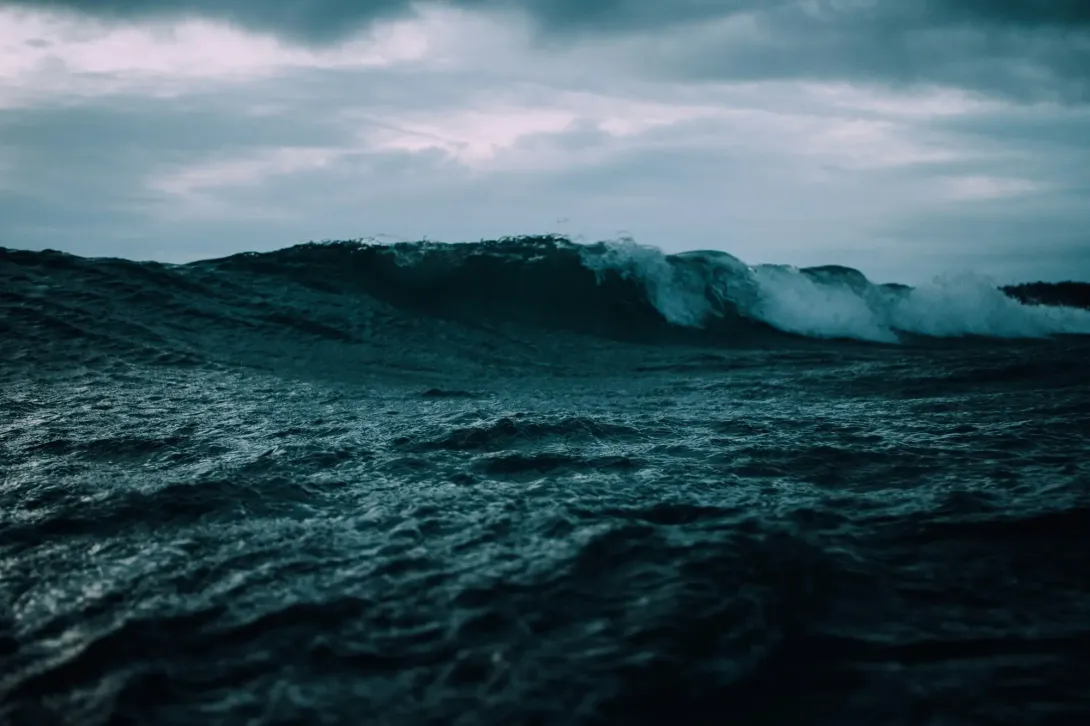
Dark blue wave on a stormy overcast day

Discover the Ocean: Tsunamis Explained

Head over to Discover the Ocean to find out all about Tsunamis including notable historical events, their impacts on our ocean and how powerful they can really be.