
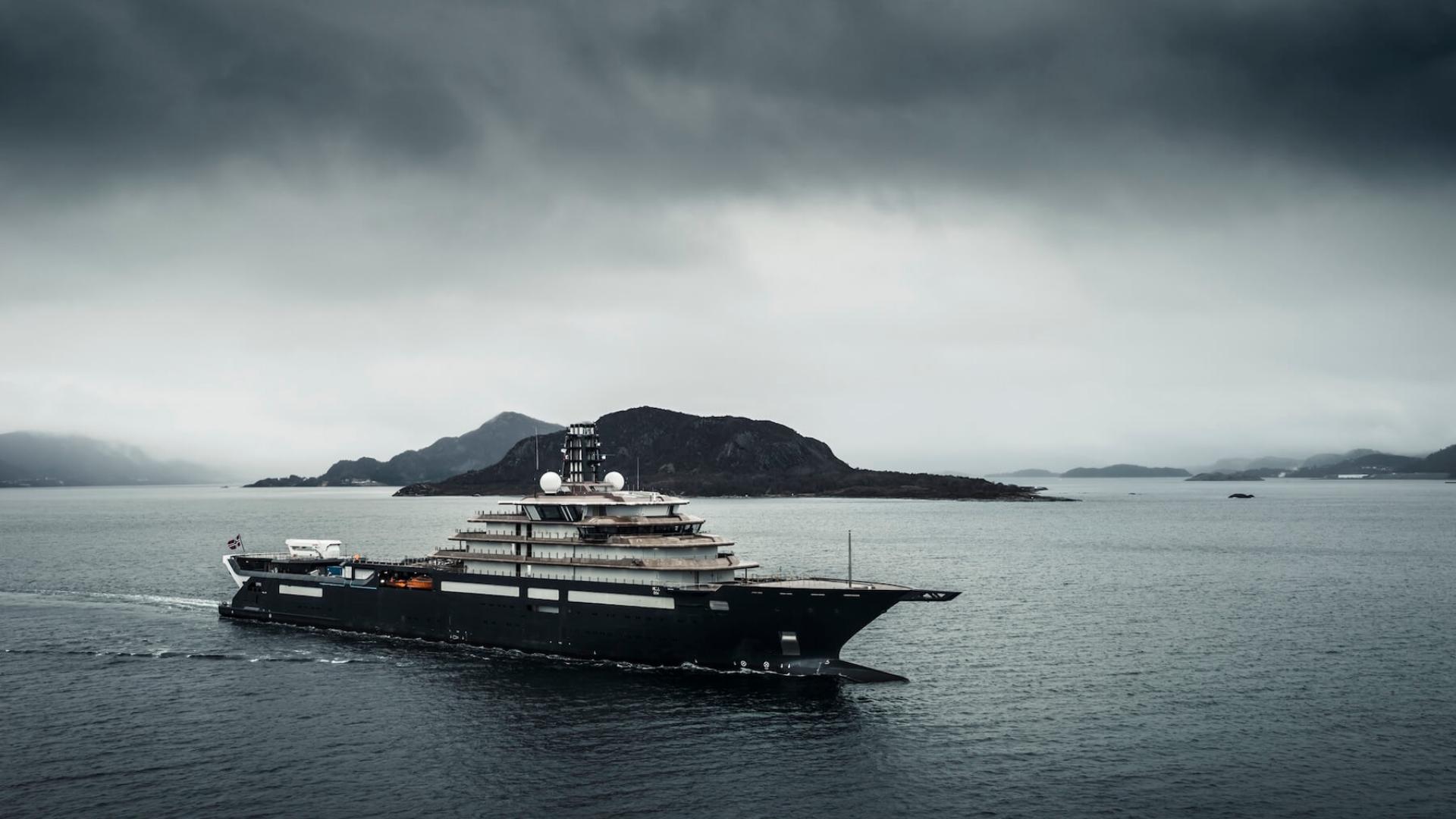
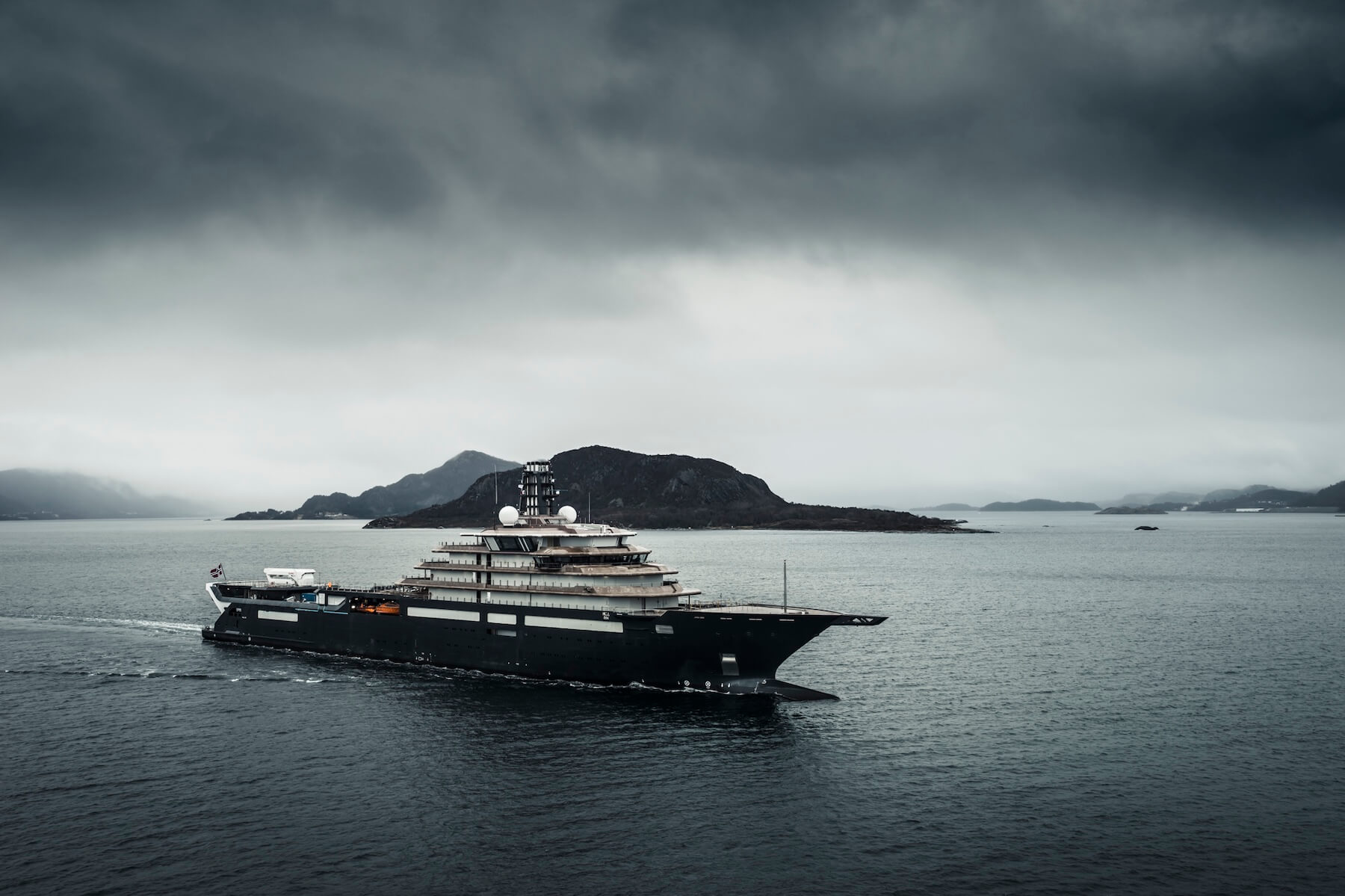
REV Ocean announces Maiden Voyage Science Program ahead of first operational research season
REV Ocean has set out the details of its Maiden Voyage Science Program: ten partner-led missions spanning the South Atlantic, the Caribbean and the Eastern Tropical Pacific that will mark the first operational research season for REV, the latest addition to the global philanthropic fleet.
The program launches in Rio de Janeiro in April 2027, alongside the UN Ocean Decade Conference, and runs through the South Atlantic, the Caribbean, the Sargasso Sea and the Eastern Tropical Pacific into late 2028.
Professor Alex Rogers, National Oceanography Centre, will co-lead the REV Ocean Sargasso Sea Expedition (ROSE) with Prof. Dr. Reinhold Hanel Thünen, Institute of Fisheries Ecology. The research will focus on one of the ocean's least understood deep-sea environments.
Located in the temperate to sub-tropical North Atlantic, the Sargasso Sea is already well-studied at the surface, but its deep pelagic and benthic ecosystems remain largely unexplored. This gap has direct implications for conservation planning. The expedition will gather critical baseline data to support the designation of a network of large-scale marine protected areas and other effective spatial conservation measures under the international Biodiversity Beyond National Jurisdiction (BBNJ) Agreement, and will also provide knowledge for the Sargasso Sea Commission for consideration of spatial conservation measures in the region's Geographic Area of Collaboration.
Among the priorities is the spawning ecology of the European and American eel, both now listed as threatened by the IUCN, having declined sharply since the 1980s, with researchers targeting the presumed spawning zone where the youngest larvae have previously been found. The expedition will also survey abyssal seafloor habitats, deep pelagic communities, and the seamount ecosystems north of Bermuda, including sites heavily impacted by historical fishing, to assess biodiversity, community connectivity, and signs of ecological recovery.
The research and expedition vessel is designed to also function as a convening platform. A boardroom, auditorium and meeting spaces sit steps away from the laboratories - so scientists, policymakers, sectoral and governance authorities and decision-makers can meet directly alongside the fieldwork. Being present in the operational environment - not just receiving reports but witnessing the science - is central to how REV Ocean will bridge knowledge and action.
Each of the ten missions is shaped by and developed with regional partners — universities, conservation organisations, UN bodies and regional authorities — who bring the scientific priorities and regional knowledge that guide the program.
Three missions target seamount ecosystems off Brazil and in the Sargasso Sea. Another will establish biodiversity baselines at coral reefs and hydrothermal vents in the Galápagos. Shark and whale migratory routes and unexplored abyssal ecosystems will be investigated across the Eastern Tropical Pacific.
REV was built to close critical gaps in ocean knowledge — but what makes it different is what becomes possible when you bring the right people on board. Scientists, policymakers, decision-makers: standing in the same room, looking at the same data, feeling the same ocean. That's how knowledge becomes action."
Silje Ulvestad, Interim CEO and COO of REV Ocean
This program brings together leading regional ocean scientists working on questions that are directly relevant to how we understand and manage the ocean. Across ten missions, teams will investigate deep-ocean ecosystems, blue carbon habitats, and approaches to training early career scientists. The science is rigorous, the partnerships are built on long-term relationships, and the data we generate will have practical use well beyond the time we spend at sea.
Dr. Eva Ramirez-Llodra, Science Director at REV Ocean
The Maiden Voyage 2027–2028
The program under planning comprises ten partner-led missions:
- Vitória-Trindade Ridge, Brazil: Seamount ecosystem research across one of the South Atlantic's least-surveyed underwater landscapes, generating baseline data to inform ongoing protection and management decisions in the region.
- Fernando de Noronha Ridge, Brazil: Mapping and biodiversity research on seamounts, cold-water corals and vulnerable ecosystems within Brazilian national waters.
- Floating with Sargassum: At-sea training for early career scientists from impacted island nations covering Sargassum, its associated biodiversity, role in carbon cycling and microplastic accumulation.
- Trinidad & Tobago: Research to support a marine protected area network for mesophotic and deep-sea ecosystems in national and adjacent international waters.
- Beata Ridge, Colombia–Dominican Republic: Deep-sea research to support the Beata Ridge protected area and a joint monitoring and management plan between the two countries.
- Sargasso Sea: Deep-sea and open-ocean research supporting international efforts toward a large-scale network of marine protected areas beyond national jurisdiction.
- Heart of the Caribbean: Research and policy work to establish the scientific basis for the Caribbean's first multinational marine protected area, spanning waters linked to Cuba, Haiti and Jamaica.
- Coiba Ridge and Colinas y Lomas System, Panama–Colombia: Research across transboundary deep-ocean ecosystems connecting the Cordillera de Coiba, Sandra Ridge and Colinas y Lomas region, supporting marine protected area design, management and connectivity between Panama and Colombia.
- Cocos Ridge, Costa Rica–Panama-Colombia: Deep-ocean research across offshore ridge systems, seamounts and protected areas linking Costa Rica and Panama, supporting understanding of ecological connectivity and strengthening the scientific basis for marine protection across the CMAR corridor.
- Galápagos–Hermandad and International Waters Corridor, Ecuador: Deep-ocean exploration within and beyond the Galápagos and Hermandad Marine Reserves, supporting regional conservation planning, connectivity assessments and future protection opportunities in both national and international waters.
All data from the science program will be shared through the Ocean Data Platform (ODP) and other relevant platforms, ensuring findings remain accessible to partners, policymakers and researchers after each mission ends.
Dr. Jose Angel Alvarez Perez, Professor at Universidade do Vale do Itajaí (UNIVALI), said: "The Vitória-Trindade Ridge is a prominent but poorly understood seamount system in the Southwest Atlantic, with high conservation value. Working with REV Ocean gives us ship time and technology to map habitats, document biodiversity and generate the baseline data needed to inform ongoing protection decisions. This is a collaboration between Brazilian researchers and international partners that would be difficult to replicate any other way."
Notes to editors
REV is designed to complement the global research fleet, adding capacity and helping teams connect field science with regional decision-making and ocean management. Access to the vessel is guided by scientific quality, mission fit and contribution to REV Ocean's Protect and Restore agenda.
Each mission runs in three phases: a planning phase with regional partners to identify knowledge gaps and priorities; two to five weeks at sea; and a post-expedition phase with in-port working sessions, convenings and data sharing. Success is measured by practical outcomes — new baseline data, evidence for marine protection, policy development plans, and training delivered.
About REV - key vessel facts
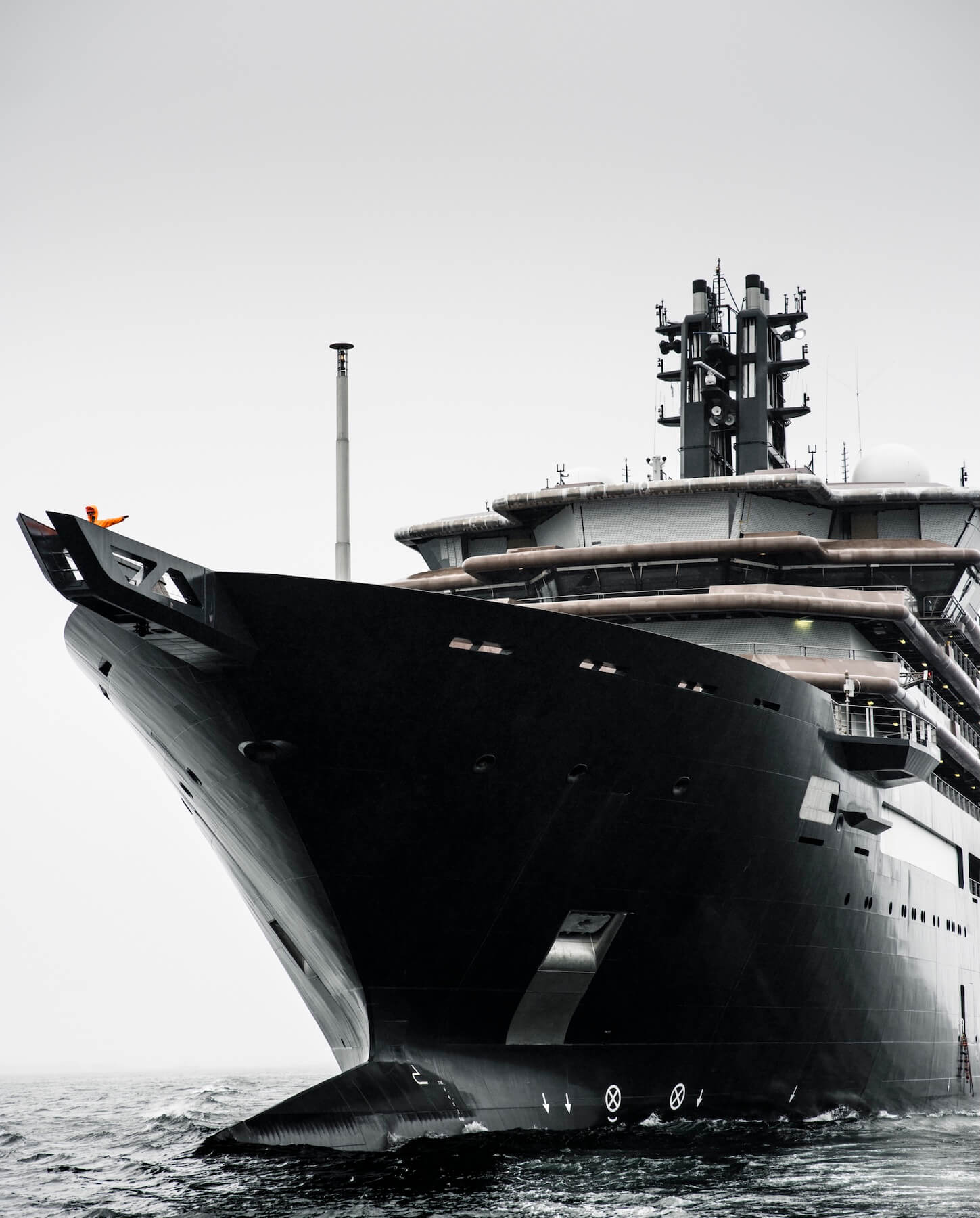
Length: 195 m
Beam: 22 m
Draft: 5.65 m
Max height above waterline: 38 m
Ice class: Polar Class 6 - capable of operating in light ice conditions in polar waters
Subsea vehicles
ROV Aurora: remotely operated, rated to 6,000 meters, deep enough to reach most of the ocean floor Submersible Aurelia: crewed, carries three people to 2,300 meters, 8 hours endurance.
Both carry 4K cameras and a suite of sampling equipment and oceanographic sensors that allow targeted sampling of both water column, seafloor and specimen.
Onboard capabilities
REV carries nine permanent laboratories - wet and dry labs, microbiology, molecular biology, filtration and adaptable multifunctional spaces - alongside a configurable container deck for mission-specific equipment. The vessel is equipped with a full suite of oceanographic instruments for sensing, sampling and observing the water column and seafloor. A boardroom, auditorium, classroom and meeting spaces support convenings, training and knowledge exchange at sea and in port.
Connectivity
Dedicated media studio with live broadcast capability. Starlink satellite provides high-speed connectivity at any location. Live streaming available from laboratories, mission control room and the depths of the ocean via the ROV.
About REV Ocean
REV Ocean exists to protect and restore ocean systems. REV, its 195-meter research and expedition vessel, is an extraordinary addition to the global philanthropic fleet - uniting scientists, policymakers and innovators where decisions about the ocean need to be made. REV Ocean's work focuses on marine protected areas, plastic pollution and ocean education. Founded in Oslo, Norway in 2017, REV Ocean is a team of 85 and growing. Learn more at revocean.org.
Image credits: Guillaume Plisson for REV Ocean.
Be part of the community helping our ocean thrive.