
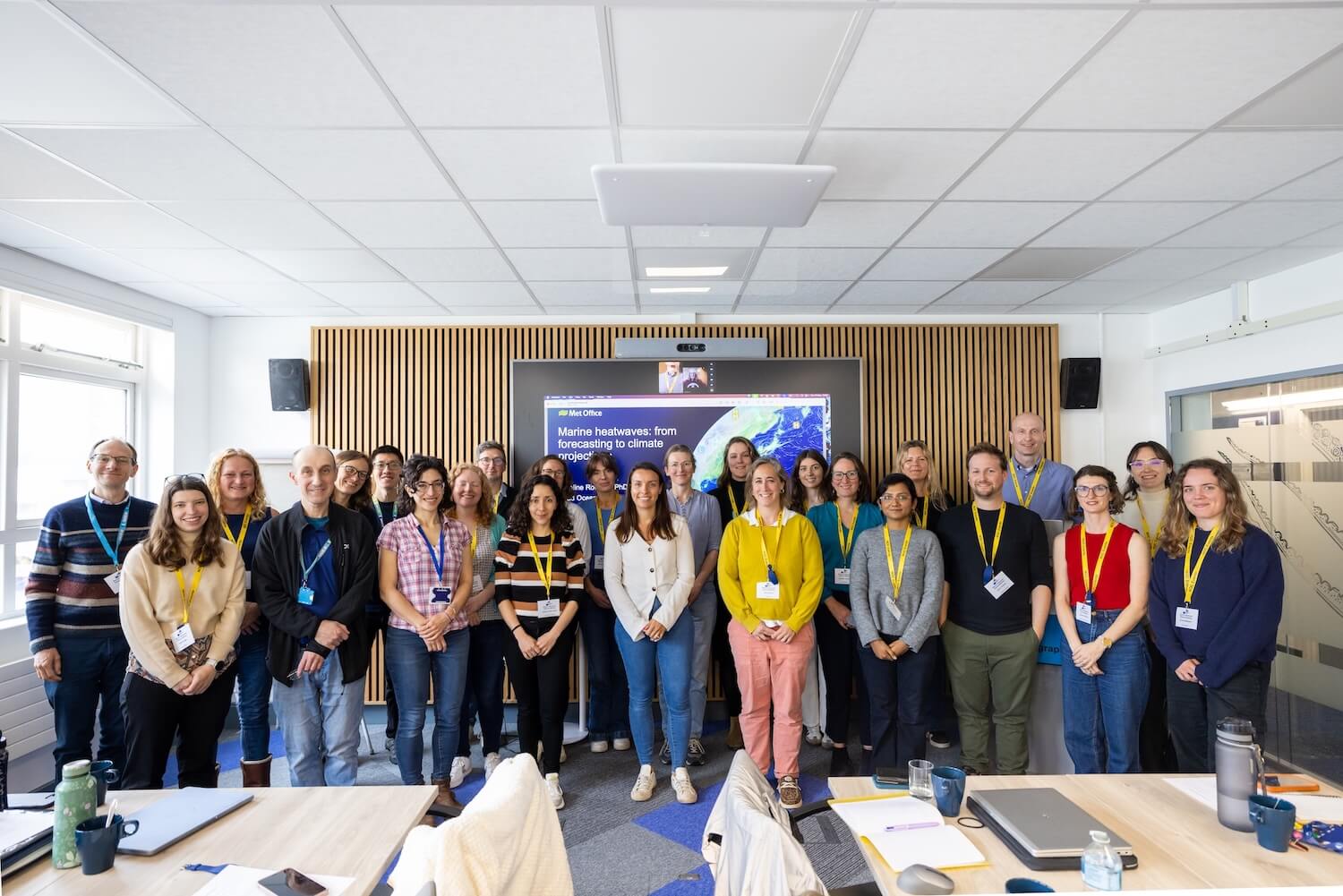
Scientists and researchers from across the UK shared their latest findings on marine heatwaves, from forecasting advancements to impacts and risks.
The National Oceanography Centre (NOC) hosted experts from across the country for a full-day meeting, focused on understanding and responding to marine heatwaves on the Northwest European shelf.
The event, the second of its kind, highlighted the importance of collaboration to better understand the dynamics of marine heatwaves and the impact they have on local communities and ecosystems.
Marine heatwaves – periods of unusually high ocean temperatures that last for days, weeks or even months – are becoming more frequent and intense, due to climate change. The number of marine heatwaves has doubled in the past 40 years.
One of the most valuable aspects of the meeting was seeing the range of interdisciplinary research taking place across the UK and Ireland. The event enabled new opportunities for collaboration and helped the scientific community identify the critical evidence gaps we need to address to better understand and evaluate the impacts of marine heatwaves.
Dr Zoe Jacobs, whose research focuses on understanding the dynamics and impacts of marine heatwaves, led the event in Southampton.
Talks covered: forecasting, drivers, subsurface events, coastal events, integrated monitoring, use of AUVs, biogeochemical impacts, potential impacts on aquaculture industry, impacts on seagrass restoration.
Attended by representatives of more than 15 research organisations and universities from around the UK and Ireland, the event was a successful opportunity to hear about ongoing research, identify opportunities for collaboration, and strengthen coordination across the community.
Sessions covered a range of related subjects, including:
- Marine heatwave forecasting and climate projection (UK Met Office)
- Accelerating trends in the 21st century (Marine Biological Association)
- How media reporting supports identification of socio-ecological impacts (NOC)
- Impacts of glider data assimilation for predicting marine heatwaves (Scottish Association for Marine Science)
The event also included a series of ‘Lightning Talks’, sharing knowledge and research into areas including impacts on marine life and industry.
To find out more about marine heatwaves, visit our page dedicated to the subject in Our Work.
The organisations who attended the event (online and in-person), including NOC, were:
- Cefas
- DEFRA
- JNCC
- Marine Biological Association
- Marine Directorate, Scottish Government
- Marine Institute, Ireland
- Newcastle University
- Plymouth Marine Laboratory
- Project Seagrass
- Scottish Association for Marine Science
- UK Met Office
- University of Bristol
- University of Exeter
- University of Plymouth
- University of Reading
- University of York
Be part of the community helping our ocean thrive.