
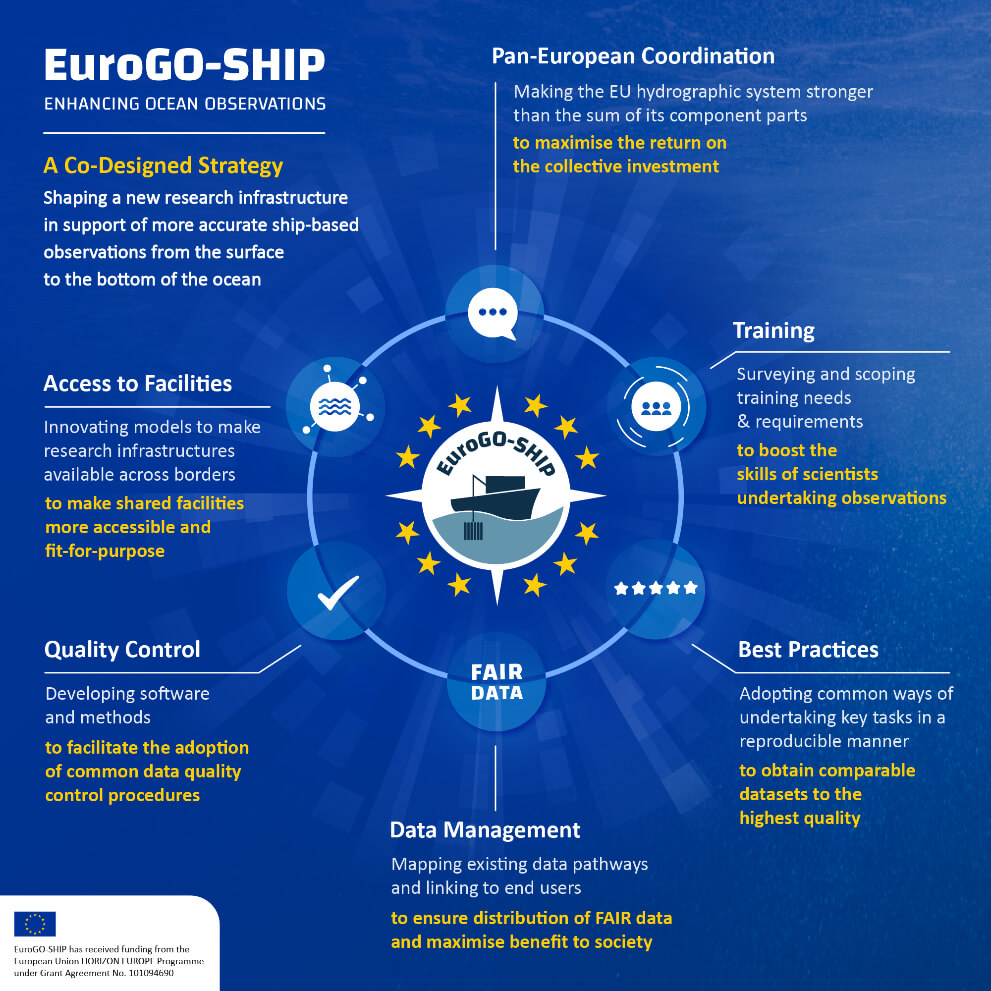
A collaboration agreement between CLASS partners Plymouth Marine Laboratory and National Oceanography Centre enabled me to join the JC247 research cruise to PAP-SO to carry out the nutrient analytical work for the PAP team and to enable a sampling programme for the long-term nutrient preservation investigations for the newly funded EU EuroGO-SHIP Infrastructure project (EuroGO-SHIP).
The EU funded EuroGO-SHIP project aims to improve the quality and integration of ship-based hydrographic data between nations. Within the aims of the nutrient work package we are investigating the best practice for long term nutrient storage if analysis at sea is not possible. It is always the preferred practice to analyse nutrient samples fresh at sea, but sometimes this is not possible. Freezing has become the most common method used currently and a number of studies have supported this. However, pasteurization has been recommended but no long-term comparisons have been carried out to date. Other chemical preservation techniques that have been used in the past should now be avoided for environmental and health and safety reasons.
The aim of these experiments on JC247 will be to recommend to the EU community, and the wider scientific community, the best practice for nutrient sample storage.
Within the EuroGO-SHIP project we will also to be investigating possibilities for producing certified nutrient reference materials for European waters, and for carrying out training in the use of nutrient analytical best practices.
In another part of this EuroGO-Ship project work package researchers from NOC are investigating best practices concerned with Salinity measurements and the different salinometers in current use across Europe.
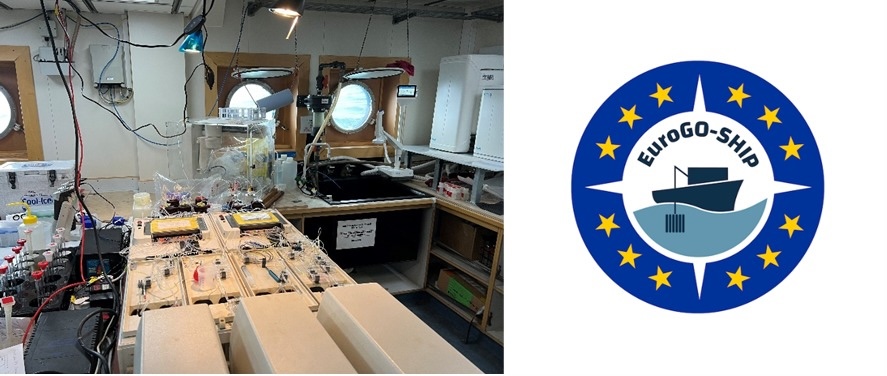
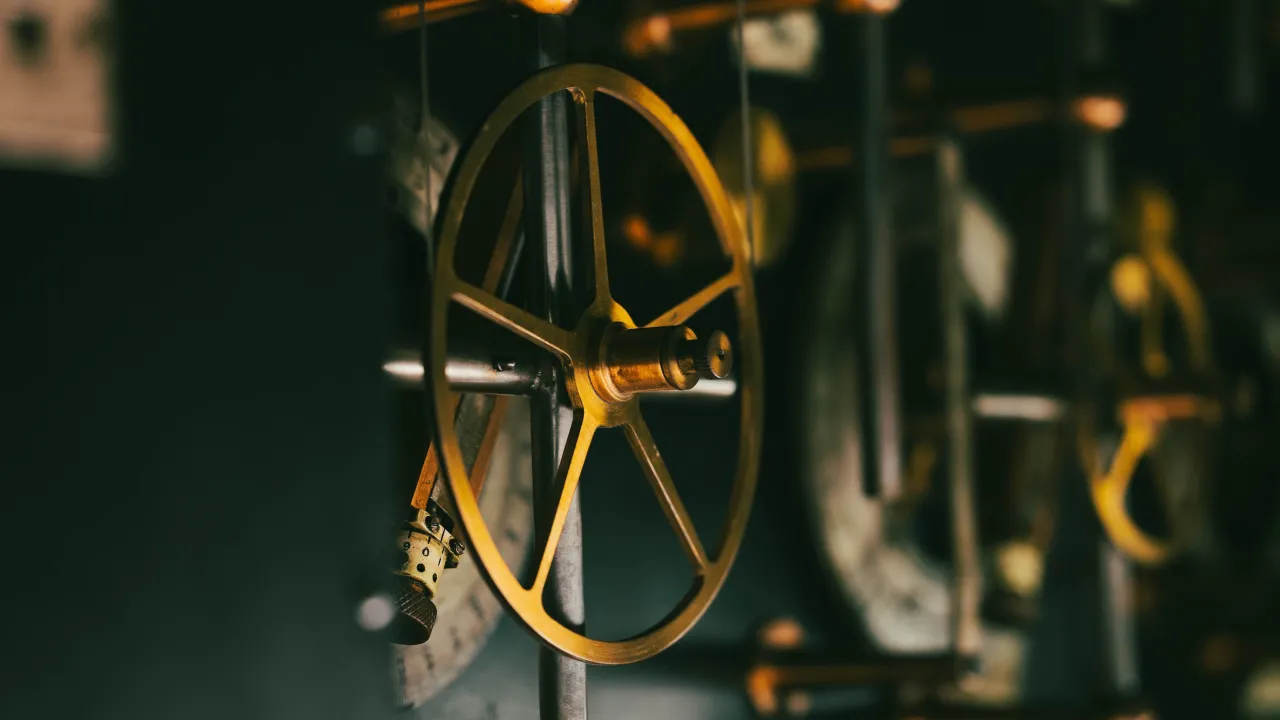
The PML autoanalyser in the chemistry lab on the RRS James Cook.
Our Work on JC247
After 2 days of mobilisation in Southampton the RRS James Cook sailed. The first sampling station of the cruise and for the EuroGO-SHIP project was just offshore from Plymouth, South West England, 50° 15.00' N, 4° 13.02' W. This was at the site of the PML long-term survey station L4 which is part of the Western Channel Observatory. L4 is normally sampled weekly by the PML nutrient team aboard the PML vessel (Western Channel Observatory). There is regular historical nutrient data from this site back to the year 2000.
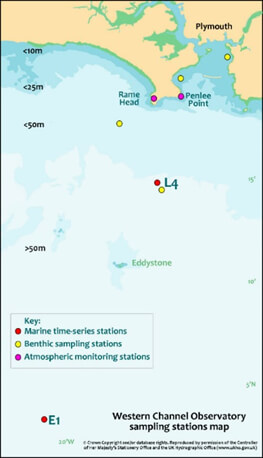
Location of L4.
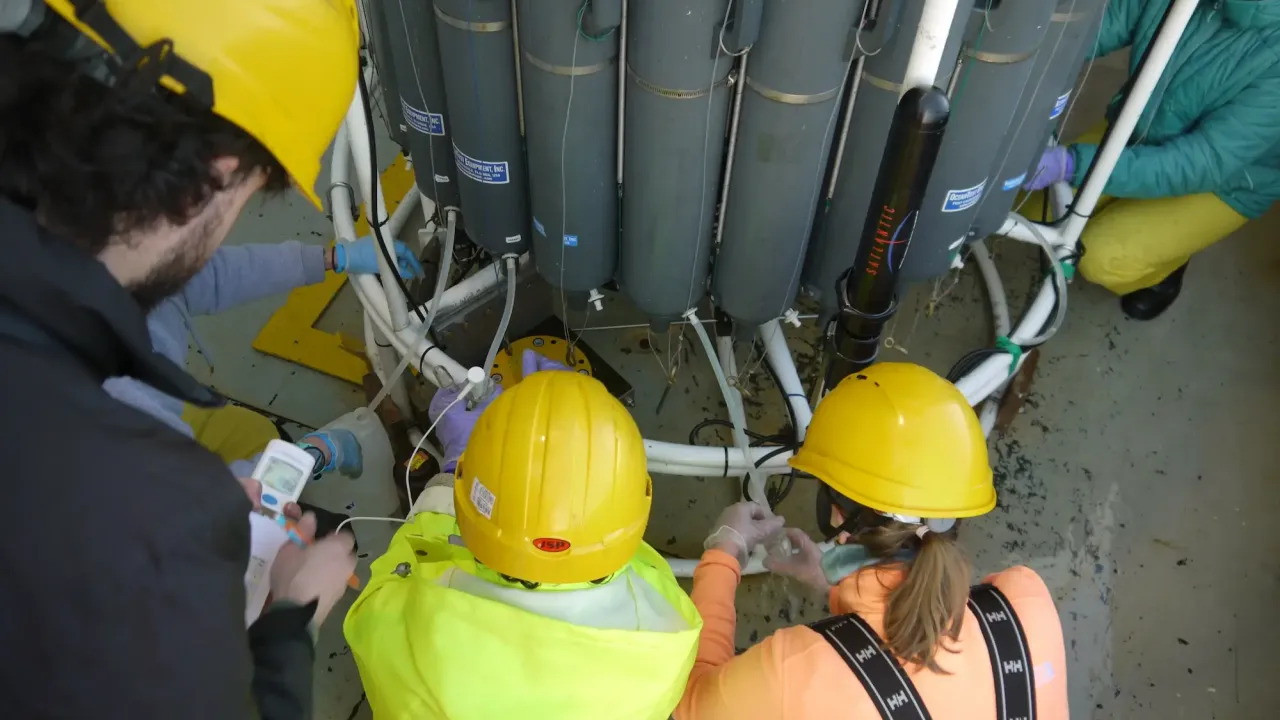
During the research cruise our seawater samples are taken using the CTD/Rosette system with 20 litre sampling bottles (below). Nutrients are analysed from the water column and the preservation sample sets were taken in triplicates from a depth of 50 m and stored both at -20C, and then preserved using the pasteurization technique of Daniel et. al. (2012). The samples were taken in both HDPE (high density polyethylene) and glass bottles.
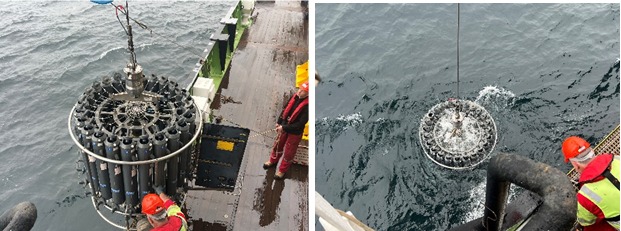
CTD / Rosette sampler during deployment from the RRS James Cook.
Following the phytoplankton spring bloom that had occurred off Plymouth in April the nutrient concentrations in the water column were depleted and approaching the detection limits of the autoanalyser. Sufficient samples were taken to allow for over 12 months of repeat analyses.
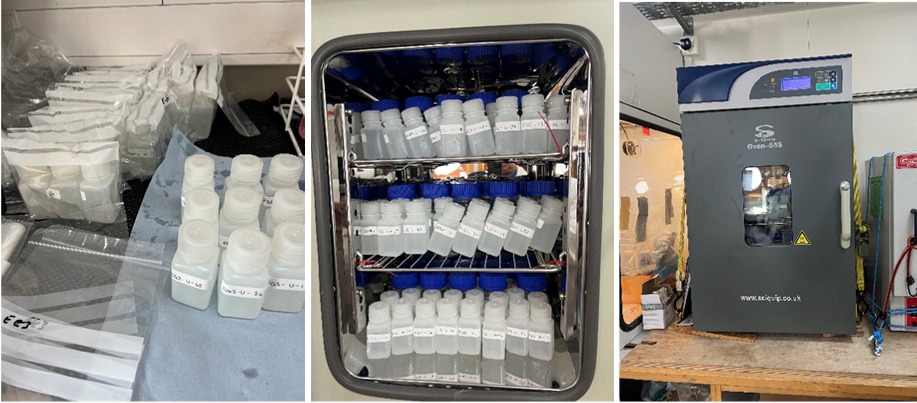
Equipment used for the EuroGO-SHIP nutrient sample preservation experiment.
After the L4 sampling the ship proceeded west to the Whittard Canyon off South West Ireland for the second sampling station and then continued west to the PAP site, where the remainder of the cruise research and experiments were to be carried out. Numerous CTD sampling casts were taken as part of the PAP site sampling programme.
For the EuroGO-SHIP project we sampled different nutrient concentration regimes to study and check the reliability of the preservation techniques for waters of varying nutrient concentrations, Further samples were taken at 200m, 500m and a deep sample with high nutrients at 4824m. These covering a wide range of nutrient concentrations that would be typically found in the seas across Europe.
There has been a lot of HDPE and glass bottle sampling happening at the EuroGO-SHIP stations and very many thanks are due to the invaluable team of Anita, Ed, and Hans who have helped with the long periods of sampling and without them it would have been an impossible job on my own, thank you team.
Once back from the cruise there will be 12-15 months of regular analyses of the sample sets to investigate the, if any, storage effects and then to recommend the best practice for the future.
Be part of the community helping our ocean thrive.