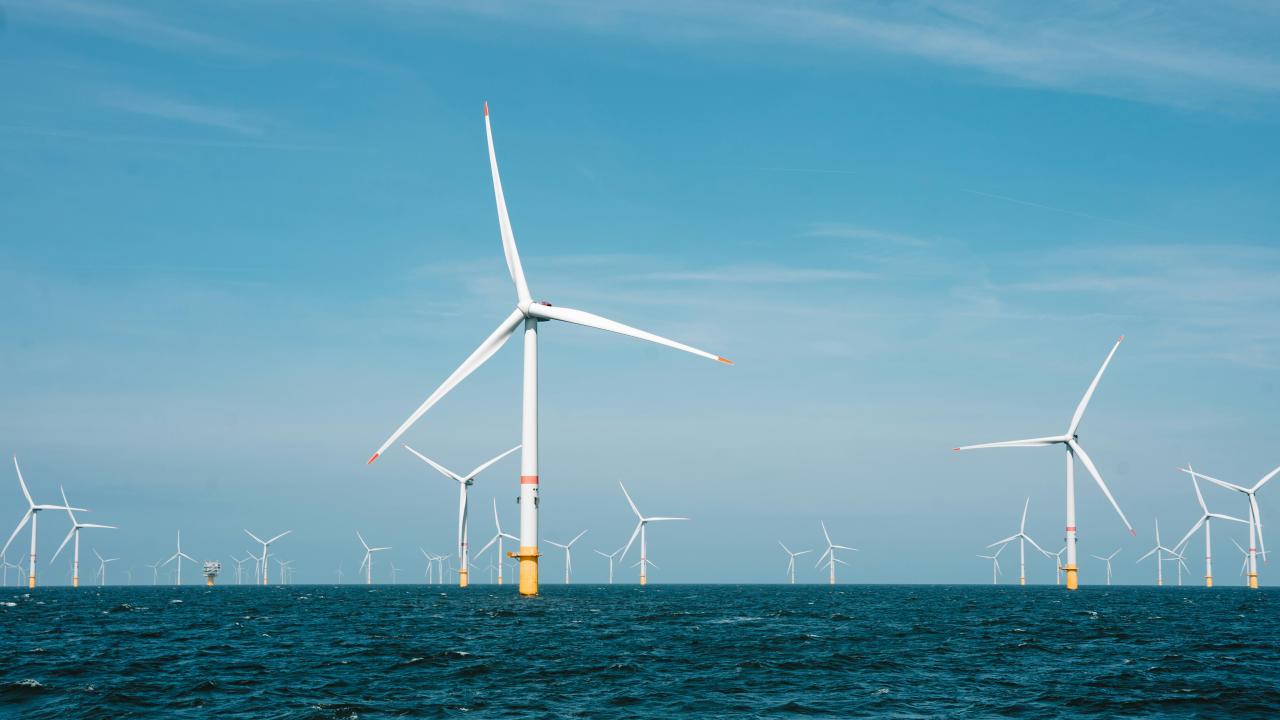

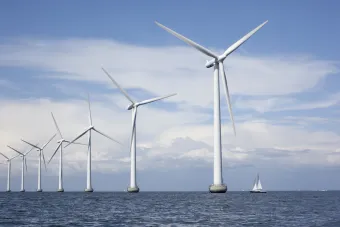
A newly published report from the Offshore Renewables Joint Industry Programme (ORJIP) is offering insight into the ecological effects of offshore wind farms on benthic habitats.
The report, featuring the work of three scientists from the National Oceanography Centre (NOC) and referencing a number of major NOC programmes such as Ecowind, was produced to address key research questions. These include focuses on biodiversity, ecological function and recovery potential of benthic habitats (the ecological region at the bottom of a body of water, including the sediment surface and subsurface layer).
The collaborative study, which was produced by APEM Group, NOC and Bangor University for ORJIP Offshore Wind, made a number of key findings which provide a better understanding of the landscapes affected by offshore wind farms. It also raised the need for further investigation.
Key findings include:
Biodiversity and species composition changes were observed but could be attributed to natural variability which contrasts with findings from the scientific literature. This indicates a need for further investigation and evaluation.
Localised ecological changes were evident near turbines, however regional-scale impacts remain unclear and requires further investigation due to limited monitoring programmes and datasets.
Recovery timelines vary by habitat and exposure. Soft-sediment communities often recover in the short term (2-3 years). However, an absence of long-term monitoring means it is difficult to fully understand the changes to habitat and understand their full recovery potential.
Dr Talicia Pillay led NOC’s involvement supported by Dr James Strong and Dr Lisa Skein.
Dr Pillay said: “It’s important for science, policymakers, governments and industry to work together to ensure we obtain a greater understanding of the impacts of offshore wind farming.
“Everything we do has an impact on the world, and it’s vital that we understand what that is so we can make informed choices. This report demonstrates just that, but it also highlights that we need more research, and more information to gain deeper knowledge.
“We had five big questions to answer, and our research has raised several more by highlighting some large gaps in knowledge. It’s our hope that we can take this project forward to address and fill those gaps.”
The report has been published and is available to read on the Carbon Trust website: https://www.carbontrust.com/our-work-and-impact/guides-reports-and-tool…
Be part of the community helping our ocean thrive.