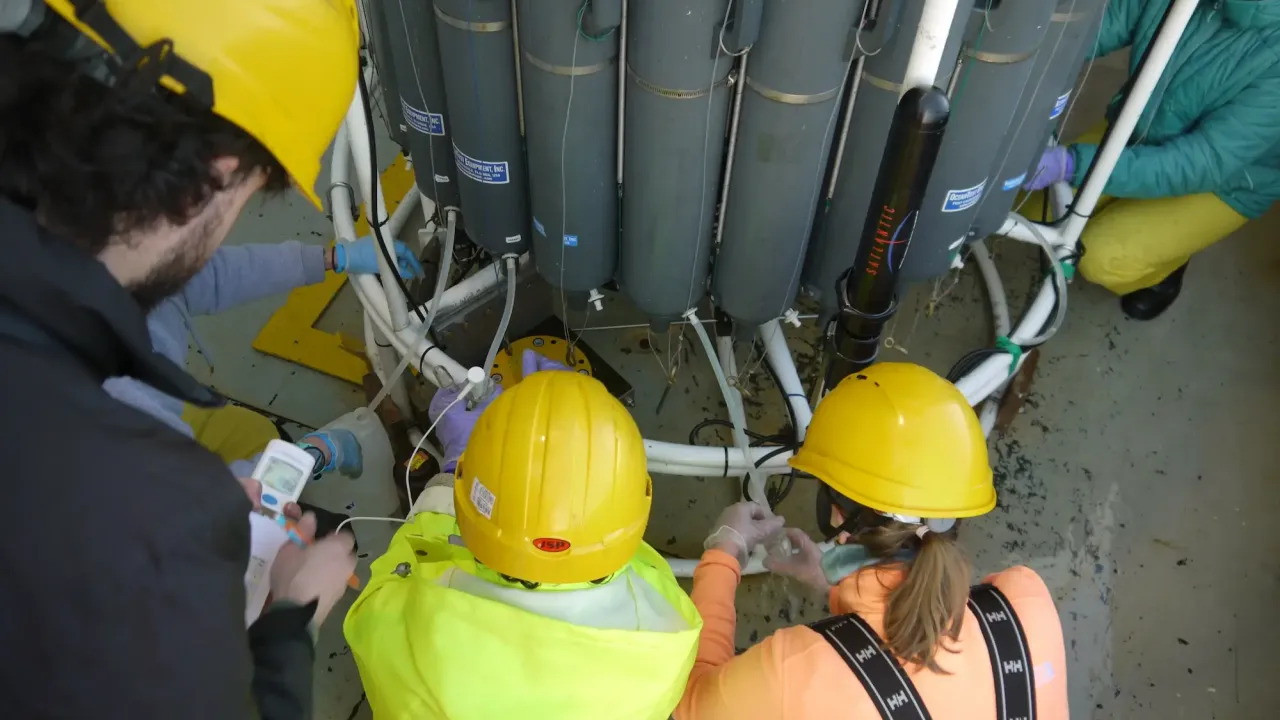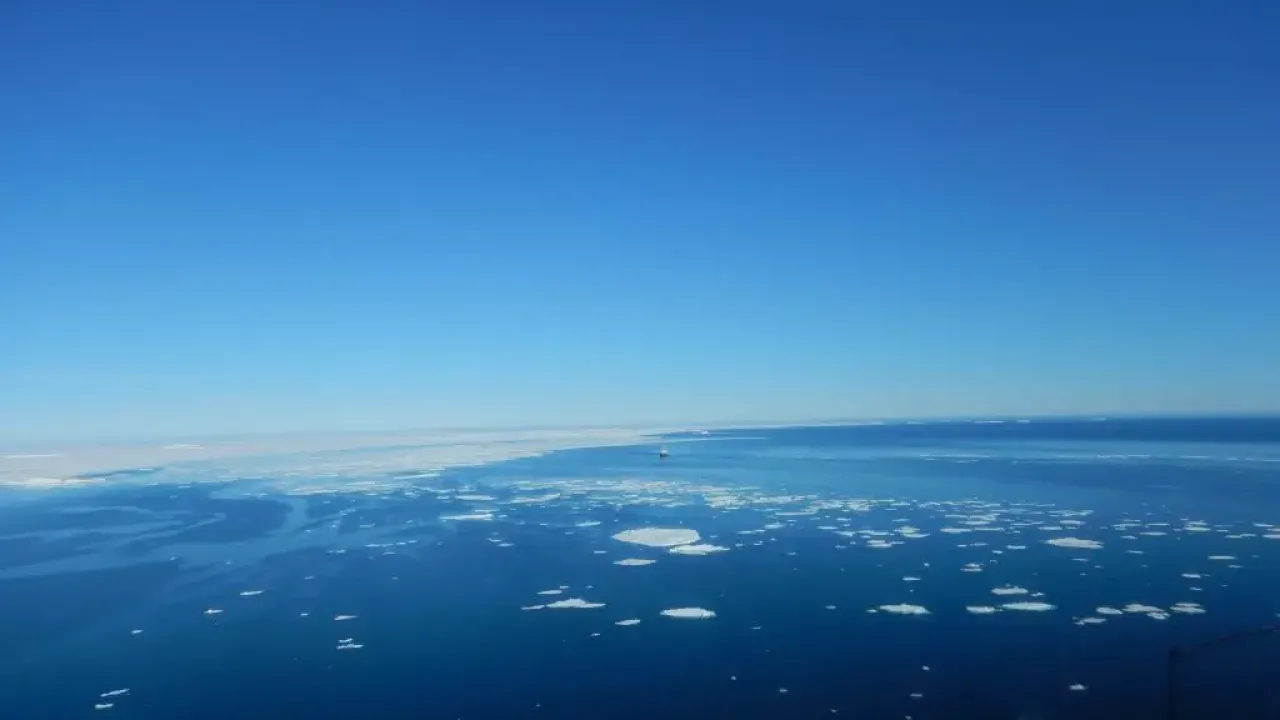

During the night a boxcore came up onto the deck of RRS James Cook. Looking through the cold water on top we caught a glimpse of a large yellow worm on the surface. This looked very much like a surface-dwelling acorn worm, or enteropneust – to our knowledge the first captured in the CCZ. We have taken samples for DNA analysis and for microscopic assessment back at home – it may even be a new species! But why do we find acorn worms so fascinating?
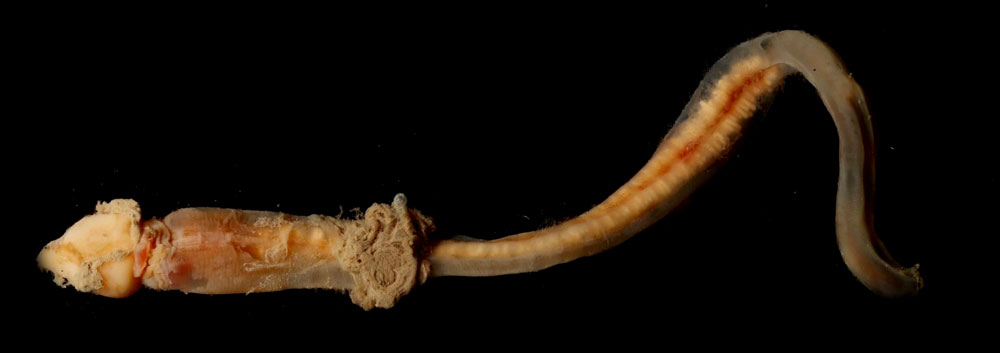
Acorn worm sampled on the SMARTEX expedition
Acorn worms are a group of animals that are commonly found burrowing in soft sediment from the seashore to the deep sea. The acorn worms, together with the echinoderms (e.g. sea stars, sea cucumbers) are the closest invertebrate (without a backbone) relatives to the vertebrates (the animals with backbones) - the group to which we belong as humans. Basically, these worms are one of our nearest relatives living in the sediments of the Clarion Clipperton Zone. We won’t dwell on any similarities in shape…
There are approximately 90 described species of acorn worm and, like many animals, they were first found in the deep sea by the Challenger expedition of 1872-1876. The first deep-sea species – a burrowing form found at 4570 m depth in the Atlantic called Glandiceps abyssicola – was described in 1893 by Johann Spengel, a German zoologist fascinated by acorn worms. This group has since been found to the incredible depth of 8116 m in the sub-Antarctic trenches.
With the development of deep-sea floor photography from the 1960s, mass imagery of the deep seafloor became possible. Two pioneers of this technique - Bruce Heezen from New York’s Columbia University and Charles Hollister from Wood’s Hole Oceanographic Institute in Boston USA – started noticing some strange spiral traces on the seafloor and reported on them in their iconic 1971 book “Face of the Deep”. These traces were also known, but unexplained, in the fossil record from around the age of the last dinosaurs until the present. However, despite numerous images, these organisms eluded capture owing to their extreme fragility and their identity remained a mystery for many years.
In the late 1970s, scientists started getting very interested in deep-sea acorn worms. Based on examination of photographs, a Danish zoologist Henning Lemche proposed that they were tentacle-bearing lophenteropneusts, which would have been an important ‘missing-link’ group (between the tentacle-less enteropneusts and the tentacle-bearing pterobranchs). The quality of the photographs was not sufficient to check the key features, but with the developments in ROV technology, eventually a surface-dwelling enteropneust – similar to the ones seen in seafloor photographs – was recovered in the North East Pacific. It was described as a new genus and species Torquarator bullocki by Nicholas Holland from the Scripps Institution of Oceanography in 2005. This resulted in a scientific paper in the prestigious journal, Nature, and a clear refuting of the idea of lophenteropneusts.
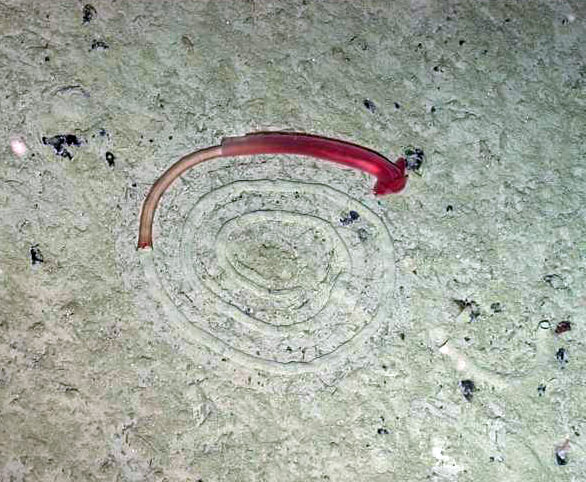
The spiral trace of a deep-sea acorn worm (this one is from the Atlantic)
Whatever their identity, these worms feed on the surface of the sediment. They leave behind fascinating spiral or meandering traces on the seafloor that take a few days to form. Starting in the centre they feed in circles until they have covered enough area then they empty their gut and swim off into the water to a new location before doing the same thing again. These spirals are what were first observed in the photographs before they saw the worm responsible.
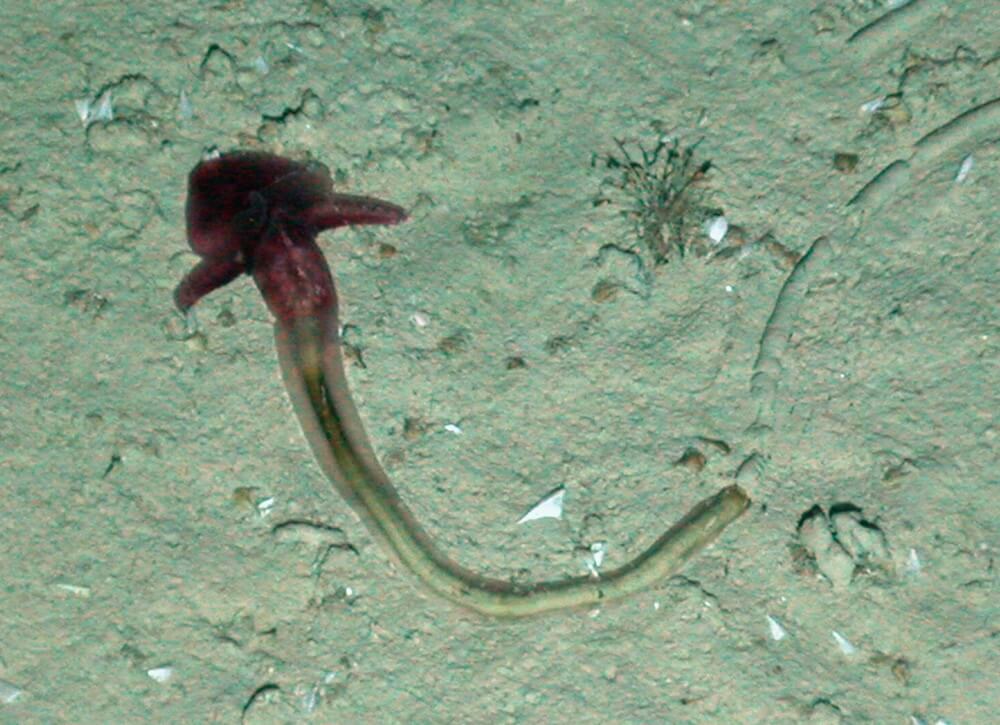
The acorn worm Yoda purpurata (also from the Atlantic)
By now at least nine species have been identified in the North East Pacific alone. In 2013 we caught and described three new species from the Atlantic, including one that was in a new genus. This was named Yoda because of its distinctive “ears”. Enteropneusts are known to occur in the Clarion Clipperton Zone. In a repeat of history, we are seeing them in photographs before catching them. Hopefully, that has just changed.
Be part of the community helping our ocean thrive.