Scientists from the National Oceanography Centre (NOC) led the first expedition to collect marine genetic resource (MGR) samples through the provisions of the Biodiversity Beyond National Jurisdiction (BBNJ) Agreement.
As part of the first BBNJ pre-notification, as submitted by the Republic of Ireland, the sampling took place during the recent GO-SHIP AR7E-2026 expedition, an internationally coordinated research expedition that voyaged from Ireland to Greenland during July-August 2026 onboard Ireland's research vessel Celtic Explorer.
The expedition brought together scientists from 15 different nationalities to study the changing North Atlantic Ocean.
The notification marks an important milestone in the implementation of the landmark BBNJ Agreement, to ensure transparency in efforts to conserve and sustainably use marine biodiversity in areas beyond national jurisdiction.
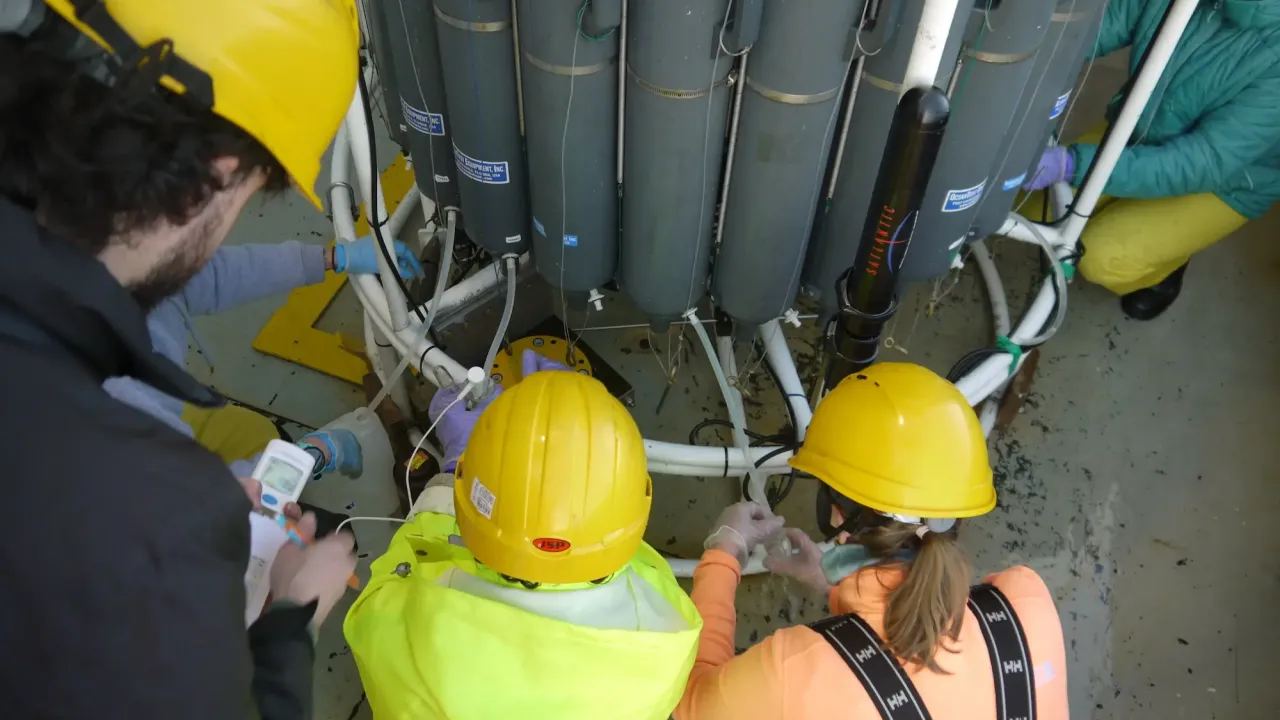
During the interdisciplinary expedition, researchers collected samples to quantify a range of physical, biogeochemical, and biological parameters to support studies in ocean biodiversity and ecosystem change.
NOC’s Dr Yvonne Firing, chief scientist for the AR7E expedition, commented: “This is a really important milestone for the BBNJ. The samples collected will now be analysed by scientists at NOC and our GO-SHIP AR7E-2026 partner organisations. The findings will help us understand how marine ecosystems are responding to environmental changes, as well as improve our knowledge of biodiversity in remote ocean regions.”
NOC’s Dr Sophie Clayton and Dr Elena Garcia-Martin led the biological sampling, including the collection of 94 eDNA samples. The eDNA samples will help to identify the plankton organisms present in the different stations across the field cruise and provide information on marine biodiversity.
This effort contributed to the burgeoning European Bio-GO-SHIP programme, which aims to aims to become an international collaboration to measure, understand, and predict the biodiversity of pelagic communities.
The sample collection was supported by the EU Horizon TRICUSO project and the UK’s AtlantiS national capability funding. Shiptime was provided through the AQUARIUS RI transnational access programme.
Be part of the community helping our ocean thrive.